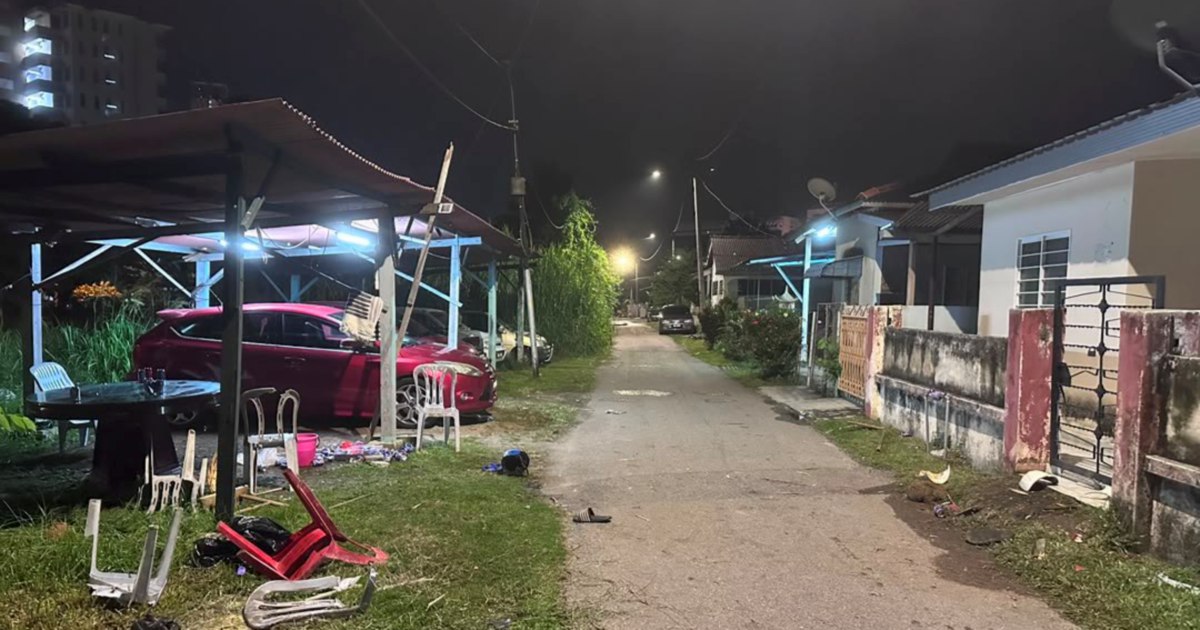
A coordinated early-morning assault in a coastal Melaka neighbourhood has prompted police to arrest five suspects, after two victims suffered significant injuries during an attack near a religious site. The incident unfolded in Kampung Pengkalan Rama Pantai along Jalan Pengkalan, where the two men had ventured to collect a motorcycle. One victim sustained a fractured skull and remains in critical condition, while his companion also sustained injuries during the confrontation with the unidentified assailants.
The timing of the assault—conducted in the early hours of the morning—suggests the attackers may have deliberately targeted this period for reduced visibility and potential witness presence. The location adjacent to a temple adds another dimension to the incident, as such areas typically experience foot traffic throughout the day but remain relatively quiet during late-night and early-morning hours. The circumstances surrounding why the victims were retrieving a motorcycle at such an unusual time remain unclear, though authorities are exploring whether this detail holds significance to the attack's motivation.
Melaka authorities responded swiftly to the incident, mobilising resources to apprehend the suspected perpetrators. The arrest of five individuals within a reasonable timeframe demonstrates effective police work and community cooperation, as residents may have provided critical information about the suspects' whereabouts or identities. However, investigators have not yet established whether all five arrested individuals played active roles in the physical assault or whether some may have been accessories or provided support before or after the incident.
The violence reflects broader concerns about personal safety in suburban and coastal areas of Malaysia, particularly during off-peak hours when police presence may be limited. Kampung Pengkalan Rama Pantai, like many developing residential areas in Melaka, presents the challenge of balancing community accessibility with adequate security measures. The temple location, while serving as a spiritual and social hub, becomes vulnerable to criminal activity when protective measures relax during quiet periods.
Critical condition injuries, particularly those involving skull fractures, demand immediate and prolonged medical intervention. The victim's hospitalisation raises questions about the level of violence inflicted and whether the assault was opportunistic or premeditated. Medical professionals at the attending facility are likely managing concerns about potential brain injury, infection, and complications from the trauma. The condition of the second victim, though described as less severe, may still result in long-term effects that impact daily functioning.
Police investigations into such cases typically examine multiple dimensions: the relationship between victims and suspects, whether prior disputes existed, potential gang affiliations, and whether robbery or other motives drove the violence. Preliminary findings may reveal whether the attack targeted these specific individuals or represented random violence against whoever happened to be present. The motorcycle itself becomes a point of inquiry—whether it was borrowed, owned, or disputed property, and whether possession of it triggered the confrontation.
For the broader Melaka community, particularly residents of Kampung Pengkalan Rama Pantai, the incident serves as a reminder of safety vulnerabilities. While five arrests provide some reassurance that the immediate threat may have been contained, the psychological impact of knowing such violence can occur near residential and religious spaces warrants community dialogue about prevention. Residents may increasingly avoid certain areas during off-peak hours, or residents may demand improved street lighting and neighbourhood watch initiatives.
The incident also raises implications for how Malaysia's law enforcement addresses coordinated violence. When multiple assailants operate together, distinguishing individual culpability becomes legally complex. Prosecutors must determine whether all five face charges related to assault causing grievous hurt, or whether varying charges reflect different participation levels. Malaysian courts will ultimately assess evidence regarding who struck the decisive blows and whether the gathering itself constituted criminal conspiracy.
Temple administration may also face questions about whether additional security measures could prevent similar incidents on their grounds. Many religious institutions maintain minimal security infrastructure, relying instead on community trust and police patrol frequency. This incident may prompt discussions about installing surveillance cameras, improving perimeter lighting, or establishing protocols for alerting authorities about unusual nighttime activity.
As the investigation progresses, authorities will likely release further details about the suspects' identities, any prior criminal records, and whether they reside in the vicinity. Understanding how five individuals became organised to commit this assault—whether through gang membership, personal relationships, or spontaneous gathering—will inform both prosecution strategy and crime prevention approaches. The interrogation process will prove critical in establishing each suspect's specific actions and intent.
The outcome of this case will carry weight for both the judicial system and affected communities. Conviction and appropriate sentencing will demonstrate that violent assaults near residential and religious areas attract serious consequences. Conversely, community perceptions of justice will depend on whether the investigation appears thorough, whether evidence clearly establishes guilt, and whether sentences adequately reflect the severity of inflicting life-altering injuries on innocent victims.

