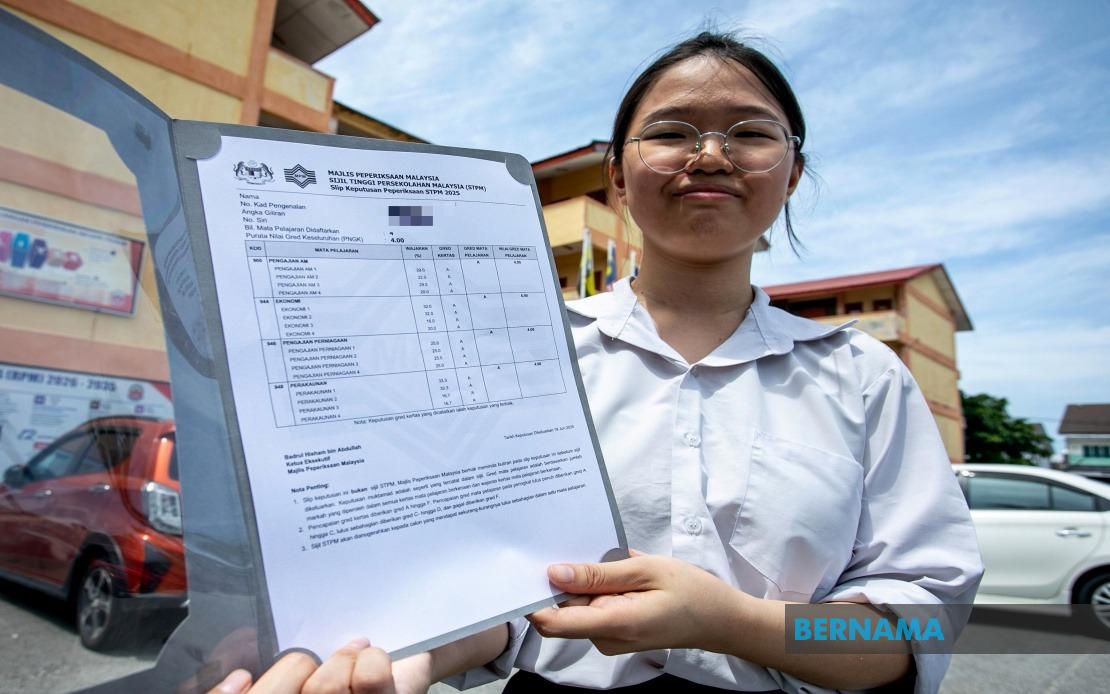
Yong Xin Yi's path to academic excellence in Malaysia's prestigious Sijil Tinggi Persekolahan Malaysia examination demonstrates how methodical preparation and unwavering commitment can translate into outstanding results. The 20-year-old from SMK Jalan Tasek in Ipoh secured four A grades this year, achieving a perfect Cumulative Grade Point Average of 4.00—a distinction that places her among the nation's highest-performing STPM candidates. Her success story, shared during a recent interview in her hometown, offers valuable insights for students navigating Malaysia's demanding pre-university examination system.
At the heart of Xin Yi's achievement lies a structured daily routine that demands considerable personal discipline. Each evening, from 5:00 pm to 10:00 pm without exception, she dedicates five uninterrupted hours to revision and consolidation of her coursework. This consistent block of study time provided her with a manageable framework within which to deepen her understanding of complex subjects and refine her problem-solving abilities. The regularity of this schedule proved instrumental in transforming classroom learning into lasting knowledge, enabling her to approach examination questions with confidence and precision.
However, Xin Yi's formula for success extends beyond evening study sessions. She emphasises that classroom engagement constitutes the foundational component of her learning strategy, operating on the principle that attentive listening during lessons dramatically reduces subsequent confusion during self-study. By actively absorbing teacher explanations in real time, she minimised the need to revisit difficult concepts multiple times, thereby maximising the efficiency of her revision hours. This approach reflects a sophisticated understanding that examination preparation begins not with textbooks but with the lecture hall, where educators provide crucial context and clarification that students often struggle to reconstruct independently.
Complementing her classroom focus and evening revision schedule, Xin Yi maintained meticulous completion of all assigned homework. She views these assignments not merely as bureaucratic obligations but as integral learning tools that reinforce classroom instruction and expose gaps in comprehension before they become problematic. This commitment to homework completion, combined with her other study habits, created a comprehensive learning ecosystem where each component reinforced the others—classroom attention informed homework completion, which guided evening revision, which in turn clarified points for subsequent lessons.
Among the four subjects in which Xin Yi achieved top grades—General Studies, Principles of Accounting, and Economics—General Studies emerged as her greatest challenge. The subject demands more than factual recall; it requires students to synthesise information, construct coherent written arguments, and conform to specific formatting and marking conventions. Recognising this weakness early, Xin Yi deliberately allocated disproportionate attention to General Studies, treating it as a priority area requiring sustained effort. This strategic reallocation of resources demonstrates maturity in self-assessment and problem-solving, qualities essential for academic advancement beyond secondary education.
Xin Yi's achievement arrived within a broader context of institutional success. Five students from her school achieved identical 4A results in the 2025 STPM examination, suggesting that SMK Jalan Tasek's pedagogical approaches and school culture actively support high-level academic performance. Her individual accomplishment therefore reflects both personal effort and institutional quality, a reminder that student success rarely emerges in isolation but typically involves supportive school environments, dedicated educators, and peer cohorts similarly committed to excellence.
Beyond academic statistics, Xin Yi's story carries profound personal dimensions that resonate within Malaysian family contexts. As the only child of a clerk mother and a phone salesman father, she views her STPM success not as a personal achievement to celebrate privately but as a vehicle for elevating her family's circumstances. This motivation—to honour parental sacrifices and generate future achievements that would make her parents proud—powered her daily commitment throughout her secondary education. Such family-centred motivation reflects deeply embedded values within Malaysian culture and suggests that sustained academic effort often draws strength from intergenerational responsibility and filial gratitude.
Looking forward, Xin Yi has channelled her academic strengths toward a concrete career aspiration. She plans to pursue tertiary studies in economics at Universiti Putra Malaysia, a decision she characterises as the product of careful reflection on both her demonstrated aptitudes and the sector's employment prospects. Her choice of field suggests strategic thinking about life after secondary education—moving beyond examination grades to consider how academic credentials translate into meaningful professional opportunities. Economics education offers broad applicability across government agencies, financial institutions, and private enterprises throughout Southeast Asia, providing the employment flexibility and income potential that can genuinely transform family circumstances.
Xin Yi's journey offers several lessons for Malaysian students navigating competitive examination systems. Her success emerges not from exceptional talent alone but from the systematic application of proven study methods, personal discipline, strategic resource allocation, and emotional support from family members. The five-hour daily revision routine provides a concrete model—ambitious enough to drive genuine mastery yet sustainable enough to maintain across months of examination preparation. For students feeling overwhelmed by academic pressure, her example demonstrates that manageable daily commitment, when sustained consistently, accumulates into transformative results.
The broader context matters as well. Malaysia's examination system, while rigorous, responds to dedicated and systematic effort. STPM represents a critical juncture where students' secondary education culminates and tertiary pathways crystallise. Students like Xin Yi who excel at this stage access opportunities at premier Malaysian universities, positioning themselves for careers that can indeed reshape family fortunes. Her aspiration to become an economist reflects not fantasy but realistic professional ambition grounded in demonstrated academic capability.
As Malaysian education continues evolving, student profiles like Xin Yi's illuminate what remains constant: the power of focused effort, supportive relationships, and strategic planning. Her perfect 4.00 CGPA and four A grades represent not merely examination success but evidence of a young person who has deliberately constructed her own path toward meaningful advancement, honouring both her capabilities and her responsibilities to her family. In doing so, she exemplifies the kind of thoughtful, committed scholarship that Malaysian institutions seek to nurture among their students.