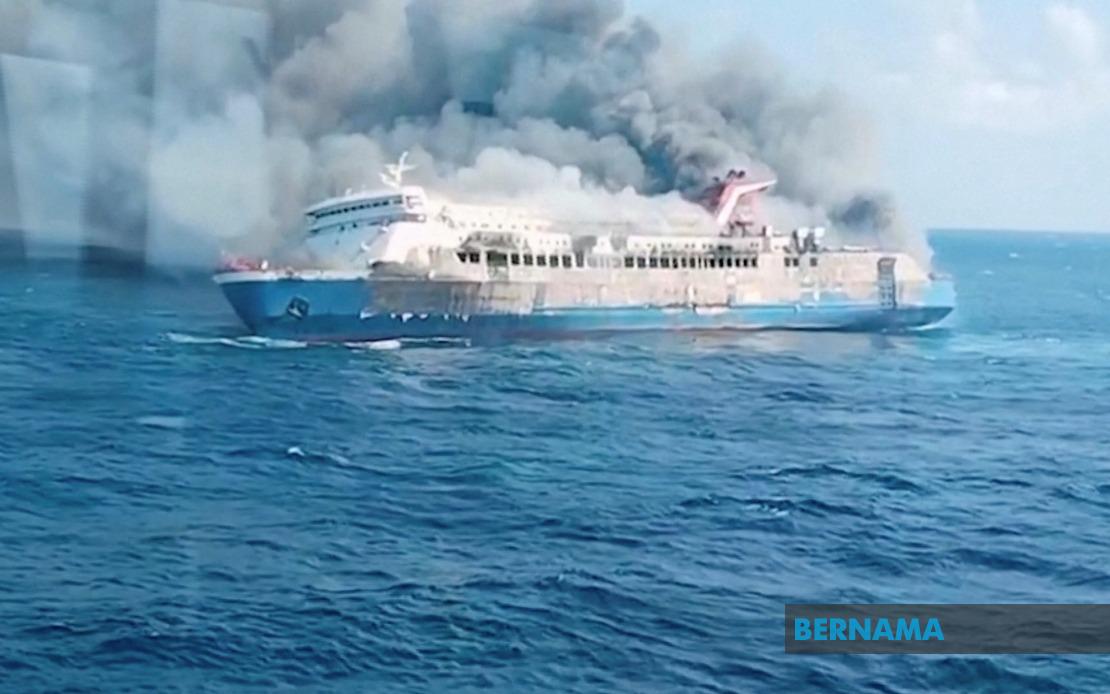
A major maritime disaster unfolded in Indonesian waters on Thursday morning when the KMP Mutiara Santosa 2, a passenger ferry operating between Surabaya and Makassar, erupted in flames while navigating the waters off northern Sumenep in Madura. The incident has claimed at least five lives, with 41 passengers and crew members still unaccounted for as rescue operations continue at an intensive pace. The vessel was carrying 232 passengers and 39 crew members when the fire broke out, making the scale of this tragedy immediately apparent to authorities responding to the emergency.
The Surabaya Search and Rescue Office received the distress signal at 8:24 am local time and mobilised a comprehensive emergency response involving multiple agencies and assets. Under the direction of Surabaya Search and Rescue Office Chief Nanang Sigit, rescue teams launched immediate evacuation efforts to remove as many people as possible from the stricken vessel. The initial response proved effective, with 225 passengers successfully brought to safety by the time afternoon operations were consolidated at 4 pm. However, the severity of the fire's progression meant that the window for orderly evacuation was critically narrow.
Witnesses and rescue personnel described a harrowing scene as the ferry became engulfed in flames. According to Nanang's account, the blaze consumed most of the vessel's structure, forcing passengers and crew to congregate on the bridge and forward sections of the ship while awaiting rescue. The concentration of survivors in these areas reflected both the rapid spread of the fire and the desperation of those aboard to reach safety. Distress signals and coordinated rescue efforts meant that evacuations could proceed, though the intensity of the situation placed considerable strain on emergency responders.
Many passengers faced a terrifying choice between remaining aboard a burning vessel and attempting self-rescue by jumping into the sea. Several individuals opted to leap from the ferry into the surrounding waters, a risky manoeuvre that nevertheless proved successful in some cases. Nearby vessels operating in the same waters played a vital role in this phase of the rescue, intercepting swimmers and providing immediate assistance to those who had abandoned ship. These civilian mariners became instrumental in saving lives during those critical early moments when official rescue assets were still mobilising to the disaster site.
The incident highlights the ongoing vulnerability of maritime transportation across the Indonesian archipelago, where ferry services remain a critical link between distant regions but face persistent safety challenges. The KMP Mutiara Santosa 2 was engaged in a routine commercial operation along one of Indonesia's major shipping routes, serving passengers and cargo moving between Surabaya, Java's largest port, and Makassar in Sulawesi. The route represents a vital economic corridor, and ferry incidents on this passage have significant implications for regional connectivity and commerce.
As of the latest update, the search and rescue operation remained active with various government agencies and multiple assets deployed across the disaster zone. The ongoing nature of recovery efforts underscores the difficulty of locating missing persons in open ocean conditions, particularly when visibility is compromised and the scale of the emergency strains available resources. Authorities have prioritised the search grid in the most probable drift patterns while continuing to gather information from rescued survivors about the circumstances immediately preceding and following the fire.
Investigations into the root cause of the fire were immediately initiated by competent authorities, though preliminary findings have not yet been disclosed. Understanding how the blaze originated—whether from mechanical failure, electrical malfunction, fuel-related incident, or human error—will be crucial not only for determining liability but also for implementing safety measures to prevent similar disasters. Maritime fire investigations typically involve examination of vessel maintenance records, crew training documentation, and the condition of fire suppression systems.
The incident carries implications extending beyond the immediate tragedy for Malaysian shipping and maritime safety observers. Ferry disasters in neighbouring Indonesia often prompt reviews of safety standards across Southeast Asian maritime industries, particularly regarding passenger vessel inspections, crew competency requirements, and emergency preparedness protocols. Malaysia's own ferry operations and regulatory frameworks may face scrutiny in the aftermath, as regional governments evaluate whether existing safeguards adequately protect passenger lives on comparable vessels.
For the families of missing persons and survivors processing the trauma of the disaster, the ongoing recovery operation represents both hope for additional rescues and the grim recognition that additional fatalities remain likely as search operations progress. The psychological impact on survivors will persist long after the immediate rescue phase concludes, requiring coordinated support from authorities and humanitarian organisations. The incident also serves as a sobering reminder of the inherent risks associated with maritime travel, even on supposedly well-established and regulated commercial routes.

