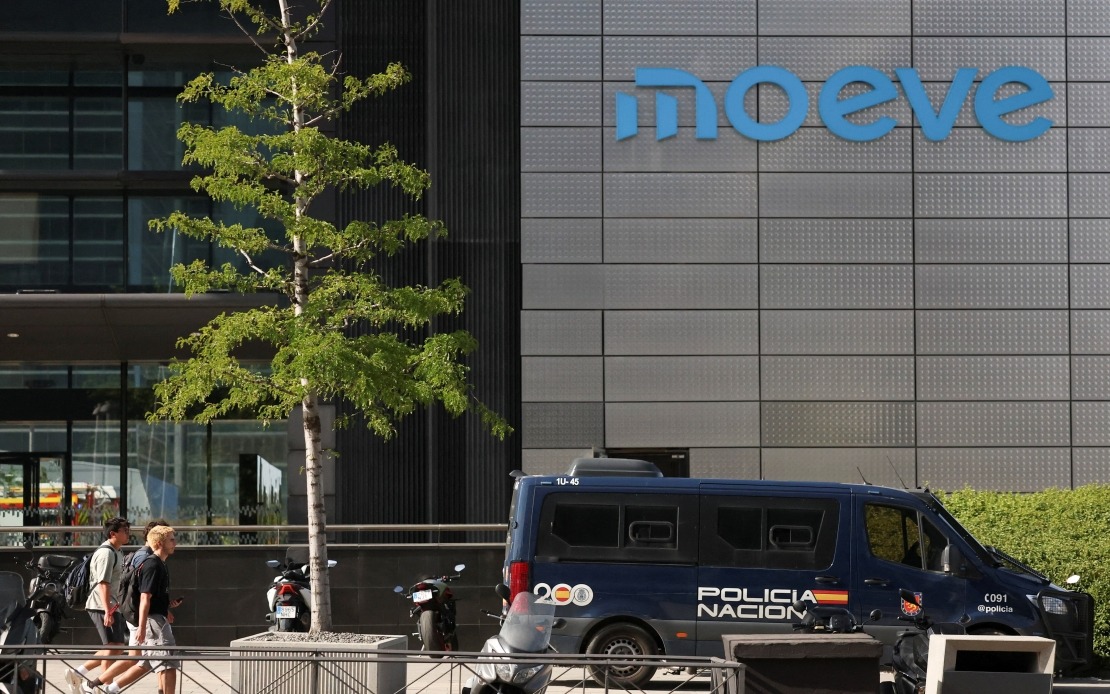
A significant fire erupted at Torre Moeve, Madrid's second-tallest skyscraper, on Tuesday afternoon, triggering a full evacuation and drawing emergency services to the Spanish capital's skyline. The blaze produced thick plumes of smoke visible across the city, prompting swift action from local authorities and firefighting crews. The incident underscored the critical importance of rapid emergency response protocols in high-rise structures, particularly in densely populated urban centres like Madrid.
The fire originated following an explosion that occurred inside the building at approximately 5:00 pm local time, according to reports from Spain's national broadcaster RTVE, which cited information provided by the National Police. The incident appears to have been initiated within technical infrastructure rather than residential or office areas, a factor that likely contributed to the absence of widespread casualties. Spanish government officials coordinating the response indicated that the origin point was the 25th floor, which contains the building's technical systems and mechanical infrastructure.
Madrid's firefighting units responded decisively to the emergency, entering the structure and systematically extinguishing the flames. By the time authorities issued their final assessment, firefighters had successfully contained and declared the fire extinguished, though crews remained inside the building to conduct thorough inspections of all affected areas and ensure no secondary fires remained. This methodical approach to post-fire investigation reflects established protocols in European emergency management, designed to prevent resurgences and identify the precise cause of the incident.
The human toll from the incident remained minimal despite the dramatic nature of the emergency. While the entire tower underwent precautionary evacuation, medical authorities treated only three individuals at the scene. Two workers sustained mild smoke inhalation from exposure within the building, while a passer-by experienced an anxiety attack triggered by the visible emergency unfolding nearby. Notably, all three individuals received treatment without requiring hospital admission, suggesting the incident's impact on human health was contained by the swift evacuation and the location of the fire within technical rather than occupied spaces.
Torre Moeve's position as Spain's second-tallest building meant the fire garnered significant public attention and media scrutiny across the nation. Such incidents in landmark structures carry particular resonance because they test the reliability of modern building safety systems and emergency protocols in structures housing thousands of occupants and serving as symbols of urban infrastructure. The incident provides an opportunity to evaluate whether contemporary Spanish building codes and safety measures function effectively under real-world stress conditions.
For readers across Southeast Asia, the Torre Moeve incident offers instructive parallels to the regional context of rapidly expanding high-rise construction. Malaysia, Singapore, and other developing economies in the region have experienced explosive growth in vertical urban development, with numerous supertall buildings rising in Kuala Lumpur, Bangkok, and Jakarta. Fire safety in these structures remains an ongoing concern as rapid construction outpaces regulatory oversight in some jurisdictions, making international incidents like Madrid's a useful reference point for assessing whether Southeast Asian building codes adequately protect occupants.
The technical nature of the fire—originating in mechanical systems rather than occupied floors—highlights how modern high-rises concentrate infrastructure and potential hazard sources in specific zones. This compartmentalization, when properly maintained, can actually limit incident severity by concentrating fire to non-residential areas. However, it also requires rigorous maintenance protocols and regular inspections of mechanical systems, something that demands sustained investment from building management companies across the region.
Spain's response to the Torre Moeve incident reflects the institutional capacity of a developed European nation with decades of refined emergency management experience. The coordination between police, firefighters, and government coordination offices occurred seamlessly, with information flowing to the public through established media channels. This transparency contrasts with approaches in some regional contexts where emergency incidents receive delayed or incomplete disclosure, potentially hampering public understanding of building safety standards.
The absence of fatalities or serious injuries from a fire in one of Spain's tallest buildings ultimately validates the effectiveness of modern building safety systems when properly implemented and when emergency protocols function without delay. Torre Moeve's evacuation proceeded orderly, with occupants able to exit safely despite the fire's origin point deep within the structure. This outcome suggests that contemporary construction standards, when enforced rigorously, do protect lives in crisis situations, a reassuring message for occupants of the countless high-rise buildings now transforming Southeast Asia's urban landscapes.
Looking forward, the Madrid incident will likely prompt renewed examination of fire safety protocols across Spain's tallest structures and may influence regulatory discussions elsewhere in Europe. For Malaysian and regional stakeholders invested in understanding best practices for tall building safety, the Torre Moeve response offers concrete lessons in evacuation efficiency, emergency coordination, and the importance of maintaining technical infrastructure to the highest standards. As Southeast Asian cities continue vertical expansion, learning from international incidents becomes increasingly valuable for protecting the region's rapidly growing urban populations.