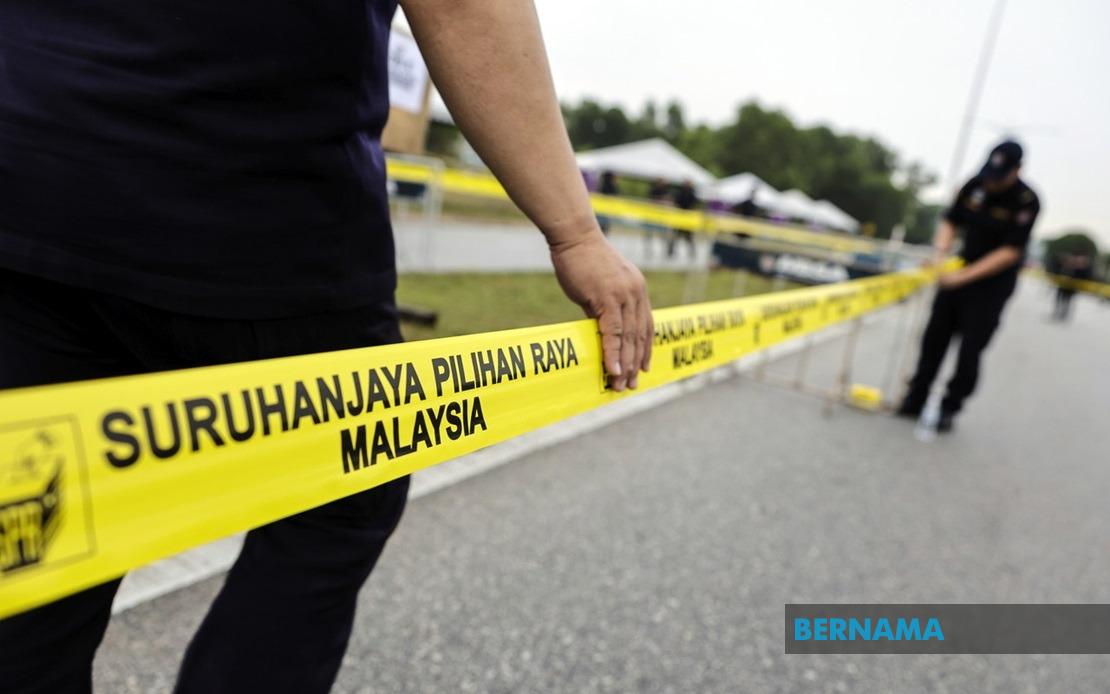
Voters and candidates in Negeri Sembilan can expect generally pleasant conditions as the state's 16th election process kicks off with nomination day tomorrow, though meteorologists warn of scattered storms in the afternoon that may affect campaign activities and polling preparations. The Malaysian Meteorological Department has predicted a mixed weather pattern that will likely characterize the crucial first day of the electoral campaign, with sunshine dominating the morning hours in most districts before conditions deteriorate later in the day.
Dr Mohd Hisham Mohd Anip, director-general of the Malaysian Meteorological Department, outlined a district-by-district forecast indicating that Jelebu, Jempol, Kuala Pilah, Rembau and Tampin will enjoy clear morning skies suitable for the nomination proceedings. However, Port Dickson and Seremban, the state capital, are anticipated to experience rain during the morning hours, potentially complicating activities at nomination centres in these urban areas. The divergence in weather patterns across the state reflects typical tropical conditions where localized showers can develop unpredictably, particularly in areas near the coast or with higher elevation.
The afternoon forecast presents a more uniform picture of atmospheric instability, with thunderstorms anticipated to sweep across virtually all districts in Negeri Sembilan. Despite the ominous terminology, MetMalaysia officials characterized these storms as temporary phenomena that are unlikely to develop into sustained, heavy rainfall. The department emphasized that voters and election workers should prepare for brief passing showers rather than the prolonged downpours that occasionally disrupt electoral processes during monsoon seasons. This distinction carries practical importance for the Election Commission's planning, as brief storms present minimal operational disruption compared to extended rain events that could necessitate schedule adjustments.
Temperature conditions across the state will remain typical for mid-July, with overnight lows settling between 23 and 24 degrees Celsius and daytime highs reaching 32 to 33 degrees Celsius. These thermal ranges, though warm by temperate standards, are well within normal parameters for Negeri Sembilan and unlikely to pose health risks for the large numbers of candidates, supporters, and election officials who will be active throughout nomination day. The combination of warm temperatures and afternoon showers characterizes standard wet-season weather patterns in the state, which has evolved little in the past decades despite broader climate discussions affecting the region.
Nomination proceedings will commence tomorrow at eight designated nomination centres across Negeri Sembilan, operating from 9 am until 10 am. This compressed window concentrates the filing of nominations and candidate registrations into a single, intensive hour that demands coordination among the Election Commission, returning officers, and participating political parties. Following the close of nominations, returning officers will conduct the official announcement of confirmed candidates, a procedural step that marks the formal beginning of the election campaign period and triggers the commencement of campaign spending limits and electoral code restrictions.
The election landscape has emerged with clear ideological and strategic divisions among Malaysia's major political coalitions. Pakatan Harapan has committed to contesting all 36 state seats available in the Negeri Sembilan State Legislative Assembly, representing an ambitious maximum effort that reflects the coalition's confidence in its organizational capacity and electoral appeal. The allocation distributes seats among coalition partners according to established negotiation patterns, with PKR receiving 16 seats, DAP securing 11, and Amanah claiming nine, a distribution that acknowledges PKR's dominant position within the opposition alliance while maintaining the representation of smaller but symbolically important partners.
Barisan Nasional's decision to contest 25 of 36 seats rather than mounting a comprehensive challenge across all constituencies reflects the coalition's strategic calculation regarding competitive viability and resource allocation. The distribution of BN's slate among UMNO, MCA, and MIC—with UMNO fielding 16 candidates, MCA ten, and MIC two—maintains the hierarchical structure of Malaysian politics that has endured despite the coalition's weakened electoral position compared to previous decades. Perikatan Nasional, representing a more recent political realignment, will field 11 candidates drawn from PAS, Wawasan, Gerakan, and the Malaysian Indian People's Party, positioning itself as an alternative force that can potentially fragment opposition-leaning or conservative votes.
Several smaller political entities are also participating in the election, reflecting the fragmentation and experimentation characteristic of Malaysian electoral politics following the 2018 political upheaval. The Parti Orang Asli Malaysia, the Socialist Party of Malaysia, and the Malaysian Islamic Congregation Party will each contest a single seat, expressions of representation for indigenous communities, progressive ideologies, and Islamic perspectives respectively. Parti Pribumi Bersatu Malaysia, the remaining significant political entity mentioned, was expected to announce its candidate roster later in the reporting period, suggesting that candidate announcements and electoral strategies were still crystallizing even as nomination day approached, indicating the dynamic and sometimes disorganized nature of electoral competition in Malaysia.
The Negeri Sembilan State Legislative Assembly was dissolved on June 5, initiating the electoral timeline that culminates in the main polling day of August 1. The Election Commission scheduled early voting for July 28, accommodating military personnel, their spouses, and police officers who face deployment or operational scheduling constraints. This compressed campaign period of approximately one month is substantially shorter than pre-dissolution speculation sometimes suggested, allowing relatively limited time for sustained grassroots mobilization, policy deliberation, and voter persuasion activities that traditionally characterize longer election campaigns in established democracies.
The electoral roll compiled by the Election Commission documents 889,490 eligible voters registered across Negeri Sembilan, establishing the universe of potential participants in the state election. This voting population comprises three distinct categories reflecting different institutional relationships with the state and varying administrative procedures for ballot casting. Ordinary voters number 867,151, the overwhelming majority who will participate in standard voting procedures on August 1, while military personnel and their spouses eligible for early voting total 16,884, and police officers authorized for early voting number 5,455, together representing approximately 2.5 percent of the total electorate. The relatively small proportion of military and police voters, despite Malaysia's significant security apparatus, reflects both absolute force size constraints and the registration limitations that restrict electoral participation to specific institutional categories.
For Malaysian voters and political observers, the Negeri Sembilan election carries significance beyond state-level implications, as electoral trends in individual states often provide barometers for national political sentiment and coalition performance capabilities. The state's demographic and geographic characteristics—encompassing urban, suburban, and rural constituencies with varying economic profiles and ethnic compositions—mirror broader Malaysian patterns, making electoral outcomes potentially predictive of national trajectories. The concentration of major political alignments contesting substantially all or most seats maximizes the information value of results, providing clear mandates that can guide subsequent national political calculations and strategic repositioning among coalition partners and opposition forces competing for federal power in advance of the next general election.

