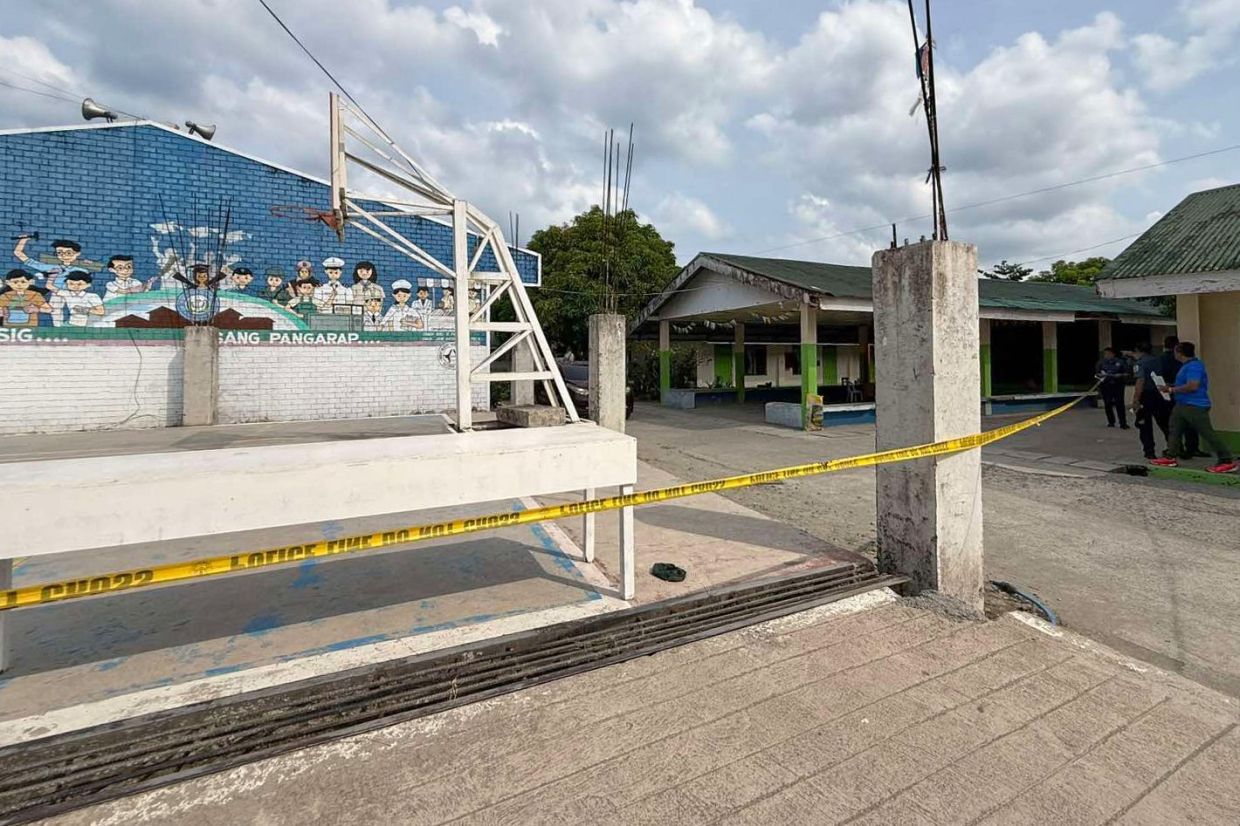
A 14-year-old student from Tolosa National High School in the Philippines has been taken into custody by police after allegedly posting violent threats against her school on social media, authorities announced Thursday. Interior Secretary Jonvic Remulla disclosed during a press briefing at Camp Crame that Philippine National Police operatives acted on information provided by Senator Bam Aquino regarding the Grade 10 student's inflammatory posts made the previous evening. The development marks the second concerning incident involving young Filipinos and threats of campus violence within days, raising fresh concerns about school safety in the archipelago.
According to Remulla's account, the troubling messages urged fellow students at Tolosa to "prepare yourselves" and contained explicit references to potential violence. The posts declared, "I will disrupt the school" and warned classmates to brace for potential casualties, stating "Be prepared for whoever gets shot or stabbed." The anonymous-seeming nature of the threats, with the author stating "You won't know me, but you will recognise me," amplified alarm among students and school administrators. Investigators determined that the minor had established multiple Facebook accounts to spread the threatening messages, suggesting a deliberate effort to ensure wider dissemination rather than an impulsive outburst.
Police conducted a digital investigation to unmask the account creator, utilising social media analysis and intelligence from concerned community members who reported the posts. Once authorities identified the student, the accounts were already offline—the minor or her associates had deleted the posts and accounts. Remulla noted that the suspect displayed hesitation and reluctance during police questioning, apparently fearing serious consequences. Her parents compounded investigative difficulties by declining to cooperate or offer explanations when approached by the Tolosa Municipal Police Station, creating obstacles for authorities seeking to understand her motivations.
The incident took an unusual procedural turn when officials realised the perpetrator could not face criminal charges. The minor was transferred to the Department of Social Welfare and Development before being released, as Philippine law—specifically Republic Act No. 9344, the Juvenile Justice and Welfare Act—prohibits prosecuting children below a certain age threshold for such offences. This legal framework, intended to protect minors from the criminal justice system and prioritise rehabilitation over punishment, meant that despite the severity of her alleged actions, the student avoided formal charges. The outcome has reignited debate in Philippine policy circles about balancing juvenile protection laws with public safety imperatives, particularly regarding online threats and school violence.
Remulla's investigation revealed that personal and family difficulties likely drove the student's alleged online conduct. Following dialogue with her household, authorities concluded that the threat had been "neutralised and rendered inactive." Crucially, detectives uncovered no evidence of an organised plot or coordination with other individuals, nor did the minor or her family possess access to firearms. These findings suggested an isolated incident rooted in psychological distress rather than a coordinated attack plan. The Interior Secretary attributed the posting partly to the influence of the Tacloban City school shooting that occurred days earlier, indicating how real-world violence can inspire copycat threats among vulnerable youth.
The Tacloban incident, which unfolded at San Jose National High School on the preceding Monday, has haunted the Philippine consciousness and likely precipitated heightened anxiety across educational institutions nationwide. Two teenage gunmen, aged 14 and 15, opened fire on their classmates, killing three students and wounding at least 20 others in what remains one of the nation's deadliest school shootings. Both the Tacloban shooters and the Tolosa threat-maker shared a common denominator that captured authorities' attention: they were reportedly enthusiastic players of GoreBox, a graphically violent video game depicting gore and brutal scenarios.
The repeated connection to GoreBox prompted the Cybercrime Investigation and Coordinating Centre to temporarily restrict the game's availability following the Tacloban tragedy. This regulatory response reflects growing governmental alarm about the potential nexus between hyperviolent digital media and real-world aggression among adolescents. While scientific consensus on video game effects remains contested internationally, Philippine officials appeared determined to remove what they perceived as a potential radicalising or desensitising influence from circulation. The move underscores how Southeast Asian societies increasingly grapple with regulating online content and gaming properties distributed globally, particularly when such material reaches minors.
For Malaysia and other regional nations, the Philippine cases serve as cautionary illustrations of evolving school security challenges in the digital age. Threats no longer manifest solely through traditional channels; instead, teenagers increasingly weaponise social media platforms to intimidate peers and schools. The anonymity afforded by multiple accounts and the permanence of online posts create unique investigative puzzles for law enforcement. Moreover, the psychological profiles emerging from these cases—troubled youth experiencing personal or family crises, exposure to violent media, and access to platforms enabling rapid threat dissemination—bear relevance across Southeast Asian educational systems where similar demographic and technological conditions exist.
The Tolosa student's case also illuminates the tension between protective juvenile legislation and public safety imperatives in the region. While young offenders deserve rehabilitation-focused intervention rather than harsh punishment, schools and communities require robust mechanisms to identify and neutralise threats before they materialise into violence. The release of the alleged threat-poster into her family's care, contingent on improved home support and psychological assessment, represents the rehabilitative philosophy underlying Philippine juvenile justice. Nevertheless, this approach demands comprehensive follow-up monitoring and accessible mental health resources—infrastructure that remains underdeveloped across much of Southeast Asia.
Parental cooperation emerges as another critical vulnerability exposed by the Tolosa case. The student's parents' initial refusal to assist police investigations hampered early intervention efforts and prevented deeper understanding of the family dynamics fuelling her alleged conduct. In many Southeast Asian contexts, cultural attitudes toward parental authority and shame create barriers to transparent communication between families and authorities during crises. Effective school safety frameworks must therefore incorporate mechanisms encouraging parental engagement without stigmatisation, recognising that family environments fundamentally shape adolescent behaviour and psychological wellbeing.
Moving forward, the Philippine experience suggests that comprehensive responses to campus violence threats must integrate digital literacy education, mental health services, parental engagement strategies, and coordinated law enforcement protocols. Individual interventions—such as removing violent video games or detaining threatening students—address symptoms rather than underlying causes. Schools across Southeast Asia would benefit from examining the Tacloban and Tolosa incidents not as isolated tragedies but as systemic challenges requiring multifaceted, long-term solutions addressing adolescent psychological distress, online safety, family support systems, and responsible media consumption patterns.

