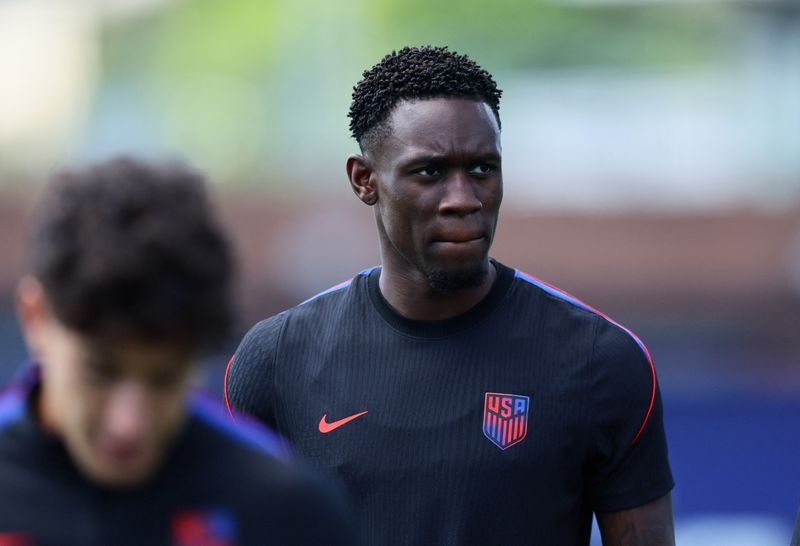
FIFA's decision to suspend Folarin Balogun's automatic one-match suspension has ignited a major governance crisis within world football, raising uncomfortable questions about the sport's independence from political pressure. The American striker would have missed the United States' World Cup last-16 encounter against Belgium after receiving a red card in the previous match, but FIFA's disciplinary committee intervened on Sunday to allow him to play, reportedly following a telephone conversation between U.S. President Donald Trump and FIFA President Gianni Infantino. The manoeuvre has exposed deep fractures in how football's governing body enforces its own regulations and exposed the vulnerability of international sport to high-level political influence.
The Belgian Football Association's formal objection struck at the heart of FIFA's justification, highlighting a fundamental contradiction embedded within the organisation's own rulebook. While FIFA pointed to Article 27 of its Disciplinary Code as providing discretionary grounds to suspend enforcement of sanctions, the Belgians noted that Article 66.4 explicitly mandates automatic suspension following any red-card dismissal during World Cup competitions. This is not an area of ambiguity or interpretation; the regulation exists precisely to ensure uniform treatment and prevent exactly the kind of exception-making that FIFA has now undertaken. The Belgian federation's measured but pointed response underscores how FIFA has essentially created a hierarchy of enforcement where the same rule produces different outcomes depending on circumstances and, perhaps, influence.
The integrity crisis extends beyond the technical application of rules to encompass the broader principle that underpins all competitive sport: fairness through consistent application of established norms. By suspending Balogun's ban, FIFA has effectively communicated to every player currently sidelined through suspension during the tournament that their circumstances might also have warranted similar discretionary treatment had they enjoyed access to equivalent political channels. This selective enforcement threatens the legitimacy of the entire competition because it suggests that compliance with rules depends not solely on what the rulebook says but on who is asking FIFA for exceptions and with what level of political leverage. Other national teams and players facing similar situations now have grounds to question why their suspensions were not equally suspended.
German Football Association President Bernd Neuendorf articulated what many in the football world feared most: the appearance, and possibly the reality, of direct political interference in sporting decisions. His explicit call for FIFA to issue a statement addressing reports of Trump's telephone call reflects the gravity with which established football institutions view this development. When the president of a major football nation feels compelled to publicly demand clarification about political conversations influencing sporting outcomes, it signals that FIFA's credibility has suffered material damage. The reputational cost to FIFA extends beyond this single tournament because it establishes a precedent that suggests political actors can successfully petition the world governing body to overturn decisions that favour their national interests.
The implications for Southeast Asian football and broader emerging-market participation in international competitions deserve careful consideration. If FIFA demonstrates that it will bend its own rules under pressure from powerful political figures, what does this mean for developing football nations seeking fair treatment in disciplinary matters or rules interpretation? The message sent is that access and influence matter as much as, or perhaps more than, the written code. For Malaysia and other regional football associations, this represents a troubling development that could undermine confidence in FIFA's impartiality when disputes arise involving their national teams. The precedent established here extends beyond this specific incident to shape expectations about how FIFA will handle future controversies involving powerful nations.
The Balogun situation also reveals how FIFA has struggled to maintain the distinction between its role as a neutral arbiter of football rules and its vulnerability to pressure from politically significant actors. Previous World Cup tournaments have seen players suspended for red-card offences without exception; the consistency of that enforcement formed the foundation of the rule's credibility. By introducing discretionary suspensions of suspensions, FIFA has acknowledged that its disciplinary framework contains mechanisms flexible enough to accommodate special pleading. The question now becomes not whether FIFA can suspend suspensions, but under what circumstances it will do so and according to what criteria. Without clear, publicly articulated standards, FIFA has essentially abandoned the pretence of rules-based governance in favour of case-by-case discretion.
The criticism from football administrators reflects genuine concern that this decision will taint any outcome of the Belgium match. Should the United States progress to the quarter-finals, that advancement will forever carry an asterisk, a technical accomplishment that nonetheless benefits from regulatory intervention that other teams have not received. This spoils the sporting narrative regardless of performance on the pitch, because the result will be inseparable from the decision-making that made Balogun's participation possible. Football's appeal rests partly on the meritocratic ideal that matches are decided by talent, tactics, and teamwork within a framework of equal rules. When that framework becomes negotiable, the sport itself suffers damage that extends far beyond a single tournament.
For Malaysian and regional observers, this incident provides a valuable lesson about the structural vulnerabilities of international sports governance when faced with pressure from powerful state actors. FIFA's institutional independence, already questioned due to concerns about corruption in bidding processes and tournament operations, has been further compromised by this decision. The incident suggests that even core sporting rules—the bedrock of competitive fairness—can be overridden through political channels rather than through transparent, rule-based procedures. This undermines confidence not only in FIFA but in the entire international sports system that claims to operate above national politics.
The ripple effects of FIFA's intervention will likely extend into future competitions as precedent and expectation reshape how national federations approach rule enforcement. If presidential telephone calls can suspend automatic suspensions, what other regulations might become subject to similar pressure? The answer should be none, but FIFA's actions have demonstrated that the organisation lacks either the institutional strength or the will to resist such pressure. This represents a significant step backward for sports governance globally and a troubling signal that political influence can successfully penetrate even the most fundamental aspects of international competition.

