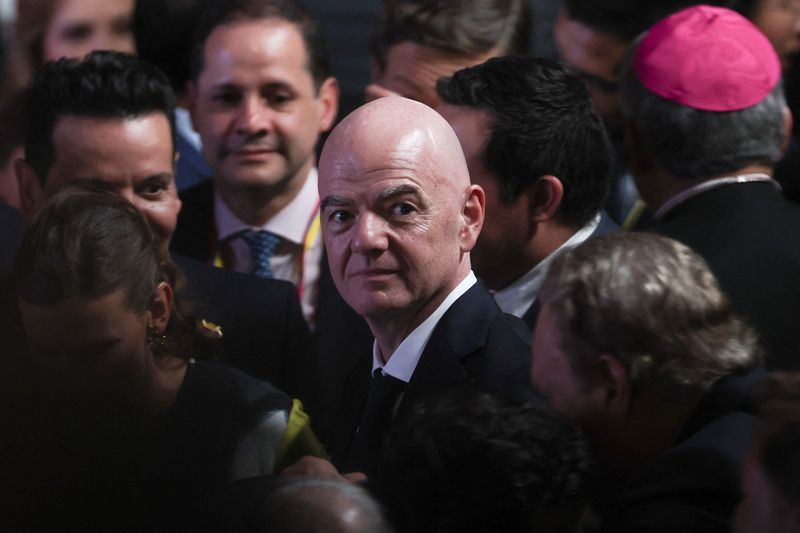
The world football governing body faces an unprecedented political crisis as three of its six continental confederations consider taking the extraordinary step of moving a no-confidence motion against President Gianni Infantino. UEFA, representing European football; the AFC, which oversees Asian football; and CONCACAF, covering North and Central America and the Caribbean, are weighing the drastic measure in response to Infantino's handling of a controversial proposal to privatise portions of World Cup commercial operations. In FIFA's 122-year history, no sitting president has faced such a formal parliamentary challenge, making any such vote a watershed moment for the organisation's governance.
At the heart of the brewing confrontation lies Infantino's ill-fated investment scheme, which sought to sell a minority stake in a newly created commercial entity to private investors. This entity would have controlled the lucrative broadcasting and sponsorship rights associated with the FIFA World Cup, football's most prestigious tournament. The proposal promised FIFA member associations access to up to $20 million in one-time capital for infrastructure development, coaching programmes, national team operations, grassroots initiatives, and women's football advancement. Yet the plan's presentation and the manner of its promotion triggered severe governance concerns among major football powers, who felt sidelined in the decision-making process and kept in the dark about critical details.
The three opposing confederations have orchestrated a coordinated public campaign highlighting what they characterise as fundamental breaches of trust within FIFA's leadership structure. Their criticism centres on transparency failures, inadequate consultation with member associations, and governance lapses that suggest Infantino pursued the initiative as a personal project without proper institutional oversight. For these confederations, the episode exposed deeper structural problems with how FIFA operates under Infantino's presidency, raising questions about accountability and the balance of power within international football's governing architecture. The crisis has intensified in recent weeks following high-profile departures within FIFA's executive ranks.
Kevin Lamour, FIFA's Chief Operating Officer, departed this month after having publicly criticised the investment proposal and alleged that FIFA staff had been systematically misled about the initiative's true nature and scope. His exit sent shockwaves through the organisation and emboldened Infantino's critics. Equally significant, FIFA Vice President Sandor Csanyi withdrew his support for the president this week, declaring that Lamour's departure represented the final breaking point in his confidence in Infantino's leadership. These internal defections suggest fractures within FIFA's senior management that extend beyond the investment controversy to encompass broader concerns about decision-making processes and institutional integrity.
Despite mounting pressure, Infantino retains considerable political resources and has publicly declared his intention to seek reelection at the scheduled FIFA Congress in March 2027. Critically, he maintains backing from Africa's confederation CAF and several Arab football associations, including Qatar and Morocco, the latter being a co-host of the 2030 World Cup. CAF President Patrice Motsepe stated last week that African nations continue to support Infantino's candidacy and that his future should ultimately be determined through the electoral process rather than extraordinary parliamentary procedures. This regional split reveals fault lines within FIFA's membership that reflect broader geopolitical alignments within international football and development disparities between wealthy European confederations and those in developing regions.
FIFA's financial position remains robust, with revenues for the 2023-2026 cycle projected to exceed $15 billion, with a substantial portion generated during World Cup years. This financial strength provides Infantino with leverage in negotiations with member associations and makes his removal a more complex proposition than it might appear on the surface. The organisation's commercial success, paradoxically, has become a point of tension; FIFA can point to its financial management while critics argue that such wealth should have been distributed more equitably and that major decisions should have been subjected to broader consultation rather than top-down implementation.
The mechanics of removing a sitting FIFA president present significant obstacles for the opposition. The FIFA Council possesses authority to convene an Extraordinary Congress, which can be triggered either by Council decision or upon written request from at least one-fifth of FIFA's 211 member associations. However, FIFA's statutes contain no explicit provision governing how a no-confidence vote would actually function or what its consequences would entail. This legal ambiguity means that any attempt to oust Infantino would venture into uncharted territory and potentially establish precedent for future contests over FIFA leadership. Moreover, sources close to the discussions indicate genuine hesitation among some opposition leaders: an unsuccessful challenge could inadvertently strengthen Infantino by demonstrating his continuing electoral support and bolstering his position ahead of the March 2027 presidential election.
No credible challenger has yet emerged to contest Infantino's expected reelection bid, with the nomination deadline set for November 18. This absence of an alternative candidate complicates matters considerably, as regional confederations must decide whether to pursue a no-confidence motion without a clear successor in mind or whether to first identify and mobilise support behind a replacement candidate. Some member associations from smaller nations have publicly signalled frustration with the opposition confederations, demanding transparency about what alternative leadership would actually deliver in concrete terms. Fleetwood Haiya, president of the Malawi Football Association, articulated this concern directly to Reuters, noting that smaller federations need to understand what specific benefits any alternative administration would bring beyond institutional reform.
Pressure on FIFA extends beyond voting member associations to include powerful commercial stakeholders wielding significant leverage despite lacking formal votes within FIFA's governance structure. The European Football Clubs association, chaired by Paris St-Germain president Nasser Al-Khelaifi and representing more than 800 clubs across the continent, has aligned itself with UEFA and other reform advocates. EFC has issued explicit warnings that member clubs could boycott upcoming men's and women's Club World Cups unless FIFA addresses governance concerns and rebalances the relationship between clubs and the international federation. Such commercial pressure from elite clubs could prove decisive, as these organisations generate enormous broadcast revenue and possess the credibility to follow through on threatened withdrawals.
Sports marketing expert Michael Payne, formerly of the International Olympic Committee, has articulated a crucial structural vulnerability in Infantino's position. Even if Infantino were to secure reelection through a simple majority vote drawing support primarily from smaller nations, the legitimacy and effectiveness of his leadership would be severely compromised if opposed by the world's leading football powers and commercial stakeholders. Payne noted the incongruity of FIFA successfully delivering the 2026 World Cup while simultaneously fracturing its internal governance structure, suggesting sponsors are questioning how an organisation can achieve such operational success yet simultaneously undermine its own institutional credibility. Notably, no major FIFA corporate sponsor has publicly criticised Infantino, reflecting the complex calculations surrounding the crisis.
For Malaysian and Southeast Asian observers, this FIFA crisis carries particular significance given the AFC's central role in the opposition movement. How the AFC navigates this standoff will influence not only FIFA's future governance but also Asian football's standing within international football politics. The controversy illuminates fundamental tensions between wealthy confederations seeking greater transparency and democratic participation in global football governance and developing nations concerned about equitable access to FIFA's substantial financial resources. The coming months will determine whether FIFA's regional confederations pursue an unprecedented no-confidence vote, fundamentally reshape the organisation's leadership, or accept continued governance under Infantino through the scheduled 2027 election cycle.

