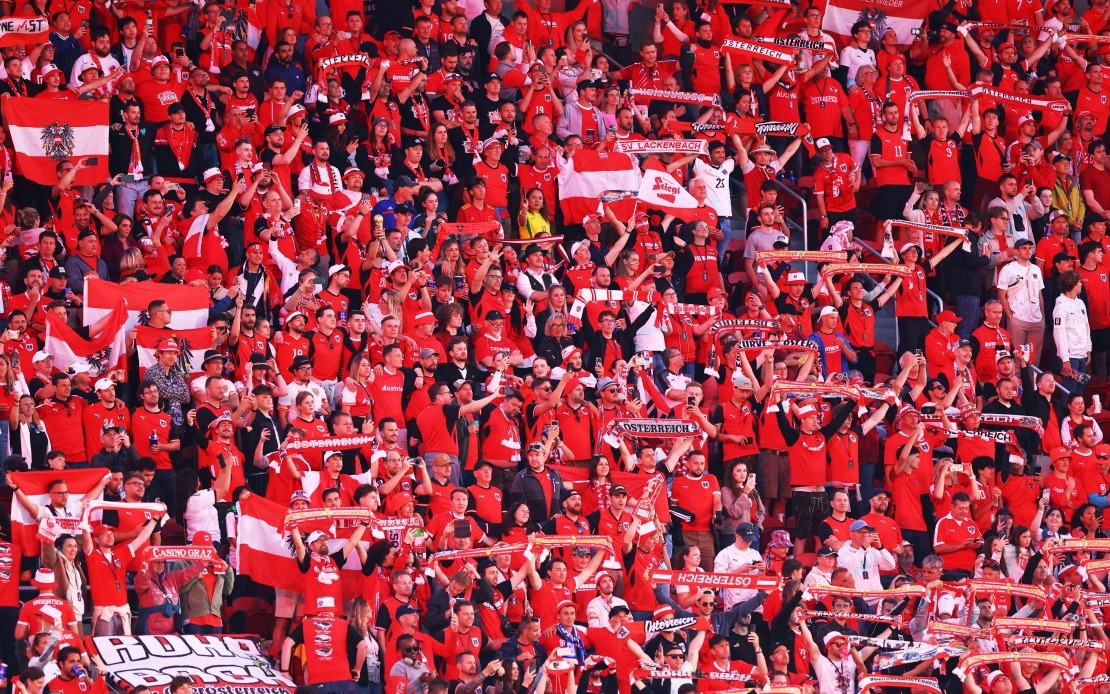
The FIFA World Cup's ambitious expansion to 48 teams has delivered striking numerical achievements that reshape the tournament's historical record books. According to FIFA's official tally released in late June, the group stage alone witnessed 4.644 million fans streaming through stadium gates across the United States, Canada, and Mexico—a commanding margin over previous tournaments that underscores the expanded format's commercial and popular appeal. The figure represents a dramatic increase from the 1994 World Cup held in the United States, which attracted 3.587 million spectators, lending credence to FIFA's strategic gamble that broadening participation would amplify global engagement.
The mathematics behind these numbers, however, require careful interpretation for regional audiences assessing the tournament's true success. While the absolute attendance tally climbs by roughly one million fans, the expanded format delivered substantially more matches—72 games in the group stage alone, double the 36 group-stage fixtures in 1994. This expansion explains why average per-match attendance actually declined to 64,508 compared with 68,991 in the 1994 edition. The difference reflects a fundamental tension within FIFA's growth strategy: spreading matches across more venues and teams inevitably dilutes crowd sizes at individual fixtures, even as total attendance swells. For Malaysian sports analysts observing how tournament formats influence domestic participation, this distinction carries implications for how larger competitions should be structured.
Beyond attendance figures, FIFA highlighted the offensive fireworks that characterised group-stage competition. The 48-team tournament produced 215 goals across its opening phase, yielding an average of three goals per match—a notable uptick from the 2022 Qatar tournament, which recorded 179 goals across 64 games at a 2.8-goal average. The elevated scoring rate suggests that the additional teams competing at varying skill levels created more mismatches and shooting opportunities than traditional formats. FIFA's narrative emphasises entertainment value, though observers might equally note that predictable one-sided scorelines represented a trade-off inherent in welcoming less established football nations into expanded competition.
Another milestone emerged when Canada's captain Alphonso Davies took the pitch during his nation's knockout-stage victory against South Africa. His entrance marked the 1,000th distinct player to feature in the tournament—a symbolic ceiling that underscores the sheer human scale of an expanded World Cup featuring 48 nations. The tournament mobilised 999 players across its participating teams, a figure that dwarfs previous editions and illustrates FIFA's commitment to inclusion alongside its commercial objectives.
The consumption patterns within stadiums reveal equally remarkable insights into fan behaviour and tournament economics. FIFA disclosed that venues sold 2.8 million beers and nearly one million bottles of water—figures that hint at the climatic conditions across North American host cities and the preferences of international audiences. The sale of 300,000 hot dogs during group-stage matches alone demonstrates the lucrative food-and-beverage ecosystem that major tournaments generate, providing substantial revenue streams for stadium operators and concessionaires beyond ticket sales.
The official fanfests established throughout all three host countries attracted over 5.5 million visitors, a figure that dwarfs the stadium attendance itself and indicates that World Cup fever extended well beyond ticketed venues. These public gathering spaces functioned as accessible alternatives for fans unable to secure match tickets, democratising participation in the tournament experience. Within these fanfests, visitors consumed more than 2 million alcoholic beverages and nearly 2 million soft drinks, generating additional commercial activity that bolstered host-nation economies during the tournament.
For Malaysia and Southeast Asia, these numbers carry instructive value regarding the scale of investment and infrastructure required to host major international sporting events. The expanded World Cup format demands not merely enhanced stadium facilities but the creation of extensive ancillary spaces, security frameworks, and logistical networks capable of processing millions of spectators across distributed venues. Should any Southeast Asian nation contemplate bidding for expanded FIFA tournaments or similar mega-events, the consumption figures and attendance patterns from this edition provide benchmarking data for feasibility planning.
The attendance and revenue metrics also underscore FIFA's successful gamble on expansion. Despite per-match averages declining, total stadium attendance climbed substantially, suggesting that the tournament's geographic reach and participatory scope generated sufficient new demand to offset the dilution effect. This finding may embolden FIFA to persist with the 48-team format, particularly if it continues demonstrating commercial viability across different continents. For regional sporting authorities monitoring global tournament trends, the World Cup's expansion signals that larger, more inclusive competitions can prove economically sustainable.
The goal-scoring statistics merit particular attention given their implications for match competitiveness and entertainment. The three-goal average, while higher than recent tournaments, may reflect imbalances inherent in expanded competition rather than uniform improvement in attacking play. Southeast Asian observers assessing their own national teams' participation in future expanded tournaments should recognise that increased goals do not necessarily indicate higher quality—rather, they often accompany wider talent gaps between participant nations.
Ultimately, FIFA's record-breaking group-stage statistics validate the commercial and logistical ambitions underlying tournament expansion. The 4.6 million spectators, the 300,000 hot dogs sold, and the 5.5 million fanfest visitors collectively demonstrate that enlarging the World Cup successfully amplifies its economic footprint and global reach. Yet they simultaneously confirm that expansion generates trade-offs in match quality and crowd density that merit consideration by stakeholders planning future tournaments.

