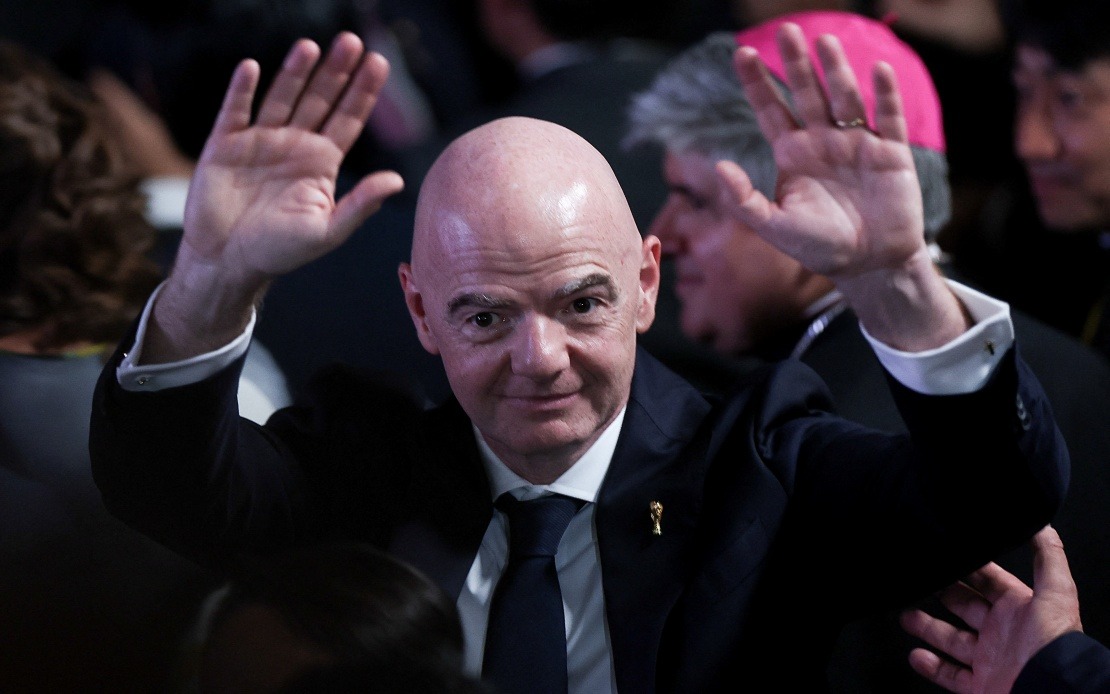
FIFA has moved to shield President Gianni Infantino from mounting criticism, issuing a statement late Saturday that draws a clear line on how presidential elections must be conducted within the organisation's framework. The declaration, released in Istanbul, comes as tensions within world football's leadership structure become increasingly visible, with questions swirling about the legitimacy and direction of Infantino's continued tenure at the helm of the global sport.
The governing body's forceful statement explicitly warns that any attempt to circumvent its established statutes and democratic procedures will not be tolerated or facilitated. This pointed language signals FIFA's determination to maintain control over the electoral process and prevent any challenges that might bypass formal channels. The statement emphasises that such procedures exist to protect the integrity of leadership transitions within the organisation, which oversees football competitions and governance across 211 member associations worldwide.
FIFA grounded its support for Infantino by highlighting that he was "democratically elected by FIFA's Member Associations" and continues to hold their mandate. This appeal to procedural legitimacy represents a core argument in Infantino's favour, particularly important given his pursuit of a fourth term as president. However, the very fact that FIFA felt compelled to issue such a emphatic statement suggests that this democratic foundation is being questioned or challenged in some quarters, indicating that consensus around his leadership is fracturing.
The timing and tone of FIFA's statement become clearer when considering recent expressions of support from major continental confederations. South American Football Confederation (CONMEBOL) and the Confederation of African Football (CAF) have both recently affirmed their backing for Infantino, according to FIFA's account. These endorsements from two of the world's most influential football confederations carry considerable weight, particularly given the regional diversity they represent. However, the fact that FIFA needed to cite these specific voices suggests that not all confederations share the same enthusiasm for the current president.
FIFA's characterisation of opposition to Infantino as a "concerted and ongoing effort" by unnamed individuals to undermine the organisation carries significant implications. By framing criticism as part of a coordinated campaign rather than as legitimate institutional dialogue, FIFA attempts to delegitimise the concerns being raised. The organisation accuses critics of attempting to achieve through allegations and insinuation what they cannot accomplish through democratic means, essentially suggesting that critics are bypassing proper procedures.
The statement directly engages with what FIFA describes as "unsubstantiated assertions and demonstrably false claims" concerning both the organisation and its president. FIFA's insistence that repetition does not make an allegation true, and that speculation should not be presented as fact, suggests that particular narratives are circulating within football governance circles. While FIFA does not specify which claims it considers false or insubstantiated, the emphasis indicates that serious questions about Infantino's leadership are being widely discussed.
Defending Infantino's record, FIFA points to his three decades of involvement in European and world football, arguing that he has expanded access, resources, and opportunities throughout the sport. This emphasis on tangible achievements and expansion suggests that FIFA views his tenure as fundamentally transformative for global football governance. The argument that progress has been made under his leadership becomes a cornerstone of the case for his continuation, though it does not address specific criticisms that have apparently prompted this defence.
The organisation's acknowledgement that it "welcomes legitimate scrutiny" appears designed to preempt accusations that FIFA is suppressing dissent or preventing democratic debate. However, the immediate qualifier—that scrutiny cannot be a "licence to distort facts, amplify unsubstantiated allegations or manufacture distractions"—effectively narrows the scope of what FIFA considers legitimate. This framing places FIFA in the position of determining which questions constitute legitimate scrutiny and which constitute distortion, a considerable concentration of power over internal discourse.
For Malaysian and Southeast Asian observers of global football governance, these internal divisions carry relevance beyond the personality of any individual leader. The fractures becoming visible within FIFA suggest deeper questions about representation, regional power dynamics, and the future direction of world football administration. The explicit mention of CONMEBOL and CAF support, combined with the references to consultations with member associations and confederations worldwide, hints that different regions may hold divergent views about Infantino's presidency. Asian football confederations and associations, including the Football Association of Malaysia, occupy a specific position within this global governance structure and may face pressure to align with particular positions.
The statement's emphasis on FIFA's responsibility to 211 member associations reflects a commitment to maintaining the organisation's universal character and operational integrity. Yet the very existence of this statement, with its defensive posture and accusations of coordinated undermining, suggests that internal consensus about leadership direction may be fragmenting. This division becomes particularly significant as FIFA approaches presidential elections, when member associations must decide whether to support Infantino's fourth term or consider alternative candidates.
The broader context reveals a world football governance system operating under considerable internal pressure. Questions about leadership legitimacy, electoral procedures, and the scope of presidential power appear to be emerging across multiple regions and constituencies. FIFA's response, while defending its institutional autonomy and democratic frameworks, simultaneously acknowledges that these frameworks themselves are becoming a point of contention. The organisation's insistence on procedural regularity may ultimately depend on whether sufficient member associations continue to accept the legitimacy of those very procedures.
As football's global governing body navigates these divisions, the implications extend beyond administrative structures to touch fundamental questions about representation and accountability. The coming presidential election will serve as a critical test of whether member associations continue to support Infantino's vision for FIFA's future, or whether the divisions currently visible within world football leadership translate into a significant challenge to his political position. The intensity of FIFA's defence suggests that the outcome of this election is far from certain.

