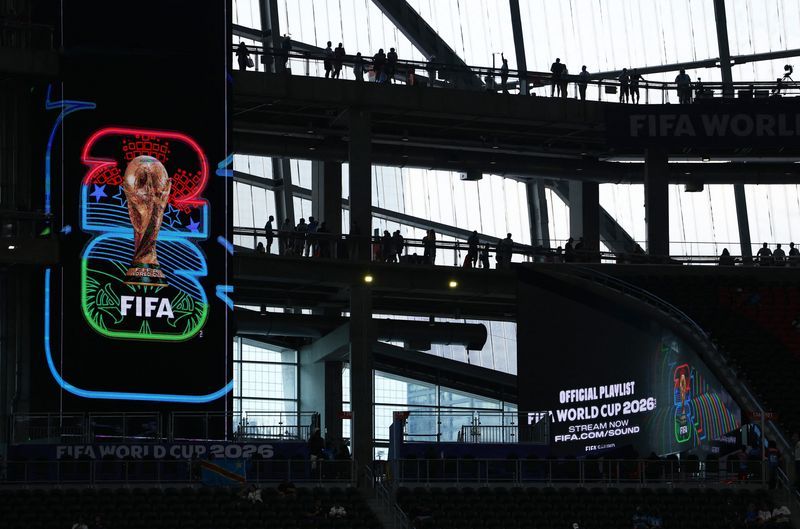
FIFA has revealed a troubling escalation in online abuse directed at players, officials and teams during this year's World Cup group stage, with its monitoring service detecting 89,000 abusive posts across social media platforms. The finding represents a stark 13-fold jump from the corresponding phase of the 2022 tournament held in Qatar, underscoring a worsening problem as the sport's global audience expands and digital engagement intensifies.
The scale of monitoring required to uncover this abuse was itself substantial. FIFA's Social Media Protection Service (SMPS) examined over six million individual posts and comments throughout the group stage—itself a 33% increase in the volume of content scrutinised compared to Qatar 2022. From this massive dataset, the service's moderation team identified approximately 225,000 posts warranting human review before ultimately confirming 89,000 as genuinely abusive and implementing enforcement measures.
Among the confirmed abusive content, racial attacks proved particularly prevalent and disturbing. Approximately 11% of all detected offensive messages carried racial motivation, representing a concerning 3 percentage point increase from the group stage four years earlier. FIFA characterised this trend as reflecting a "significant increase in the objectively worst, most offensive material" circulating on major social platforms, suggesting not merely quantitative growth but qualitative deterioration in the nature of abuse.
The expanded tournament format contributed substantially to these figures. The decision to enlarge the World Cup from 32 participating nations to 48 teams naturally expanded the pool of supporters engaging online, generating greater volumes of content to monitor and proportionally more opportunities for abuse to flourish. Nevertheless, this structural explanation does not diminish the seriousness of the underlying problem or the intensifying toxicity within digital football communities.
FIFA's response infrastructure relies on a hybrid approach combining artificial intelligence detection with trained human moderators. The SMPS leverages technology to scan for racist, discriminatory and threatening language while simultaneously protecting followers of players and teams from inadvertent exposure to such material. Beyond reactive moderation, the service has begun adopting a proactive stance by automatically concealing approximately 181,000 hateful comments from team accounts before they achieved wider visibility.
The moderation workload extended well beyond abuse detection. Over two million comments required human or algorithmic review during the group stage alone—encompassing spam, bot-generated content and fake account activity—marking a fourfold increase from 2022. This expanded scope reflects both platform growth and the deliberate deployment of inauthentic engagement tactics by various actors seeking to amplify divisive content or manipulate discourse surrounding the tournament.
Enforcement escalation represents another dimension of FIFA's response. Approximately 1,000 accounts were flagged for detailed investigation beyond standard removal procedures, suggesting coordinated or particularly egregious patterns warranting deeper scrutiny. More significantly, FIFA stated that over 100 cases have been prepared as potential legal referrals to law enforcement authorities, demonstrating that the federation recognises certain abusive content as potentially criminal rather than merely policy-violating.
The SMPS offers access to all participating teams, players, coaches and match officials, institutionalising protection mechanisms at tournament level. This availability across the entire competition ecosystem reflects FIFA's positioning of digital safety as integral to competitive integrity and player welfare. However, the modest uptake or effectiveness of such protections remains unclear from available information, raising questions about how comprehensively teams and individuals utilise available defences.
Real incidents illustrate the concrete impact of this phenomenon. Netherlands players Justin Kluivert, Quinten Timber and Crysencio Summerville faced sustained racist abuse on social platforms following their penalty misses during the knockout shootout defeat against Morocco. Such high-profile targeting of athletes over sporting performance demonstrates how competitive disappointment becomes a flash point for deploying existing racist animosities, amplified through digital channels that offer anonymity and reach.
For Malaysian and Southeast Asian readers, the World Cup's expanding digital footprint carries particular resonance. As football enthusiasm grows across the region and more supporters engage through social media, the transmission mechanisms for international abuse and toxicity gain potency within local communities. The 13-fold surge signals that as global audiences diversify geographically, the platforms themselves may amplify pre-existing prejudices rather than dissolving them through exposure to international perspectives.
The implications extend beyond tournament football. FIFA's experience demonstrates that major sporting events increasingly function as focal points for organised or spontaneous hateful activity online, regardless of event size or location. The fact that expansion to 48 teams coincided with exponential abuse growth suggests that inclusive expansion, while valuable for competition and opportunity, simultaneously creates larger surfaces for toxicity to propagate.
Moving forward, FIFA's evolution of enforcement—including evidence collection for law enforcement referral—signals recognition that platform moderation alone proves insufficient. Genuine accountability requires coordination between sporting bodies, social media companies, and national legal systems. This partnership model remains nascent and unevenly developed, particularly in regions where digital rights frameworks remain underdeveloped or enforcement capacity is limited.

