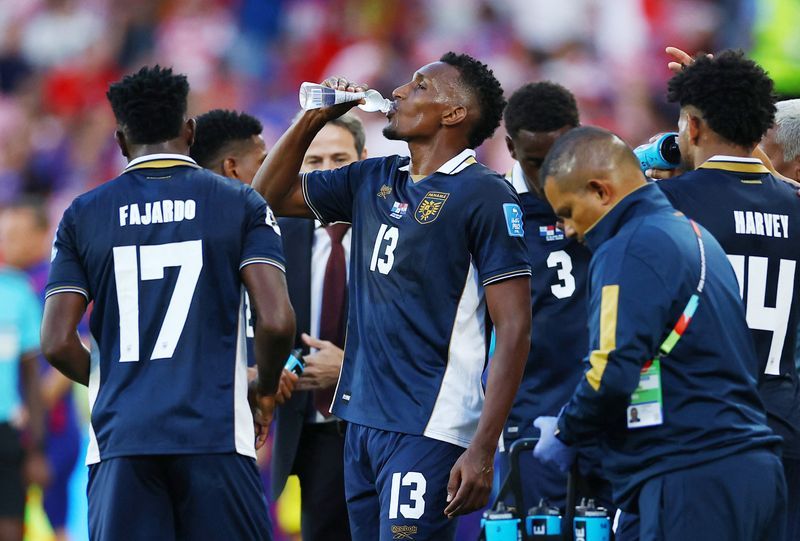
FIFA president Gianni Infantino has moved to silence growing criticism of mandatory hydration breaks at the World Cup, asserting that the measure stems entirely from sporting requirements and carries no financial motive for football's governing body. The three-minute stoppages, mandated at the 22nd and 67th minutes of each match, have faced sustained pushback from players, coaches and supporters since the tournament's opening rounds, with detractors questioning both their necessity and their underlying rationale.
The introduction of these breaks ostensibly aims to protect player welfare during matches contested in the heat of North America. However, the timing has coincided with a significant expansion of advertising opportunities for broadcasters, who have capitalised on the enforced stoppages to air additional commercials. This parallel development has fuelled speculation that financial considerations played a role in implementing the rule, despite FIFA's insistence otherwise. Infantino addressed these concerns directly, emphasising that FIFA receives no incremental revenue from the hydration breaks as all commercial arrangements were finalised well before their introduction.
From a tactical perspective, the breaks have fundamentally altered how matches unfold. Coaching staff now possess designated windows to deliver fresh instructions and make in-game adjustments without consuming their allocation of substitutions. England manager Thomas Tuchel has been particularly vocal in his criticism, arguing that the interruptions undermine the essential rhythm of football and transform its basic character. His sentiment echoes concerns raised by Uruguay coach Marcelo Bielsa, who contends that dividing matches into shorter segments through artificial stoppages removes a defining feature of the sport—its continuous, flowing nature.
Yet support for the measure is not entirely absent. Spain's Luis de la Fuente and Netherlands captain Virgil van Dijk have acknowledged the legitimate health benefits when ambient temperatures are genuinely extreme, though they have highlighted an apparent inconsistency in the rule's application. Both have questioned why hydration breaks remain mandatory in cooler climates and at enclosed venues where heat poses minimal risk to player safety. This selective enforcement, they suggest, undermines the stated rationale of protecting athletes from dangerous conditions.
Infantino's defence of the breaks anchors itself on two principal arguments. First, he emphasises that the World Cup's compressed calendar—39 days spanning potentially eight matches per team—creates exceptional physical demands that justify additional rest opportunities. This scheduling reality, he argues, distinguishes the World Cup from regular league competitions and justifies interventions that might otherwise seem unnecessary. The tournament's intensity and rapid succession of fixtures means cumulative fatigue poses genuine risks to player health and safety.
Second, and perhaps more significantly for competitive fairness, Infantino stresses that uniform application of the rule ensures all teams face identical conditions. Without mandatory breaks in hot venues, he suggests, coaching staff in matches played in excessive heat would gain a strategic advantage through access to tactical reset opportunities unavailable to their counterparts in cooler conditions. This inconsistency would create an uneven competitive playing field based partly on geography and weather rather than sporting merit alone.
The FIFA president has also pushed back against contentions that the breaks diminish match intensity or player performance levels. According to his assessment, the stoppages have not noticeably reduced the tempo or quality of play, with athletes maintaining competitive standards throughout full 90-minute encounters. This claim, if substantiated, would suggest that the breaks serve their intended wellness function without compromising the spectacle itself.
For Malaysian and Southeast Asian sports observers, this debate carries particular resonance. The region's tropical and subtropical climate makes heat-related health risks a genuine concern in football, a sport of immense popularity across Malaysia, Singapore, Indonesia and Thailand. The principle of protecting athlete welfare in extreme conditions aligns with established sporting ethics, yet the execution and scope of such measures remain legitimately debatable. Whether mandatory breaks prove necessary universally or should be applied selectively based on verified environmental conditions remains an open question.
The controversy also highlights broader tensions in modern football between sporting integrity, commercial interests, and player welfare—concerns that resonate globally but carry particular weight in developing cricket and football markets where broadcasting agreements represent crucial revenue sources. The manner in which FIFA has balanced these competing pressures will likely influence how other international sporting bodies approach similar questions in the future.
Ultimately, Infantino's statement attempts to reframe the hydration breaks as a prudent safeguarding measure rather than a cynical commercial vehicle. Whether this characterisation persuades the sceptics among coaches, players and fans remains uncertain. What seems clear is that any modification to football's fundamental laws demands robust justification and transparent reasoning—commodities that have been in short supply throughout this particular debate.

