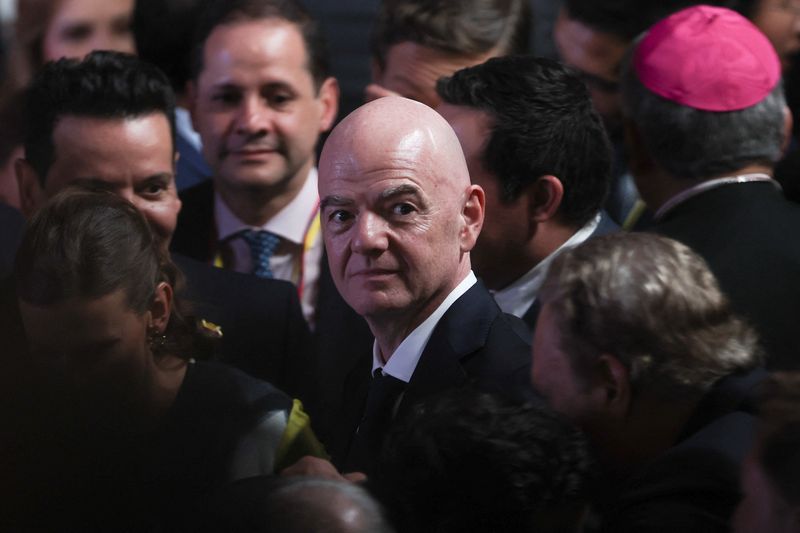
The fate of FIFA president Gianni Infantino will ultimately rest in the hands of the organisation's 211 member associations when they gather for elections in March 2027, according to Confederation of African Football president Patrice Motsepe, who has thrown his weight behind the embattled leader amid mounting international criticism.
Infantino currently faces significant pressure from three major continental confederations—UEFA, AFC, and CONCACAF—which have publicly denounced his leadership and called for his resignation. Their opposition was triggered by his controversial attempt to introduce private investment into FIFA competitions, an initiative that has become deeply contentious within the global football community. The failed privatisation bid has exposed deep divisions within FIFA's governance structure and raised fundamental questions about the direction of international football administration.
Motsepe's intervention represents a crucial counterweight to the rebellion brewing in Europe, Asia, and North America. The CAF president, speaking to Sky News, argued that the democratic electoral process represents the appropriate forum for resolving questions about FIFA's leadership, rather than allowing regional confederations to effectively determine outcomes through public pressure campaigns. His position underscores a growing divide between African football's leadership and their counterparts in wealthier regions, reflecting broader geopolitical and economic tensions within the global game.
The March 18 congress scheduled for Rabat, Morocco carries particular significance as it will host FIFA's 77th general assembly. This venue selection itself carries symbolic weight, positioning an African nation as the neutral ground where this leadership battle will unfold. For Malaysian observers and Southeast Asian stakeholders, the contest carries implications for AFC's influence within FIFA and the balance of power between continental confederations that directly affect regional competition formats and broadcasting arrangements.
Motsepe's defence of due process reflects a nuanced position that acknowledges the legitimacy of scrutiny while defending institutional procedures. He emphasised that leaders must remain accountable and open to interrogation regarding their governance and decision-making, yet insisted that FIFA possesses established mechanisms through which grievances should be channelled. This framing positions him as a voice for institutional stability and proper procedure, even as the organisation faces its most serious internal crisis in recent years.
The CAF president's call for rival candidates to emerge represents a practical framework for resolving the current impasse. Rather than viewing Infantino's potential departure as a foregone conclusion or accepting his position as unassailable, Motsepe suggested that the electoral system itself provides the appropriate venue for competition between candidates. This approach implicitly challenges critics to convert their complaints into formal candidacies and make their case to the global membership, raising the stakes and demanding greater clarity about alternative visions for FIFA's future.
Motsepe's emphasis on unity and cooperation carries particular weight given African football's economic dependence on FIFA's financial distributions and governance support. Africa as a continent receives substantial revenue through World Cup qualification tournaments and continental competitions whose formats and schedules remain subject to FIFA decisions. Any lasting fracture in FIFA's management structure could potentially affect these revenue streams and competitive opportunities, making CAF's supportive stance strategically calculated as well as principled.
The CAF president's reaffirmation that Infantino retains African football's backing signals that Infantino maintains support across one of FIFA's largest bloc of voting members. Africa controls over one-fifth of FIFA's member associations, rendering their collective position decisive in any electoral contest. This backing provides Infantino with a substantial foundation heading into what promises to be a contentious campaign, even as his position faces unprecedented challenge from traditionally powerful confederations.
The underlying tension reflects fundamental philosophical differences about FIFA's role and structure. Infantino's privatisation initiative represented a bold attempt to modernise FIFA's revenue model and potentially increase investment in elite competitions. The scheme's rejection by major confederations suggests resistance to reforms that might privilege top-tier competitions or alter the distribution of resources within the global football ecosystem. These conflicts will likely dominate debate in the approach to next year's elections.
For Southeast Asian football, the outcome of FIFA's internal power struggle carries practical consequences. Any changes to FIFA's governance or leadership could affect AFC's strategic positioning, the format of continental competitions, and the mechanisms through which smaller nations secure resources and development support. The region has historically benefited from FIFA's developmental programmes and capacity-building initiatives, making stable governance an important consideration.
Motsepe's invocation of non-negotiable principles—due process, governance, and legality—positions the electoral process as the forum where these competing values can be reconciled. His argument essentially holds that Infantino deserves fair treatment and the opportunity to defend his record before the membership, while simultaneously asserting that FIFA members possess the ultimate authority to decide whether he merits another term. This framing attempts to bridge the gap between those demanding immediate change and those resistant to what they view as coordinated pressure from powerful confederations.
The March 2027 election will ultimately serve as a referendum not merely on Infantino personally, but on FIFA's direction following years of successive crises and reforms. Motsepe's call for letting the democratic process determine the outcome represents an appeal for institutional legitimacy and collective ownership of FIFA's future. Whether this approach succeeds in resolving the current conflict or merely postpones deeper institutional reckoning remains to be seen.

