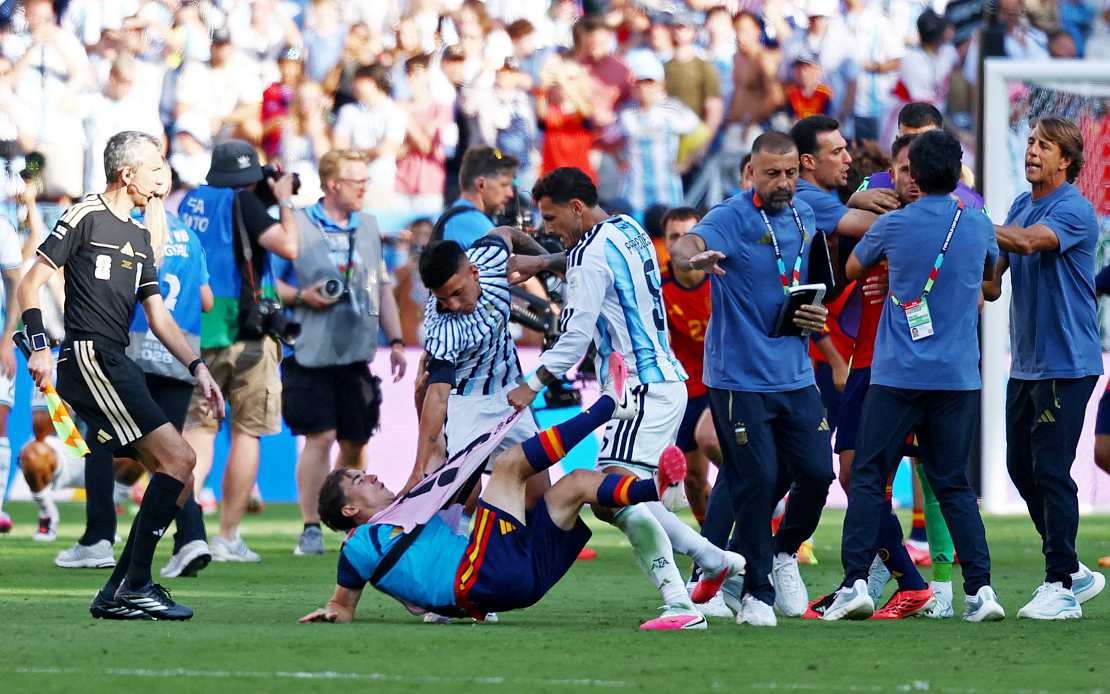
FIFA has initiated a formal investigation into Argentina's behaviour during and after their World Cup final encounter with Spain, signalling the football governing body's determination to enforce strict standards around player conduct and off-field incidents. The probe follows the match commissioner's detailed report, which documented several concerning moments that violated the organisation's disciplinary code, prompting the appointment of a dedicated Disciplinary and Ethics Prosecutor to examine the full scope of potential infractions.
The most immediate trigger for the investigation was an altercation involving Argentina midfielder Leandro Paredes, who was observed attempting to strike Spanish players as they celebrated their victory on the pitch in New Jersey. This aggressive behaviour, captured in real time and witnessed by thousands of spectators and millions watching globally, represented a stark departure from the decorum expected of elite athletes competing at sport's highest level. The incident became impossible for FIFA to overlook, given its prominent visibility and the clear potential violation of conduct regulations.
Argentina's physical playing style throughout the tournament had already drawn considerable scrutiny from match officials and sporting commentators. During their semi-final triumph over England, the South American side attracted further criticism for their robust and at times overly aggressive approach to the game, which culminated in midfielder Enzo Fernandez receiving a red card after accumulating two yellow cards. This pattern of disciplinary issues created a concerning narrative around Argentina's tournament conduct that extended beyond isolated incidents to suggest systemic tactical and behavioural problems.
Beyond the on-pitch aggression, FIFA is also examining whether Argentina's players crossed the line into political expression by displaying a banner proclaiming Argentine sovereignty over the Falkland Islands following their victory against England. This action potentially contravened Article 34.3 of the tournament regulations, which restrict players' ability to make political statements or gestures during matches and celebrations. The distinction between patriotic expression and prohibited political conduct remains contentious in international sport, and FIFA's handling of this matter will have broader implications for how other nations navigate similar situations.
The precedent set by FIFA's own disciplinary record is instructive. Following a friendly match against Slovenia in 2014, Argentina's football association faced financial penalties for a similar sovereignty banner incident, demonstrating that the organisation has previously acknowledged such actions as rule violations. However, UEFA, European football's governing body, has taken notably more stringent positions on comparable infractions, imposing match bans rather than merely financial sanctions. When Spain's Rodri and Alvaro Morata engaged in chanting about Spanish claims to Gibraltar after Euro 2024, they received one-match suspension, setting a precedent that could influence FIFA's eventual ruling.
FIFA's historical approach to political and social gestures has been notoriously restrictive, reflecting an institutional philosophy that prioritises competitive neutrality above other considerations. During the 2022 World Cup in Qatar, the English Football Association was explicitly warned that captain Harry Kane would face immediate sporting consequences, beginning with a yellow card, should he wear the 'OneLove' rainbow armband in support of LGBTQ+ rights. This warning occurred in a country where homosexuality remains criminalised, highlighting FIFA's willingness to suppress even advocacy for human rights when it conflicts with host nation sensibilities.
For Malaysian and Southeast Asian readers, this investigation carries relevance beyond simple sporting curiosity. Football governance structures and how international bodies enforce discipline shape the competitive environment for regional clubs and players. Argentina's potential violations and FIFA's response will establish precedents affecting how Asian federations and their players navigate similar situations in future tournaments. The balance FIFA strikes between enforcing conduct standards and permitting cultural or political expression will influence regional football culture and player behaviour across the region.
The investigation also underscores broader tensions within international sport between maintaining competitive integrity and allowing athletes space for genuine cultural or political expression. Argentina's passionate football culture, deeply intertwined with national identity and historical grievances, occasionally generates behaviours that international authorities view as transgressions. Yet distinguishing between acceptable patriotic passion and prohibited political conduct remains genuinely difficult, and FIFA's eventual determination will reflect the organisation's evolving understanding of where these boundaries lie.
The Disciplinary and Ethics Prosecutor's inquiry will require detailed examination of video evidence, witness statements, and contextual factors surrounding each alleged breach. FIFA has indicated that further details will be released once the prosecutor completes their investigation and submits findings to the Disciplinary Committee. This transparent communication approach suggests the organisation recognises the high-profile nature of the proceedings and the global attention they will receive.
The timeline for FIFA's decision remains unclear, but the appointment of a dedicated prosecutor indicates the organisation considers the alleged violations sufficiently serious to warrant thorough investigation rather than summary dismissal. Argentina's response to the inquiry will likely involve formal submissions defending their players' conduct and challenging any characterisations of intentional rule-breaking. The eventual outcome will establish important precedents for how FIFA manages disciplinary matters in high-profile tournaments and could influence player behaviour at future competitions across all confederations.

