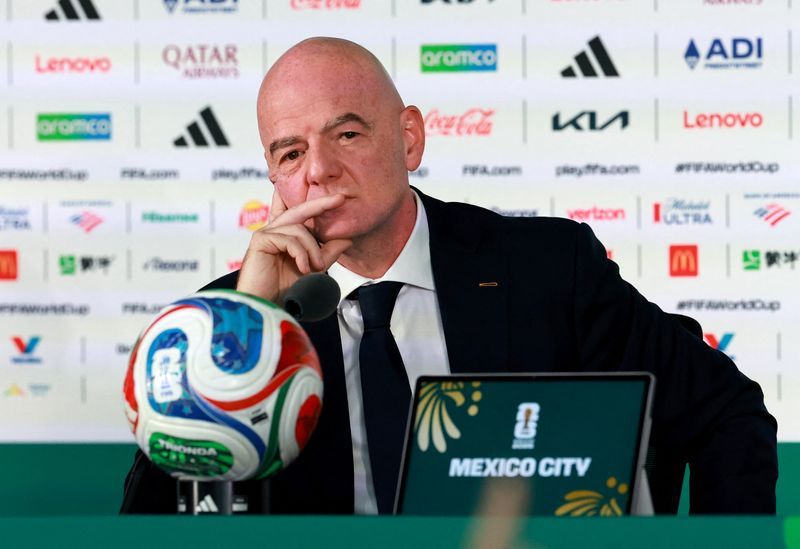
FIFA's attempt to close the chapter on its most divisive internal crisis under Gianni Infantino's watch appears premature, despite a carefully orchestrated show of solidarity in Rabat this week. The governing body's leadership rallied behind the president in public statements, yet the underlying tensions over how world soccer's most important decisions are made show no signs of dissipating. The controversy surrounding the hastily withdrawn proposal to monetise future World Cup commercial rights has exposed fundamental rifts in FIFA's institutional culture that a single apology and promise of review are unlikely to heal before the 2027 presidential election.
FIFA's conciliatory statement issued after Wednesday's gathering attempted to reset the narrative around one of the most damaging episodes of Infantino's tenure. The organisation acknowledged that handling of the proposed World Cup commercial deal "should have been different" and apologised to its 211 member associations for failing to properly include them in discussions. This represented a significant retreat from FIFA's earlier posturing, when the governing body defended its actions as procedurally sound. Yet the speed and tone of the reversal underscores how severely the backlash damaged the institution's credibility among key stakeholders who felt deliberately marginalised from decision-making processes that would fundamentally reshape world football's commercial landscape.
The scale of the revolt that forced FIFA's hand should not be underestimated. National federations, continental confederations, professional leagues, and club associations across multiple regions united in their criticism—a rare occurrence in FIFA's fractious politics. European Leagues, representing over 1,300 clubs across the continent, specifically flagged the unrealistic four-week timeline given to assess a separate proposal to expand the 2030 World Cup from 48 to 64 teams. This pattern of presenting stakeholders with fait accompli decisions rather than genuinely consulting them before major announcements has become characteristic of FIFA's strategic approach, and it extends far beyond a single commercial proposal. The confederation bodies view themselves as partners in global football governance, yet increasingly feel treated as afterthoughts to be notified of decisions already made at FIFA headquarters.
What makes this moment particularly consequential for Malaysian and Southeast Asian football is the regional dimension of the governance debate. The Asian Football Confederation, which oversees football development across the region, has joined UEFA and CONCACAF in questioning Infantino's leadership style and FIFA's institutional practices. For developing football nations in Southeast Asia, the stakes are particularly high. These countries depend heavily on FIFA's technical and financial support programmes, which means their confederations must balance legitimate governance concerns against the practical reality that challenging FIFA's power structure could affect their access to crucial development funding. This asymmetry in power dynamics remains unresolved despite this week's mea culpa from FIFA's leadership.
Infantino himself moved swiftly to manage the political fallout, with particular attention to securing endorsements from key power brokers within FIFA's governance structure. The Secretary General Mattias Grafstrom's public backing, following an internal memo acknowledging the "sad and reproachable" nature of recent events, provided crucial institutional legitimacy. Infantino's strategic deployment of photo opportunities—most notably appearing beside Grafstrom at a women's Africa Cup of Nations match, both smiling and giving thumbs-up gestures—exemplified the carefully choreographed nature of this week's reconciliation. Such calculated messaging suggests that while the immediate political crisis may have been contained ahead of March's presidential election in Morocco, the underlying governance fractures remain unhealed.
Yet the broader calculus favours Infantino's continuation in office. His support base among smaller associations, particularly across Africa and Asia, remains solid, and no credible challenger has emerged to contest the presidential election. This reflects a fundamental reality in FIFA politics: developing nations, which constitute the majority of the organisation's membership, view Infantino as a benefactor who has substantially increased development funding and invested in football infrastructure across their regions. The World Cup expansion proposals and commercial initiatives, though controversial among elite footballing nations in Europe, are genuinely popular among developing football nations hoping to host major tournaments. This explains why the political revolt, despite its breadth and intensity, did not translate into a genuine threat to Infantino's position. He has successfully built a constituency that prioritises access to FIFA resources above concerns about institutional transparency and decision-making processes.
The promised governance review scheduled for presentation at the next Council meeting will prove crucial in determining whether this crisis catalyses genuine institutional reform or merely produces performative adjustments. FIFA's initial position—that all actions complied with existing regulations and errors related only to "process and communication"—reveals a fundamental defensive posture. The organisation claims it operated within its rulebook, suggesting that the real problem lies not with FIFA's governance framework but with how it was applied. This framing effectively shifts responsibility for the crisis away from systemic institutional failures and onto individuals. However, the breadth of stakeholder criticism suggests that the problem runs deeper than communication failures. When multiple confederations, professional leagues, and national associations independently conclude that their voices are excluded from major decisions, the issue becomes one of institutional design rather than implementation.
For Malaysian football governance, this international crisis has instructive implications. The Football Association of Malaysia and the Asian Football Confederation increasingly find themselves navigating between loyalty to FIFA's institutional framework and pressure to advocate for member interests. The governance debates now consuming FIFA's politics—around transparency, stakeholder consultation, and decision-making timelines—mirror concerns that have periodically emerged within regional football governance structures. The international football ecosystem's hierarchical power dynamics, with FIFA at the apex and national federations dependent on its resources and legitimacy, constrain the ability of regional bodies to challenge institutional practices. This week's show of solidarity with Infantino masks rather than resolves these structural inequalities.
The commercial rights proposal that triggered this crisis will not be revived in its original form. However, FIFA's fundamental strategic objective—finding new revenue streams to fund development programmes and tournament expansion—will certainly resurface. Future proposals on similar themes will inevitably face heightened scrutiny and demands for consultation that did not previously exist. The cost of this week's crisis, measured in damaged institutional credibility and fractured relationships with confederations and leagues, has reset expectations around how FIFA conducts major strategic initiatives. Any proposal involving commercial strategy, tournament expansion, or institutional reforms will now encounter significantly greater pressure for transparency, evidence of genuine consultation, and documented accountability measures. This represents a genuine constraint on FIFA's autonomy, even if Infantino's political position remains secure.
The reality confronting world football governance is that Infantino can weather this immediate crisis and secure another term as president, but FIFA can no longer operate as though its decisions require only rubber-stamp approval from member associations. The Rabat meeting this week demonstrated that the organisation recognises this new reality, hence the apology and promise of process review. Yet whether this represents a fundamental recalibration of FIFA's institutional culture or merely tactical concessions remains unclear. What is certain is that the governance debate will persist, potentially intensifying as the 2030 World Cup approaches and major commercial and competitive decisions must be finalised. The window for genuine institutional reform may be closing, and FIFA's response to that challenge will shape not only how world football is governed but also the nature of footballing opportunities available to developing nations across Southeast Asia and beyond.

