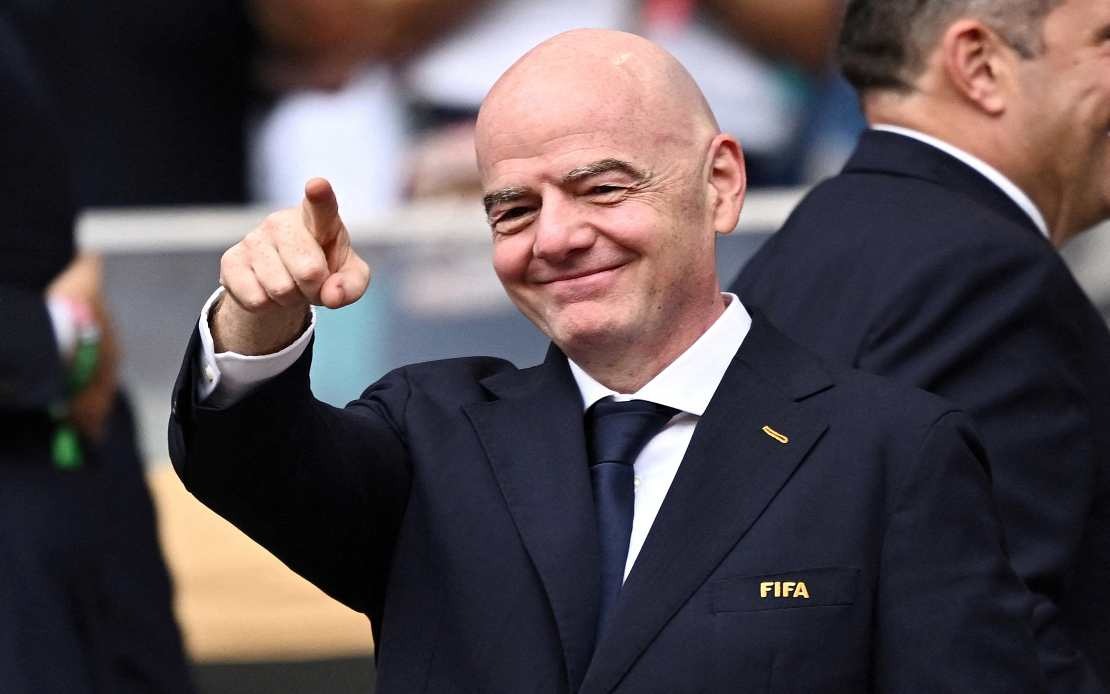
FIFA has come under scrutiny for sending pre-drafted letters to football associations worldwide that praised President Gianni Infantino's leadership and accomplishments, according to multiple reports. The letters, which contained pre-filled names and signatures of association presidents, were circulated before this year's World Cup tournament held across the United States, Mexico and Canada. The move has raised questions about FIFA's transparency and the authenticity of organisational endorsements during what is shaping up to be a contentious re-election campaign.
The correspondence highlighted Infantino's purported achievements during his tenure, specifically emphasising his initiatives in expanding football infrastructure across member nations and his advocacy for women's football development globally. However, the practice of distributing ready-made letters with pre-filled signatures suggests a coordinated campaign rather than organic support from independent football associations, drawing criticism from governance watchdogs and sports administrators who question the legitimacy of such endorsements.
Not every national football association received these letters, indicating a selective distribution strategy. The partial rollout raises further questions about FIFA's methodology in gauging genuine support for Infantino's leadership among its membership. This selective approach underscores potential inconsistencies in how the governing body communicated with its constituent members during the re-election period.
The controversy surrounding Infantino's leadership intensified significantly following FIFA's announcement in July of an ambitious fundraising plan. The organisation proposed selling approximately 20 per cent of a newly created entity that would control FIFA's media and commercial rights, including those tied to the World Cup tournament. The initiative was designed to generate USD 4.2 billion for FIFA's coffers, dramatically expanding the organisation's financial resources and influence within world football.
Investment funds reportedly connected to Joshua Kushner, brother of Jared Kushner who serves as son-in-law to United States President Donald Trump, emerged as a potential buyer of this stake. The involvement of such high-profile American investors immediately triggered political concerns across Europe and beyond, with many football administrators viewing the proposal as an attempt to consolidate external influence over FIFA's core operations and decision-making processes.
European football's governing body UEFA responded swiftly and decisively to the monetisation proposal. UEFA announced that all member associations under its jurisdiction would boycott FIFA tournaments indefinitely if the stake-sale plan proceeded without complete withdrawal. This ultimatum represented an unprecedented challenge to FIFA's authority, as UEFA encompasses some of world football's most commercially valuable associations and competitions, including the Champions League and European Championship.
The boycott threat carries genuine weight given that UEFA members represent a significant portion of FIFA's revenue base and tournament participation. Such a schism would fundamentally damage FIFA's global standing and its capacity to organise meaningful international competitions. The severity of UEFA's response underscores the depth of opposition to what many view as a governance overreach that would cede control of football's commercial future to external investors with questionable ties to political interests.
Against this backdrop of controversy, Infantino faced mounting pressure from football associations internationally regarding his continued leadership. Media reports suggested the FIFA president could be compelled to step down as the mounting opposition from member organisations created an untenable political environment. The convergence of the pre-written letter scandal, the controversial monetisation scheme, and the UEFA boycott threat created a perfect storm threatening his tenure.
For Malaysian readers and Southeast Asian football stakeholders, these governance failures at FIFA carry particular significance. Malaysia and other ASEAN nations depend on FIFA's institutional stability and fair administration for their participation in world football. If FIFA's decision-making becomes compromised by external commercial interests or if the organisation loses credibility through manipulative endorsement tactics, it undermines the foundational principles of sport and weakens the voice of smaller football associations in international governance structures.
The episode also demonstrates broader concerns about how major international sports organisations operate behind closed doors. The practice of pre-written endorsements suggests that FIFA's stated commitment to democratic processes and member consultation may be more rhetorical than substantive. This revelation could embolden calls for structural reforms within FIFA, including enhanced transparency mechanisms and genuine democratic participation from all member associations, regardless of their commercial value or geopolitical influence.
The interconnection between FIFA's financial schemes and political networks further complicates the governance picture. When multinational sports organisations become vehicles for advancing political interests or when external investors gain disproportionate influence over sporting decisions, the integrity of international competition itself becomes compromised. Southeast Asian football associations must remain vigilant in protecting their institutional independence and ensuring that FIFA reforms prioritise the sport's integrity over commercial expansion.

