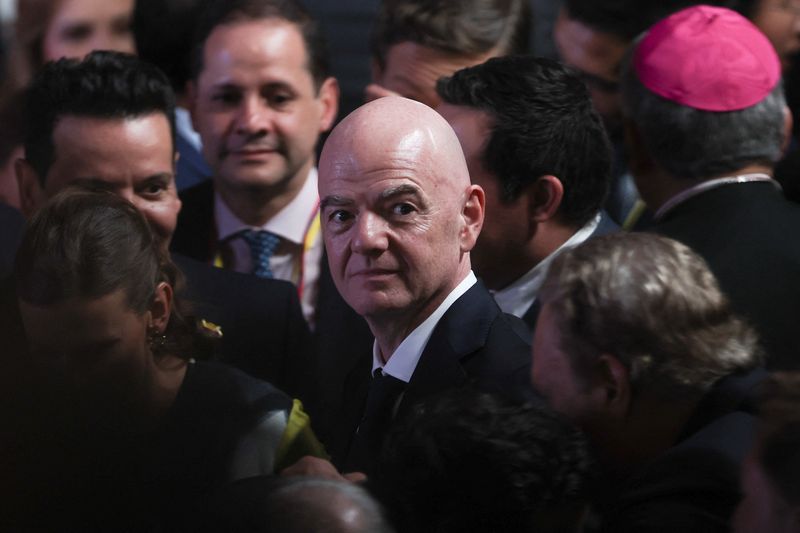
FIFA has issued a stark warning against what it characterises as a "concerted and ongoing effort" to destabilise President Gianni Infantino, insisting that any challenge to his position must proceed through the organisation's formal democratic channels and statutory requirements. The defensive statement signals the deepening turbulence within world football's governing body, which finds itself torn between powerful European interests questioning Infantino's fitness to lead and a substantial bloc of member associations from Africa, South America and North America reaffirming their confidence in him.
The crisis engulfing FIFA crystallised around Infantino's ambitious and ultimately ill-fated proposal to generate approximately $4.2 billion by selling commercial rights to the World Cup and other major tournaments. What was intended as a groundbreaking revenue strategy instead triggered a firestorm of opposition from UEFA, numerous national football federations and several high-ranking FIFA officials. The backlash forced an emergency leadership meeting in Morocco this week, where FIFA's executive hierarchy moved swiftly to contain the damage by apologising to member associations for mishandling the initiative while simultaneously closing ranks behind the embattled president.
Infantino has faced mounting pressure to resign following the proposal's collapse, with criticism emanating from multiple quarters of international football. UEFA, the European confederation that oversees the continent's most commercially valuable leagues, has formally declared it no longer retains confidence in the FIFA president. This represents a particularly potent challenge given Europe's historical dominance within global football governance and its economic leverage through its members' commercial prominence. The Norwegian Football Federation, under President Lise Klaveness, has added its voice to calls for Infantino's departure, with Klaveness arguing that the president no longer possesses the institutional credibility necessary to govern an organisation of FIFA's scale and complexity.
Yet the picture becomes considerably more complicated when examining support for Infantino among FIFA's broader membership. The Confederation of African Football delivered a unanimously supportive resolution backing Infantino's continued leadership just hours after the Norwegian federation's public call for his resignation. CONMEBOL, which governs South American football and represents some of the sport's most prestigious nations, has made clear that any attempt to remove Infantino must come through a formal vote of all FIFA member associations rather than through backchannels or procedural manoeuvres. Mexico's football federation similarly threw its backing behind the president, notwithstanding calls from its continental confederation CONCACAF for a thorough examination of Infantino's tenure.
The underlying crisis was precipitated partly by investigative reporting from The Daily Telegraph concerning payments UEFA made to a former employee during Infantino's tenure as the European confederation's general secretary. Infantino has categorically denied the allegations, and FIFA has rejected them as baseless. Notably, FIFA's latest statement avoided directly addressing these specific claims, instead adopting a broader defensive posture against what it characterises as inaccurate and misleading media reporting. The organisation pledged to respond to factually incorrect reports "directly and vigorously," signalling an intention to combat unfavourable narratives through aggressive communications strategies.
FIFA's statement functioned simultaneously as a warning to potential challengers and a reaffirmation of its commitment to established institutional procedures. The organisation emphasised that the current president was democratically elected by member associations and continues to govern with their mandate, implicitly challenging the legitimacy of opponents working outside formal channels. This rhetorical framing proves significant for Malaysian and Southeast Asian football observers, as it highlights ongoing tensions between powerful European confederations and the broader global membership over how international football should be governed and who gets to determine the direction of world sport's largest governing body.
The statement's refusal to identify specific parties allegedly orchestrating efforts to undermine Infantino leaves considerable ambiguity regarding who FIFA believes is driving the campaign against the president. The vagueness may be deliberate, allowing FIFA to cast aspersions on European rivals without making specific accusations that might invite legal challenge or provide a focused target for media scrutiny. UEFA remains the most obvious candidate for such criticism given its explicit loss of confidence in Infantino, yet FIFA's blanket warning casts a wider net that could encompass national associations, media organisations, or other actors.
For the March FIFA Congress in Morocco, where Infantino seeks a fourth term, the current landscape presents a paradox. No credible alternative candidate has emerged to challenge the incumbent, suggesting that despite the vocal opposition from Europe and individual federations, there may be insufficient political will to mount an organised alternative campaign. The widespread support Infantino maintains among African, South American and North American member associations may prove sufficient to secure re-election even without European backing. This outcome would represent a fundamental shift in how power flows through international football, with the traditional European axis yielding influence to a coalition of confederations representing the sport's fastest-growing markets.
The institutional vulnerabilities exposed by this crisis extend beyond Infantino's personal standing. The failed commercial rights proposal demonstrated that even the FIFA president's significant authority has limits when attempting to reshape the organisation's fundamental revenue model without sufficient consensus. The backlash suggests that member associations, while generally deferential to FIFA's executive, retain the capacity to organise resistance when they perceive threats to their interests or institutional prerogatives. This power dynamic may inform future decision-making within FIFA, potentially constraining unilateral presidential initiatives.
For Malaysia and other Southeast Asian nations represented within FIFA, the unfolding crisis presents questions about how to position themselves within the competing power blocs shaping global football governance. The CONMEBOL and CAF support for Infantino offers an alternative to the European-dominated model that historically determined FIFA's direction. Southeast Asian federations' alignment in this dispute could influence their voice in future FIFA deliberations, making the March Congress a pivotal moment for understanding how global football governance is being rebalanced between established power centres and emerging confederations seeking greater influence.
FIFA's adamant insistence on procedural legitimacy and democratic processes ring somewhat ironically given the organisation's historical governance challenges and transparency criticisms. Yet the emphasis on statutes and member association votes does provide a clear framework for resolving the current impasse. Whether the March Congress produces genuine democratic engagement or merely legitimises a predetermined outcome remains a crucial question for the sport's global community and for member associations seeking to ensure their voices shape FIFA's future direction.

