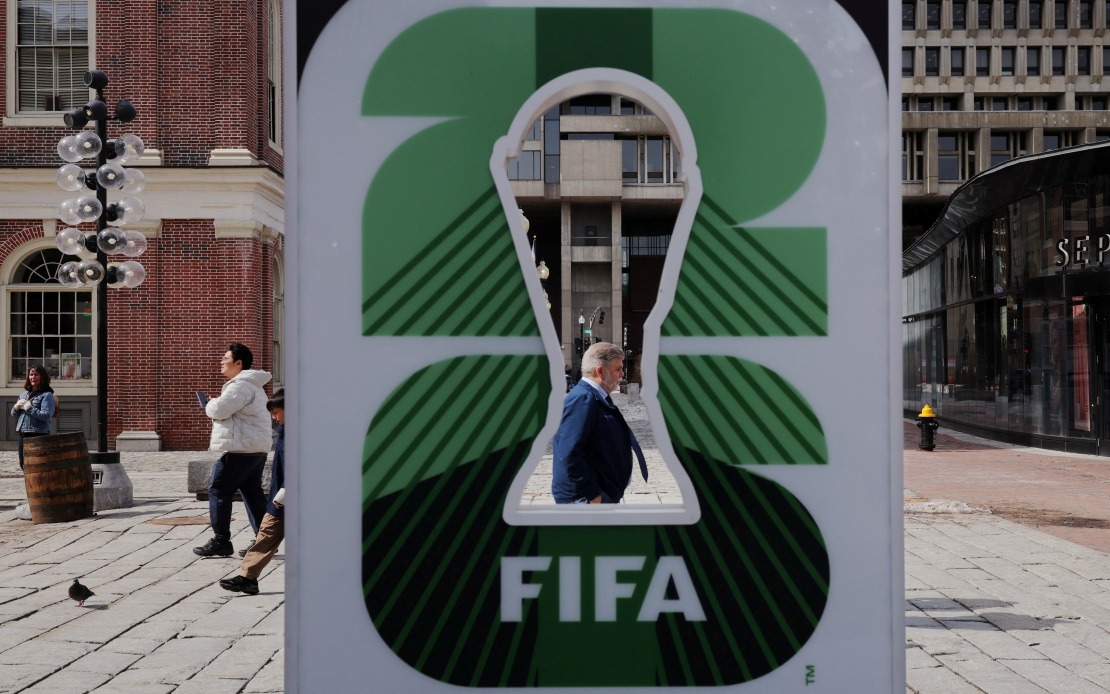
FIFA President Gianni Infantino has abandoned a contentious proposal to privatise portions of World Cup operations, marking a significant reversal for the football governing body just days after the plan's announcement. The decision, disclosed to Sky News on Friday, reflects mounting pressure from stakeholders who viewed the initiative as fundamentally at odds with FIFA's stated mission to unite rather than fracture the global football community.
The scrapped scheme had centred on establishing a US$20 billion FIFA Forward Enterprise subsidiary dedicated to managing the World Cup and other major competitions. Critically, the proposal would have offered more than 20 per cent of this new entity to external private investors, effectively opening FIFA's flagship tournament to commercial interests beyond the organisation's direct control. This represented an unprecedented step toward financialising what many in world football regard as a public trust.
Infantino's explanation for the withdrawal suggests the backlash transcended typical corporate opposition. In his statement to Sky News, the FIFA President acknowledged that the venture "has created divisions of a nature that, regardless of the level of support, are no longer in the interest of the objective set out in the first place." This phrasing indicates the initiative had become so polarising that even qualified support could not justify its continuation, essentially conceding that unity itself—a cornerstone of FIFA's legitimacy—had been compromised by pursuing it.
For Malaysian and Southeast Asian football observers, the reversal offers reassurance about FIFA's structural governance, though it also highlights how contested the organisation's future direction remains. The World Cup remains sport's most significant quadrennial gathering, and decisions affecting its administration inevitably shape the sport's trajectory across all confederations, including the Asian Football Confederation. Any privatisation framework could theoretically influence how development resources flow to emerging football nations, making stakeholder concerns about democratic decision-making particularly acute.
The timing of Infantino's announcement underscores how rapidly institutional consensus can collapse when perceived self-interest conflicts with community values. The plan had been formally unveiled on Tuesday, yet resistance consolidated so swiftly that by Friday, the FIFA President deemed continuation untenable. This speed suggests opposition transcended isolated pockets of dissent, instead reflecting genuine concern across diverse constituencies—from national federations to player representatives and legacy interests.
Infantino has signalled an intention to reconvene stakeholders for fresh dialogue, framing the process as a recommitment to FIFA's foundational purpose: fostering football development globally, with particular emphasis on nations requiring institutional support. This rhetorical pivot toward inclusion and equity addresses critics who argued the privatisation scheme privileged wealthy investors over football's developmental imperative. Whether this commitment will translate into substantive policy remains to be seen, particularly given FIFA's historical tension between commercial expansion and grassroots development.
The reversal also carries diplomatic implications given Infantino's well-documented cultivation of relationships with influential political figures, most notably United States President Donald Trump. The FIFA President has actively strengthened US ties during his tenure, including presenting Trump with FIFA's inaugural Peace Prize in December and maintaining frequent contact throughout the previous World Cup cycle. These efforts suggest Infantino views American political and commercial engagement as strategically vital to FIFA's future, yet even this alignment apparently could not overcome the principled objections to privatisation.
The World Cup subsidiary concept itself remains valid in FIFA's calculations, despite the privatisation element's rejection. Infantino has indicated the organisation will persist with establishing the US$20 billion entity, but without external equity stakes. This modification suggests FIFA recognises the need for dedicated infrastructure managing its most valuable asset, yet accepts that full operational control must remain within the organisation's hands to preserve legitimacy and alignment with its member associations' interests.
Stakeholder concerns likely encompassed fears about decision-making opacity, profit extraction that might diminish resources directed toward development programmes, and the precedent such privatisation would establish for other FIFA competitions and activities. The precedent question particularly matters across Asian football, where emerging nations have sought greater influence over global institutions. Permitting private investors to hold substantial stakes in World Cup administration could theoretically shift decision-making power toward capital-intensive interests rather than broad-based football development.
Infantino's preservation of rhetoric about FIFA's unifying mission suggests he recognises the organisation's fundamental legitimacy depends on stakeholder perception that decisions serve football rather than private shareholders. This acknowledgement, extracted through stakeholder pressure rather than freely offered, indicates FIFA's governance remains sensitive to collective action and demonstrates that even senior leadership cannot entirely disregard confederation and federation interests, at least when those interests align.
Moving forward, FIFA faces the challenge of demonstrating that the abandoned privatisation scheme represented genuine exploration rather than a trial balloon testing institutional resistance. Credibility demands that future commercial initiatives incorporate stakeholder consultation earlier and more transparently. For Malaysian football interests, the reversal provides a modest affirmation that FIFA's decision-making mechanisms retain some responsiveness to collective concerns, though sustained vigilance regarding development resource allocation remains warranted as the organisation navigates its complex commercial and sporting mandates.

