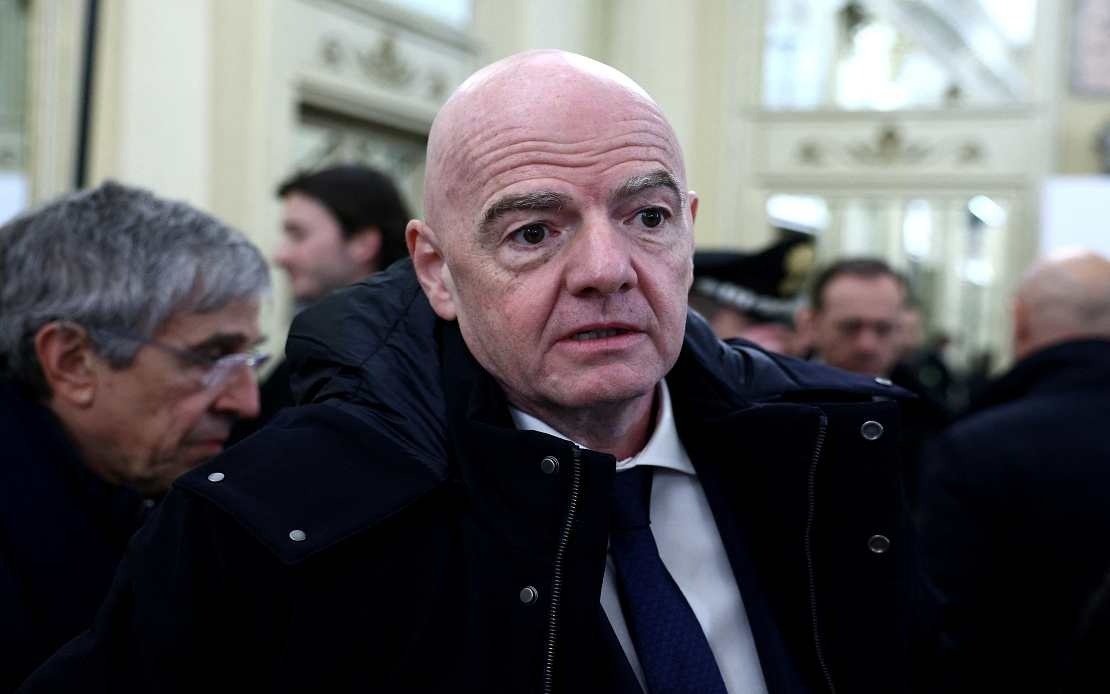
FIFA President Gianni Infantino has been formally reported to the International Olympic Committee for allegedly breaching fundamental rules on political neutrality, according to documents filed by human rights organisation FairSquare. The complaint centres on Infantino's conduct during major tournament decisions and his apparent interaction with international political figures, raising fresh questions about the independence of world football's governing body at a time when sporting governance faces intense scrutiny.
FairSquare, which has established itself as a watchdog for compliance with Olympic standards, asserts that Infantino—who joined the IOC in 2020—has violated the Olympic Charter and the IOC's ethics code on multiple occasions. The organisation identifies at least five unambiguous breaches of neutrality requirements, alongside additional evidence of two further serious violations. These allegations strike at the heart of how FIFA leadership conducts itself when navigating politically sensitive decisions that could affect tournament outcomes and athlete eligibility.
The most recent and high-profile case involves the suspension of a prominent striker's one-match ban ahead of a World Cup knockout fixture against Belgium. FIFA's disciplinary committee chose to suspend the sanction, clearing the player for participation in the crucial match. The timing and nature of this decision became controversial when reports emerged that the player's nation's president had personally telephoned Infantino shortly before the ruling. Infantino subsequently emphasised that FIFA's disciplinary bodies operate with complete autonomy from his office, yet the organisation provided no detailed explanation for the sudden reversal of the initial punishment.
This particular incident exemplifies broader concerns about institutional independence within FIFA's decision-making structures. When high-level political figures make direct contact with sports administrators before significant rulings, the appearance of impropriety emerges regardless of the actual independence of the process. For Southeast Asian nations with their own interests in international football governance, such transparency issues carry implications for how fairly competitions are administered and whether smaller football nations enjoy equitable treatment in disciplinary matters.
FairSquare initially brought these concerns to FIFA's own ethics committee in December, seeking internal remediation before escalating to the IOC. The Norwegian football federation subsequently reinforced these concerns by writing to FIFA's ethics committee to request formal consideration of the allegations. More notably, fifty members of the European Parliament formally communicated with FIFA's ethics body on June 29, collectively urging the committee to thoroughly investigate FairSquare's submission. This unprecedented coordination across different institutional levels reflects serious international concern about the matter.
The decision to escalate the complaint to the IOC represents a significant development, as it places responsibility with the body that oversees Olympic sports governance globally. Infantino's position as an IOC member creates a direct accountability mechanism beyond FIFA's internal structures, potentially bypassing any institutional reluctance to scrutinise the president's conduct. The IOC maintains strict codes of conduct for member organisations and individuals, viewing political interference in sporting decisions as fundamentally incompatible with Olympic ideals and the broader integrity of competitive sport.
For Malaysian football stakeholders and the broader Southeast Asian football community, this matter carries symbolic and practical importance. The independence of FIFA's disciplinary machinery directly affects how tournaments are administered and how fairly nations of varying political and economic influence are treated. If political pressure demonstrably influences major decisions, it undermines the meritocratic principle that competition outcomes should reflect solely the performance of athletes and teams. This vulnerability extends particularly to smaller nations that lack the political leverage of larger powers.
The pattern of escalating complaints—from FairSquare to FIFA's internal ethics committee, then to national football federations and international parliamentary bodies, and finally to the IOC—demonstrates the accumulated weight of institutional concern. Rather than dismissing the allegations as isolated complaints, this progression suggests systematic and recurring behaviour that multiple independent observers found sufficiently serious to warrant formal action. The involvement of European Parliament members particularly underscores how the issue transcends sports governance to touch upon broader questions of institutional accountability in international organisations.
Infantino's assertion that FIFA committees operate with complete independence requires substantiation through transparent investigation. While any organisation's leader naturally claims to respect decision-making autonomy within their structure, external perception matters critically in competitive sports. When presidents of nations place phone calls to sports administrators immediately before disciplinary reversals, reasonable observers question whether institutional independence genuinely exists in practice, even if formal procedures theoretically protect it. The burden falls upon FIFA to demonstrate through comprehensive investigation that political contact did not influence the outcome.
The implications extend beyond this single case. FIFA faces recurring accusations of political influence in tournament decisions, venue selections, and disciplinary matters affecting high-profile nations and athletes. Each unresolved allegation chips away at the credibility of the institution's governance structures. For the global football community and nations like Malaysia that participate in FIFA competitions, governance credibility directly affects belief in the fairness of international competition. If major decisions appear influenced by political considerations rather than sporting merit, the entire system's legitimacy suffers among participating nations and their supporters.
The IOC's response to FairSquare's complaint will carry significance beyond this particular case. How Olympic governance bodies treat allegations against sports federation leaders sets precedent for future accountability. A thorough investigation would signal that political neutrality remains a genuine requirement rather than aspirational language. Conversely, dismissing the complaint without serious examination could embolden further political interference in sports decisions and weaken faith in international sports governance structures that millions across Southeast Asia and globally depend upon for fair competition.
Infantino's position remains unchanged as the formal IOC process unfolds, yet the public filing of such allegations at the highest governance level represents a watershed moment in FIFA oversight. Whether the IOC investigates comprehensively, how FIFA responds to specific allegations, and what reforms emerge from this process will shape how international sports governance operates during Infantino's remaining tenure and beyond, influencing the integrity of competitions that matter to athletic communities worldwide.

