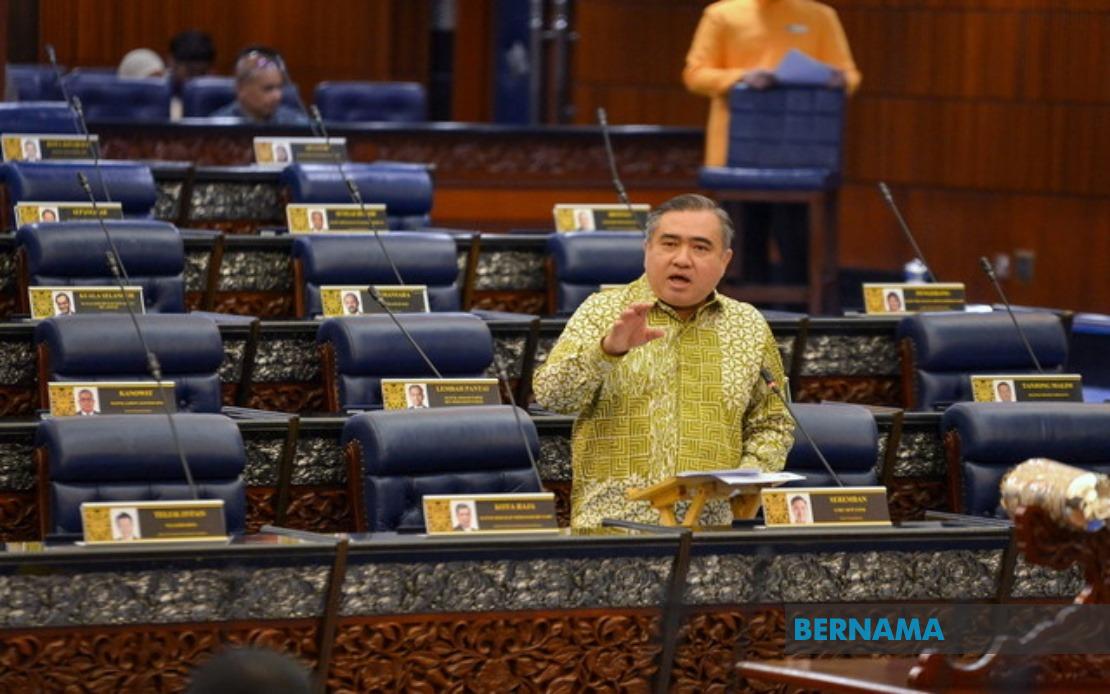
Transport Minister Anthony Loke has confirmed that the Federal Government will shoulder the financing burden for Johor's ambitious Elevated Autonomous Rapid Transit (E-ART) project, marking a decisive shift toward public sector support for the sprawling infrastructure venture. Speaking during parliamentary question time in the Dewan Rakyat, Loke revealed that while the appointed consortium will initially bear costs, independent assessments have determined that relying entirely on private sector funding would render the mega-project economically unviable. This pronouncement represents a significant policy turn, as the government commits substantial resources to what is shaping up to be one of Southeast Asia's most consequential transport undertakings in the coming years.
The financing structure for the project remains fluid, with Loke emphasizing that detailed negotiations are still underway concerning the precise funding mechanisms, the scale of financial commitment, and how repayment obligations will be structured across the extended concession period. This phased approach suggests the government is carefully calibrating its involvement to balance fiscal responsibility with the imperative to realise critical transport infrastructure. The Cabinet will ultimately scrutinise the negotiated terms before any formal Concession Agreement is inked, adding another layer of deliberation to what has become an increasingly complex undertaking. The acknowledgment that private financing alone proves insufficient underscores broader anxieties across the region about whether market forces can adequately fund transformative public transport systems without substantial government participation.
The E-ART project carries heightened urgency given the imminent launch of the Johor Bahru-Singapore Rapid Transit System (RTS) Link, scheduled to commence operations in January 2027. This parallel development creates a tight temporal window in which planners must prepare Johor's transport ecosystem to absorb the influx of passengers and manage potential congestion spikes. Loke acknowledged this pressure during his parliamentary exchange with Datuk Seri Dr Wee Ka Siong, who had specifically queried how traffic dispersal would function when the RTS Link opens before the E-ART project reaches completion. The overlapping timelines underscore why government intervention has become essential—the private sector alone cannot orchestrate the coordinated, cross-system planning that such a scenario demands.
Construction timelines suggest the E-ART initiative will unfold across a four-year window commencing from the formal issuance of the Letter of Acceptance. This extended delivery schedule positions the project to complement rather than compete with the RTS Link, though the sequencing means Johor's transport planners must immediately activate contingency mechanisms to prevent congestion deterioration during the interim period. The government has responded by formulating an integrated traffic dispersal strategy in partnership with Johor's state administration, reflecting recognition that rail-centric solutions cannot solve transport challenges in isolation. This holistic approach signals a maturing understanding within Malaysia's transport establishment that megacities require layered, redundant systems operating in concert.
Central to the government's interim strategy is the expansion and modernisation of bus services across Johor Bahru and surrounding districts. The BAS.MY network, which represents a relatively recent addition to Malaysia's public transport ecosystem, will be substantially expanded to encompass 28 routes operated by a fleet of 254 buses, including an increasing proportion of electric vehicles. This expansion is particularly notable for Malaysian readers given the country's broader sustainability commitments and the precedent it sets for integrating environmentally conscious transport solutions into regional hubs. The evolution of BAS.MY from a pilot programme to a backbone service reflects lessons learned from other Southeast Asian cities regarding the critical role bus networks play in preventing traffic paralysis.
Complementing the bus expansion is the Stage Bus Service Transformation (SBST) 2.0 programme, through which 157 dedicated buses will be deployed across the Johor Bahru Sentral and Bukit Chagar routes, with operations anticipated to commence in early 2027. This timing is strategically deliberate, positioning the enhanced service to synchronise with the RTS Link's opening and thereby distribute passenger demand across multiple transport modes. The government is concurrently progressing procurement of 12 additional KTM Komuter Southern train sets, further testament to its commitment to multi-modal solutions. Pending final approvals, the ministry has already initiated the Shuttle Selatan service, which commenced on June 16 and connects Kulai-Kempas-Johor Bahru and Kempas-Pasir Gudang corridors with a daily capacity of 14 trips, providing immediate relief on congested routes.
Pricing policy has emerged as a contentious dimension of Malaysia's public transport expansion, with parliamentary members pressing the government to institute fare ceilings across all services. Loke's response illuminates the fiscal mathematics underlying transport provision—when governments enforce artificially suppressed fares, the resulting shortfall between operational costs and revenue demands continuous public subsidy injections. This tension between affordability and fiscal sustainability affects not only Johor but resonates across Malaysia and the broader region, where policymakers grapple with ensuring transport accessibility without bankrupting state coffers. Loke's articulation of this trade-off suggests the government acknowledges that genuine commitment to low-cost public transport necessitates direct budgetary allocation rather than regulatory price controls alone.
The government's positioning of public transport as a subsidised essential service rather than a commercially self-sustaining enterprise represents a philosophical reorientation within Malaysian transport policy. By explicitly committing federal funding to both the E-ART project and keeping fares suppressed, authorities are prioritising mobility equity and congestion mitigation over private-sector profit extraction. This stance carries implications for neighbouring jurisdictions and Southeast Asian governments wrestling with similar challenges. It also suggests Malaysia's leadership recognises that transport infrastructure, particularly in urban corridors abutting international borders like Johor, generates externalities—including reduced congestion, improved air quality, and enhanced competitiveness—that justify public investment beyond narrow financial returns.
For Malaysian businesses and residents, the E-ART project promises transformative implications for Johor Bahru's competitive positioning as a regional economic hub. The combination of the RTS Link and E-ART, underpinned by expanded bus networks and train services, would position Johor Bahru among Southeast Asia's most comprehensively connected urban centres. This infrastructure cluster could catalyse business investment, worker mobility between Malaysia and Singapore, and tourism flows. The government's willingness to fund the E-ART project suggests recognition that Johor's economic future depends on transport infrastructure quality comparable to or exceeding that of neighbouring Singapore, which has long invested heavily in seamless, multi-modal systems.
The parliamentary exchange and Loke's responses indicate that implementation will proceed through standard Cabinet approval processes, ensuring ministerial oversight and fiscal scrutiny before commitments crystallise. The involvement of the Johor state government in traffic planning underscores the cooperative federalism approach that characterises contemporary Malaysian infrastructure development. As negotiations advance on financing mechanisms and repayment schedules, clarity on the precise public-private split will emerge, but the fundamental commitment—that the Federal Government will ensure the E-ART project proceeds through public funding—appears irreversible. This decision positions Johor Bahru's transport transformation as a defining infrastructure achievement for the current administration and a template for regional urban development.

