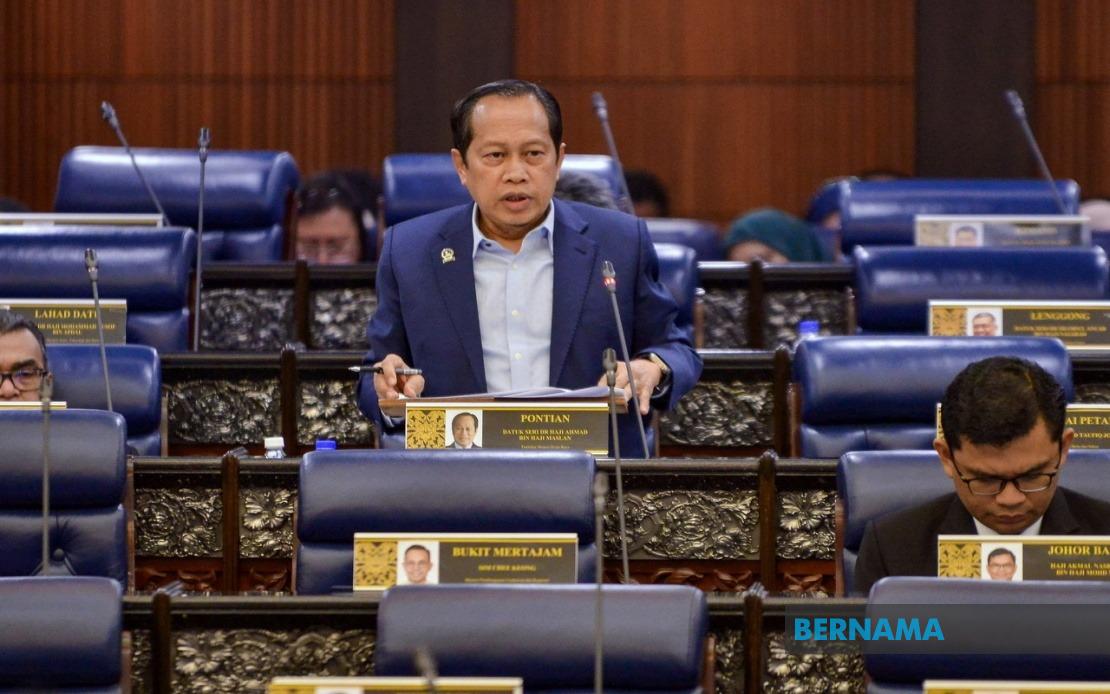
The federal government has disbursed RM1.2 billion in land compensation payments for Phase 1 of the Sabah Pan Borneo Highway project, according to Deputy Minister of Works Datuk Seri Ahmad Maslan. In addition, landowners in Sarawak have received RM737 million in compensation for their portion of the multi-state infrastructure initiative. The government has assumed full responsibility for all compensation claims, ancillary losses, and administrative expenses connected to land acquisition, ensuring affected property owners face no financial detriment from the massive undertaking.
The disclosure came during parliamentary questioning in the Dewan Rakyat when WARISAN member Isnaraissah Munirah Majilis from Kota Belud sought clarification on the dramatic escalation of the Sabah project's estimated cost. The Phase 1 initiative, originally priced at RM12.86 billion when first assessed in 2015, has now ballooned to RM24.889 billion—nearly doubling in expense over the intervening decade. This substantial increase has drawn parliamentary scrutiny regarding project management and cost control mechanisms, particularly as Malaysia undertakes its most ambitious terrestrial infrastructure development in East Malaysia.
Ahmad Maslan attributed the significant cost increase primarily to a fundamental shift in project delivery methodology. When the federal government terminated the Project Delivery Partner model in 2019, citing national interest considerations, the infrastructure initiative transitioned to the Federal Conventional Contractor approach. This transition necessitated comprehensive reassessment of the remaining work scope and technical specifications nearly five years into the original planning horizon. The switch represented a pivotal moment in the project's trajectory, triggering revaluation of construction methodologies and resource allocation strategies that substantially altered financial projections.
Technical factors constituted the primary drivers of the cost escalation, according to Ahmad's parliamentary response. Design modifications and expanded project specifications demanded sophisticated geotechnical engineering solutions and extensive soil remediation work across Sabah's challenging terrain. The infrastructure also required massive utility relocation operations to accommodate highway alignment through densely developed areas, necessitating coordination with telecommunications, water, and electrical service providers. These technical adjustments, while essential for project viability and safety compliance, cumulatively contributed substantially to the enhanced budget requirements.
The Sabah Pan Borneo Highway's Phase 1 implementation comprises two distinct contractual components. Phase 1A encompasses sixteen separate work packages valued at RM10.9 billion, while Phase 1B incorporates nineteen work packages carrying a combined value of RM13.989 billion. This segmented approach allows for phased procurement and construction management, potentially reducing execution risk and enabling adaptive project control. The dual-phase structure reflects contemporary infrastructure project management principles, permitting sequential evaluation and course correction opportunities as construction progresses across the sprawling Sabah landscape.
Beyond engineering considerations, macroeconomic factors substantially influenced the revised cost estimates. Global and domestic inflation substantially increased material expenses throughout the project timeline, particularly affecting critical construction inputs. Iron, bitumen, and cement—fundamental to highway construction—experienced significant price volatility in international markets. Machinery and labour costs also escalated considerably as regional economic conditions tightened labour availability and equipment rental expenses. These inflation pressures, largely beyond government control, accumulated across the multiyear project duration, creating cumulative financial burdens that necessitated budget adjustments.
The Pan Borneo Highway initiative represents one of Malaysia's most significant recent infrastructure commitments, particularly for East Malaysian development. For Sabah and Sarawak, the megaproject promises enhanced connectivity, facilitating economic integration, trade facilitation, and regional development opportunities. However, the dramatic cost escalation raises important questions about long-term project sustainability, government fiscal capacity, and the economic returns required to justify such massive capital commitments. Malaysian policymakers must ensure that eventual highway completion delivers proportional economic benefits and improved quality of life for Sabah residents.
The RM1.2 billion in land compensation represents substantial financial commitment to property owners affected by the infrastructure corridor. Unlike some development projects where affected communities experience displacement with minimal compensation, Malaysia's deliberate assumption of full compensation obligations reflects government acknowledgment of landowner rights and social responsibility. This approach, while financially demanding, prevents the generation of long-term grievances and facilitates smoother implementation, crucial for maintaining public confidence in large-scale government initiatives.
The Sarawak Pan Borneo Highway component, which has received RM737 million in land compensation, demonstrates parallel commitment to equitable treatment across both East Malaysian states. The integrated approach to the cross-Borneo corridor underscores federal recognition that genuine regional development requires simultaneous advancement in both Sabah and Sarawak. Competition between the two states for development resources and political favour necessitates balanced investment, and the Pan Borneo Highway represents a flagship federal commitment to this equity principle, though the project's escalating costs test government budgetary discipline.
Moving forward, the Sabah Pan Borneo Highway Phase 1 project's trajectory will significantly influence Malaysian infrastructure policy and budget planning for subsequent regional initiatives. The near-doubling of project costs within a decade signals the importance of robust initial feasibility studies, comprehensive risk assessment frameworks, and realistic contingency planning. Future large-scale Malaysian infrastructure projects must incorporate lessons from the Pan Borneo experience, ensuring that cost estimates incorporate realistic allowances for geological challenges, market volatility, and methodological adaptations that invariably emerge during lengthy construction periods.

