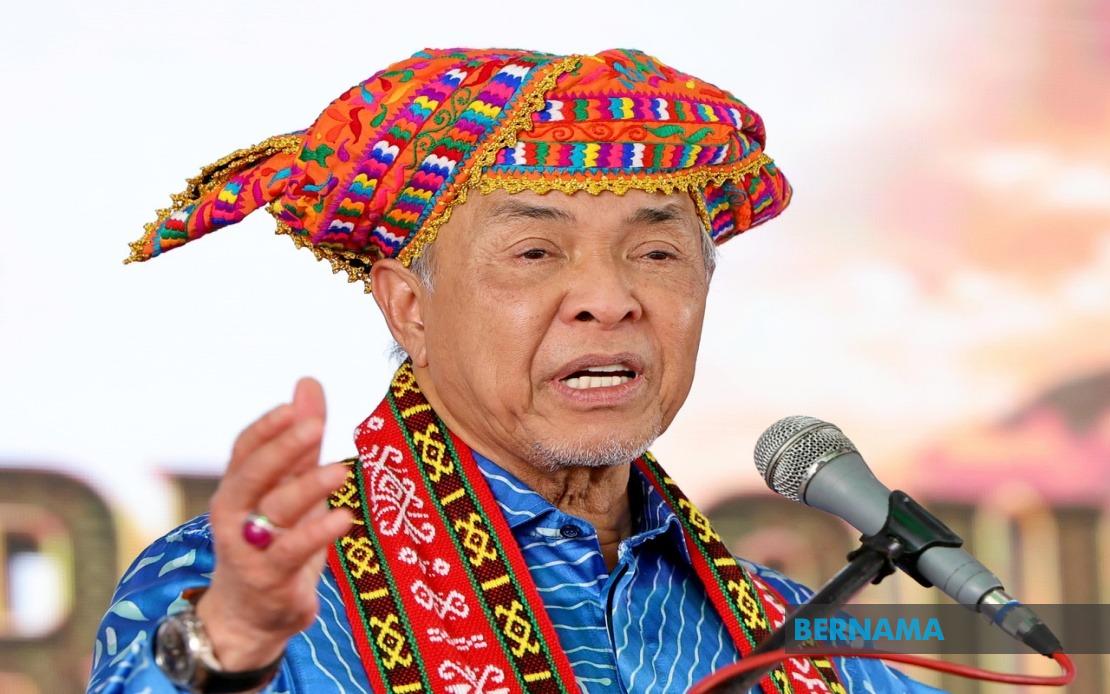
The federal government is investing RM4.06 billion into rural water supply infrastructure across Sabah, marking a significant push to address longstanding service deficiencies in the state's most disadvantaged communities. Deputy Prime Minister Datuk Seri Dr Ahmad Zahid Hamidi announced the commitment while opening the Rungus Cultural Festival in Matunggong, underscoring the administration's determination to tackle fundamental development disparities between urban and remote areas.
The Rural Water Supply (BALB) projects will be executed directly by the Sabah state government, with federal oversight ensuring implementation stays on track. Ahmad Zahid, who holds the Rural and Regional Development portfolio, stressed that clean water access represents a basic right that has eluded too many Sabahans. Beyond water, he identified electricity supply as a parallel challenge requiring urgent intervention, positioning these utilities as foundational to broader economic and social progress across the state's interior regions.
Three districts emerge as priority recipients: Kudat, Kota Marudu, and Pitas stand among Malaysia's poorest by official measurement, making them natural focal points for this concentrated resource allocation. The decision reflects federal acknowledgment that Sabah's development trajectory has diverged significantly from more urbanized peninsular states, with rural communities bearing the brunt of infrastructure inequality. By channeling funds specifically to these hardship zones, the government aims to narrow the gap between aspirational development goals and lived reality for residents dependent on subsistence activities and limited economic opportunities.
Ahmad Zahid's broader framing positions rural water access within a comprehensive anti-poverty strategy targeting B40 households—those in the bottom forty percent of income earners. Complementary socioeconomic initiatives are being planned and rolled out concurrently, suggesting the water investment forms part of an integrated approach rather than a standalone project. This multifaceted intervention acknowledges that infrastructure alone cannot lift communities from hardcore poverty without simultaneous attention to income generation, skills development, and livelihood diversification.
The Rural and Regional Development Ministry will provide technical support and monitor progress to prevent delays and cost overruns. This supervisory role addresses a persistent challenge in Malaysian development projects, where implementation gaps between budgetary allocation and ground-level completion have historically undermined program effectiveness. By committing to active engagement rather than merely releasing funds, the ministry signals seriousness about tangible outcomes for beneficiary communities.
Beyond the water supply announcement, Ahmad Zahid pledged support for elevating Matunggong from sub-district to full district status—a bureaucratic upgrade with material consequences for local governance and resource access. He committed to raising the matter with Chief Minister Datuk Seri Hajiji Noor and the Cabinet, recognizing that formal district designation typically unlocks more generous development allocations from both federal and state governments. This demonstrates understanding that administrative reorganization can serve as a lever for channeling resources to previously marginalized areas.
Additionally, Ahmad Zahid directed agencies under his ministry to begin repairs on Matunggong's Community Hall within three months, illustrating commitment to quick-win infrastructure projects alongside longer-term water supply buildout. Such civic facilities often serve as community anchors, hosting health clinics, educational programs, and social gatherings. Their maintenance reflects broader investment in social infrastructure that builds community resilience and provides platforms for service delivery.
The timing of these announcements during a cultural festival carries political symbolism. By launching development initiatives at the Rungus Cultural Festival, Ahmad Zahid connected infrastructure investment with cultural affirmation, signaling that progress need not erase indigenous identity or traditions. This messaging matters in Sabah, where tensions between development and cultural preservation periodically surface, particularly among indigenous communities whose lands and livelihoods sometimes conflict with extraction or commercial projects.
For Malaysian observers beyond Sabah, this allocation reflects shifting federal priorities toward addressing regional inequality, a perennial political flashpoint. Sabah and Sarawak have historically felt neglected relative to peninsular states, with water and electricity shortages in interior areas frequently cited as evidence of unequal development commitment. This RM4.06 billion commitment, while substantial, must be contextualised against Sabah's enormous geographic size, dispersed population, and challenging terrain—realities that inflate infrastructure costs and complicate service delivery across the state's 73,620 square kilometers.
The investment also carries implications for national water security. As Malaysia confronts climate variability and population growth, ensuring reliable rural supply becomes strategically important for food security, health outcomes, and social stability. Rural communities relying on inadequate water access often experience higher disease burdens, lower school attendance, and reduced agricultural productivity. By prioritizing rural water infrastructure, the federal government addresses not merely a convenience gap but fundamental determinants of human development and economic participation.
Looking forward, the success of these BALB projects will depend on implementation capacity, maintenance systems, and community engagement. Sabah's experience with previous large-scale infrastructure initiatives demonstrates that budgetary allocation and project completion represent different challenges. Local communities must be trained in system maintenance, spare parts must remain accessible, and tariff structures must balance affordability with cost recovery. Without attention to these operational dimensions, completed water systems can deteriorate rapidly, rendering investment ineffective.
The announcement also occurs within Malaysia's broader development planning cycle, where Sabah seeks to demonstrate progress toward higher-income status. Improving basic service access to rural populations enhances human capital metrics that international development agencies track, potentially facilitating future investment and cooperation. For state leaders like Chief Minister Hajiji Noor, federal commitment to rural infrastructure helps demonstrate developmental progress to constituents and investors alike, supporting narratives of inclusive growth and shared prosperity.

