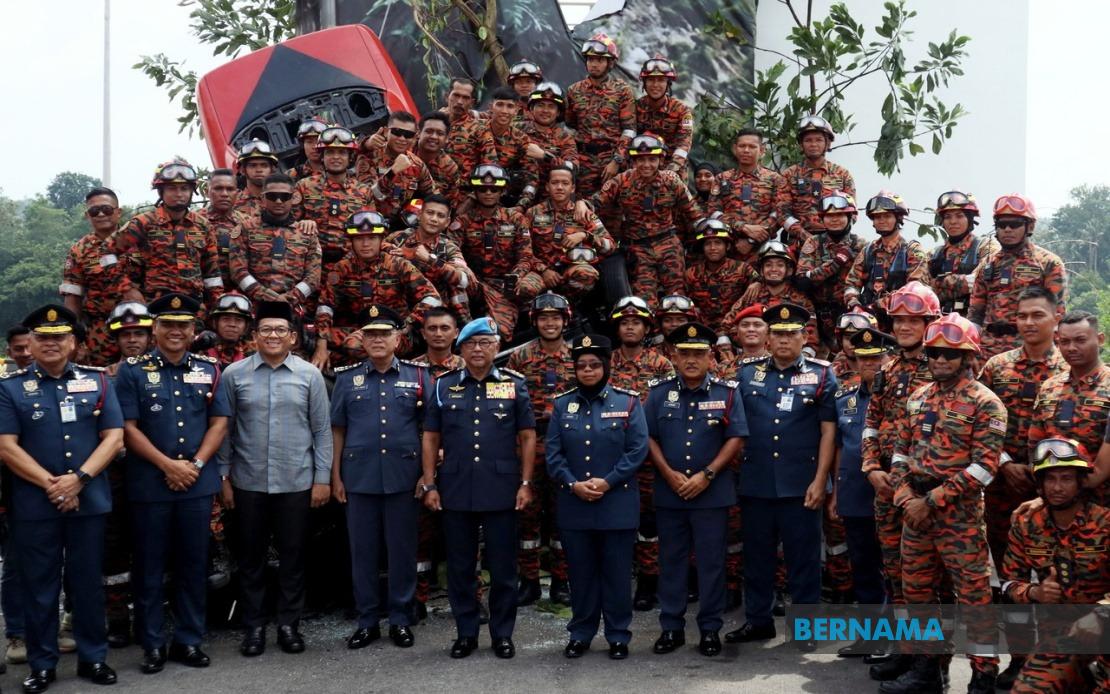
The Malaysian Federal Government has committed RM278.9 million in annual development expenditure towards advancing the Malaysian Fire and Rescue Department's operational capacity through an ambitious portfolio of 86 projects earmarked under the First Rolling Plan of the 13th Malaysia Plan. The financial allocation, which encompasses both new initiatives and continuation of existing programmes, reflects the administration's recognition that emergency response infrastructure forms a critical backbone of public safety and development planning across the nation.
According to Housing and Local Government deputy minister Datuk Aiman Athirah Sabu, the funding will support 27 freshly launched projects alongside 59 ongoing installations throughout Malaysia during the current fiscal year. This dual approach allows the department to maintain momentum on established facilities whilst simultaneously expanding coverage to underserved communities, a strategic balance that underscores government priorities in systematic service delivery rather than sporadic interventions.
Pahang state has emerged as a particular focus area within this development framework, with seven substantial facility projects currently progressing under both the 12th Malaysia Plan and the initial rolling period of the 13th Malaysia Plan. These undertakings span the full spectrum of fire and rescue infrastructure modernisation, from acquiring purpose-built stations with residential quarters to constructing entirely new facilities in previously underserved townships. Notable among these are initiatives centred on the Gohtong Jaya, Benta, and Tioman locations, each selected to address specific geographic and demographic needs.
Simultaneously, the government is executing enhancement programmes across existing stations, recognising that infrastructure maintenance and capacity upgrading deserve equal investment alongside new construction. The Bentong and Kuantan stations are undergoing systematic improvements, whilst the Triang facility is being reconstructed to modern standards. These enhancement initiatives ensure that older installations remain relevant and effective rather than becoming obsolete, a pragmatic approach that maximises return on previous capital expenditures whilst maintaining uniform service quality across the state.
The recently inaugurated Sungai Lembing Fire and Rescue Station represents a tangible manifestation of these planning priorities. Constructed at a cost of RM6 million on a seven-acre strategic site, this facility marks the 29th such station established in Pahang and commenced operational delivery on February 15. The station's establishment addresses a service gap that previously left approximately 15,000 residents in Sungai Lembing and its surrounding areas dependent on more distant emergency response capabilities, a situation that inevitably prolonged response times during critical incidents.
Beyond its primary operational function as an emergency response centre, the Sungai Lembing station has been intentionally designed to transcend conventional fire and rescue station roles. Deputy minister Aiman Athirah envisions the facility evolving into a comprehensive community resource hub capable of delivering fire safety education, imparting practical rescue skills, and cultivating broader awareness of emergency preparedness amongst civilian populations. This vision aligns with contemporary thinking regarding emergency management, which increasingly recognises that prevention and public education generate superior outcomes compared to reactive intervention alone.
The strategic positioning of fire and rescue infrastructure intersects meaningfully with broader regional development narratives, particularly in heritage-conscious municipalities such as Sungai Lembing. Deputy Economy Minister and Paya Besar Member of Parliament Datuk Mohd Shahar Abdullah articulated this intersection by emphasising that the station's establishment complements an integrated revitalisation programme designed to position Sungai Lembing as a destination combining historical preservation with contemporary prosperity. Parallel initiatives addressing heritage conservation include restoration of the PCCL Cinema, development of ecotourism infrastructure, establishment of a digital museum, and upgrading of the Sungai Lembing Tunnel—projects collectively advancing a candidacy for UNESCO World Heritage Site designation.
Mohd Shahar's remarks underscore a critical observation regarding development planning: that physical infrastructure and economic development programmes lack credibility and sustainability absent concurrent investment in public safety systems. The emergence of modern fire and rescue capabilities transforms township development from aspirational marketing messaging into substantive community value, as investors and residents require confidence that emergency response provisions match the sophistication of other civic amenities. This integration of safety considerations into holistic development strategy distinguishes advanced municipal planning from fragmented infrastructure deployment.
The Pahang state leadership, represented through Menteri Besar Datuk Seri Wan Rosdy Wan Ismail and State Legislative Assembly Speaker Datuk Seri Mohd Sharkar Shamsuddin, witnessed the ceremonial commissioning of the Sungai Lembing station, reflecting institutional recognition of its significance within the broader state development framework. The ceremonial opening itself, graced by the Sultan of Pahang Al-Sultan Abdullah Ri'ayatuddin Al-Mustafa Billah Shah, conveyed powerful symbolic messaging regarding the hierarchy of development priorities within the state's administrative apparatus and demonstrated high-level commitment to emergency preparedness infrastructure.
The RM278.9 million annual allocation deserves contextualisation within Malaysia's broader public expenditure frameworks and the resource demands facing emergency response agencies nationwide. Fire and rescue departments across the country confront escalating operational pressures stemming from rapid urbanisation, increasing industrial complexity, expanding populations in hazard-prone areas, and the intensifying impacts of climate-related emergencies including flooding and landslides. The committed funding, whilst substantial, must be assessed against these multiplying demands, ensuring that resource allocation remains calibrated to emerging threats rather than addressing historical patterns of emergency service provision.
The distribution between new project initiation and ongoing programme maintenance embedded within this allocation reflects mature budget planning philosophy. Allocating approximately 31 percent of funding towards novel projects whilst reserving approximately 69 percent for programme continuation acknowledges the reality that emergency response infrastructure demands sustained operational funding, maintenance resources, and staff training investments beyond initial capital construction. This ratio ensures that the government builds capacity systematically rather than creating underutilised facilities through underfunded ongoing operations.
For Malaysian residents and regional observers monitoring governance effectiveness, the Sungai Lembing station exemplifies whether Federal Government funding commitments translate into tangible community benefit. The February commencement of full operations approximately five months prior to the project's formal ceremonial inauguration suggests effective project execution and completion within planned timeframes—a credibility indicator often absent from infrastructure programmes across the region. The facility's integration with heritage preservation initiatives demonstrates governmental understanding that modern public safety underpins successful regional development, a perspective increasingly adopted throughout Southeast Asia's faster-developing municipalities.
Moving forward, the sustained commitment of RM278.9 million annually to fire and rescue infrastructure modernisation signals governmental confidence in the Emergency Response sector's role within broader national development. As Malaysia positions itself for advanced economy status, the visibility and effectiveness of emergency response systems directly influence investor confidence, international competitive positioning, and resident quality of life perceptions. The current investment trajectory, provided it maintains consistency across subsequent Malaysia Plan iterations, establishes foundational capacity for responding to the increasingly complex emergency scenarios confronting densifying urban centres and developing heritage zones throughout the country.

