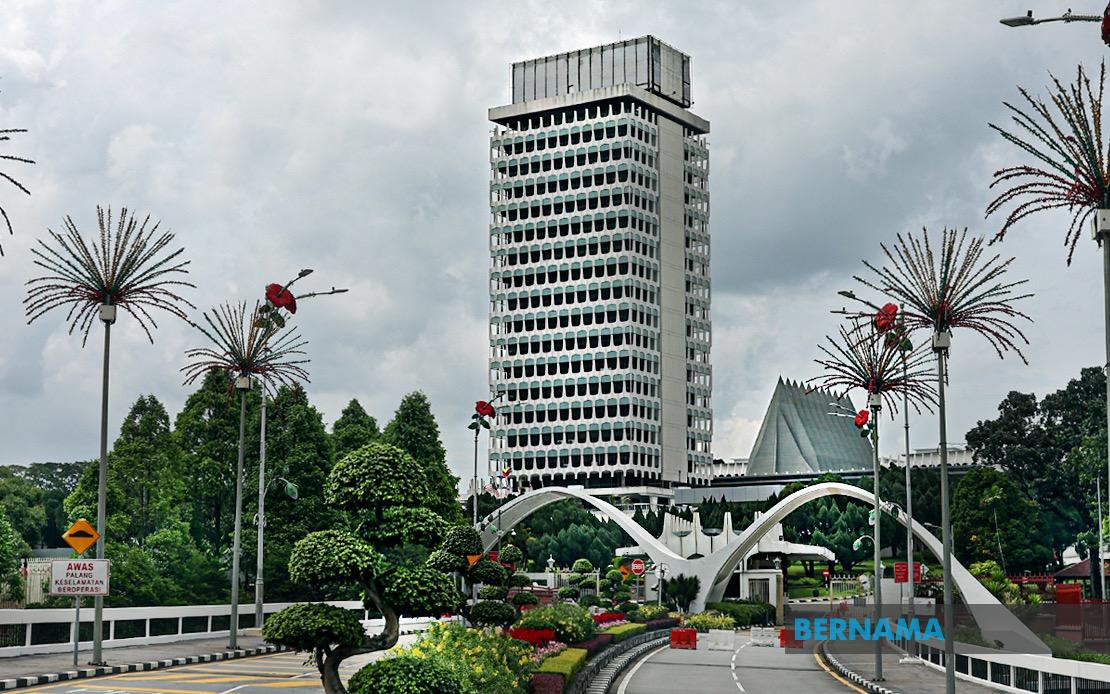
Prime Minister Datuk Seri Anwar Ibrahim moved to address longstanding concerns about the equitable distribution of federal resources during the second week of the Dewan Rakyat sitting, clarifying that the overwhelming majority of Malaysian states receive allocations significantly above their tax contributions to the Federal Government. Speaking during Ministers' Question Time on Tuesday, Anwar rejected suggestions that any state was being deliberately neglected, reframing the allocation methodology as fundamentally rooted in developmental priorities and citizen welfare rather than a zero-sum fiscal arrangement. This statement comes at a politically sensitive time when regional concerns about federal largesse have periodically resurfaced in state-level discourse across the country.
The Prime Minister elaborated on the mechanics of resource distribution, explaining that the government evaluates allocation requests with reference to genuine development requirements and public benefit indicators. When state administrations submit proposals involving a Notice of Change for additional project funding, the Federal Government requires renegotiation of terms before committing further resources or extending credit facilities. This procedural safeguard reflects the government's determination to maintain fiscal discipline while responding to legitimate development needs from state counterparts. The clarification also implicitly signals that ad hoc funding requests without proper justification face heightened scrutiny, a position likely to influence how states structure their development pitches moving forward.
Striking a more cautionary tone, Anwar underscored that the announcement of novel initiatives or policy interventions during election campaign windows contravenes Section 24B of the Election Offences Act 1954, signalling potential legal jeopardy for officials or agencies that breach this constraint. This pronouncement assumes particular relevance given Malaysia's electoral calendar and the intermittent campaigns that punctuate the political landscape. The Prime Minister's emphasis on electoral propriety suggests the government is determined to maintain institutional boundaries between developmental governance and partisan campaigning, a distinction increasingly important in Southeast Asian democracies.
Parliament advanced a significant package of protective and regulatory legislation during the week, most prominently the Sexual Offences Against Children (Amendment) Bill 2026, which represents a renewed governmental commitment to safeguarding vulnerable populations. Alongside this measure, lawmakers endorsed amendments to the Employment Insurance System (Amendment) Bill 2025 and the Cybercrime Bill 2026, the latter containing provisions addressing digital forgery through deepfakes and the unauthorised dissemination of intimate images obtained or manipulated via computational means. The cybercrime legislation reflects policymakers' awakening to risks posed by artificial intelligence misuse, a concern increasingly resonating across Southeast Asia as digital technologies proliferate.
Minister in the Prime Minister's Department (Law and Institutional Reform) Datuk Seri Azalina Othman Said disclosed that her ministry is preparing comprehensive contract law reform to accommodate third-party entitlements and actualise the regulatory framework governing commercial agents in an era of machine learning integration. The Study of Contract Law Reform in Malaysia, now completed and circulated to parliamentarians, incorporates policy recommendations, global comparative analysis, and legislative drafts designed to modernise commercial legal architecture. This initiative acknowledges that existing contractual frameworks require substantial recalibration to accommodate algorithmic decision-making and emerging business models dependent on artificial intelligence, positioning Malaysia among jurisdictions grappling with legal modernisation in parallel with technological advancement.
On the cost-of-living front, which remains a persistent concern for Malaysian households, the government doubled down on its commitment to maintaining adequate availability of essential commodities whilst restraining inflationary pressures on basic necessities. Economy Minister Akmal Nasrullah Mohd Nasir detailed continuous daily surveillance mechanisms monitoring both inventory levels and pricing of essential goods, whilst emphasising coordinated engagement with Petroliam Nasional Berhad and commercial operators to stabilise energy supply chains and insulate consumer purchasing power. This multifaceted approach recognises that inflation mitigation requires synchronised intervention across production, logistics, and retail ecosystems rather than isolated policy levers. The ministry's emphasis on real-time monitoring reflects lessons learned from inflationary episodes that have periodically strained household finances throughout Southeast Asia.
In the education sphere, Deputy Education Minister Wong Kah Woh announced that the MADANI Book Voucher programme 2026 will extend educational purchasing power to more than 2.2 million students enrolled under Ministry of Education oversight, backed by an allocation of RM221.6 million. The digital voucher redemption system, through which eligible students can claim RM100 per individual, commenced operation last Wednesday and extends through October 31. This initiative targets educational accessibility and supports the publishing and retail ecosystem simultaneously, representing a demand-side stimulus strategy oriented towards literacy and knowledge acquisition. The programme's scale underscores the government's conviction that educational equity requires sustained fiscal commitment, particularly as competing pressures constrain household discretionary spending.
Communications Minister Datuk Fahmi Fadzil disclosed that his ministry is completing the regulatory apparatus underlying the Online Safety Act 2025, including supplementary regulatory instruments specifically addressing private messaging functionalities to demarcate the responsibilities digital platform operators bear when confronting harmful content. The Malaysian Communications and Multimedia Commission is simultaneously investigating the deployment of agentic artificial intelligence technology to streamline complaint investigation and administration, thereby reducing operational strain on investigative personnel. In parallel, the ministry is encouraging social media enterprises to harness artificial intelligence capabilities for expedited detection and removal of user-generated content violating published community standards. These coordinated initiatives signal recognition that content moderation at scale requires hybrid human-algorithmic approaches and that regulatory frameworks must evolve commensurate with technological capability.
The phased regulatory rollout reflects the government's nuanced understanding that technology governance necessitates proportionate, risk-calibrated approaches rather than blanket prohibitions or laissez-faire permissiveness. By leveraging artificial intelligence for content screening whilst maintaining human oversight of sensitive determinations, policymakers seek to balance innovation facilitation with harm reduction. This regulatory philosophy carries implications beyond Malaysia's borders, as Southeast Asian jurisdictions increasingly look to peers for templates addressing digital safety and platform accountability. The government's emphasis on collaborative engagement with platforms, rather than adversarial enforcement, suggests a preference for cooperative rather than coercive governance modalities.
The current parliamentary sitting, scheduled to continue through July 16 following commencement on June 22, encompasses sixteen sitting days during which lawmakers will address taxation, sectoral regulation, and social provision. The legislative agenda reflects a government attempting to navigate competing pressures: maintaining fiscal responsibility whilst expanding safety nets, fostering innovation whilst constraining technological harms, and distributing development resources equitably across a diverse federation. These tensions underscore the governance challenges confronting contemporary Malaysia as it seeks to advance simultaneously across economic, social, and technological frontiers whilst managing regional disparities and household financial strain characteristic of middle-income Asian economies.

