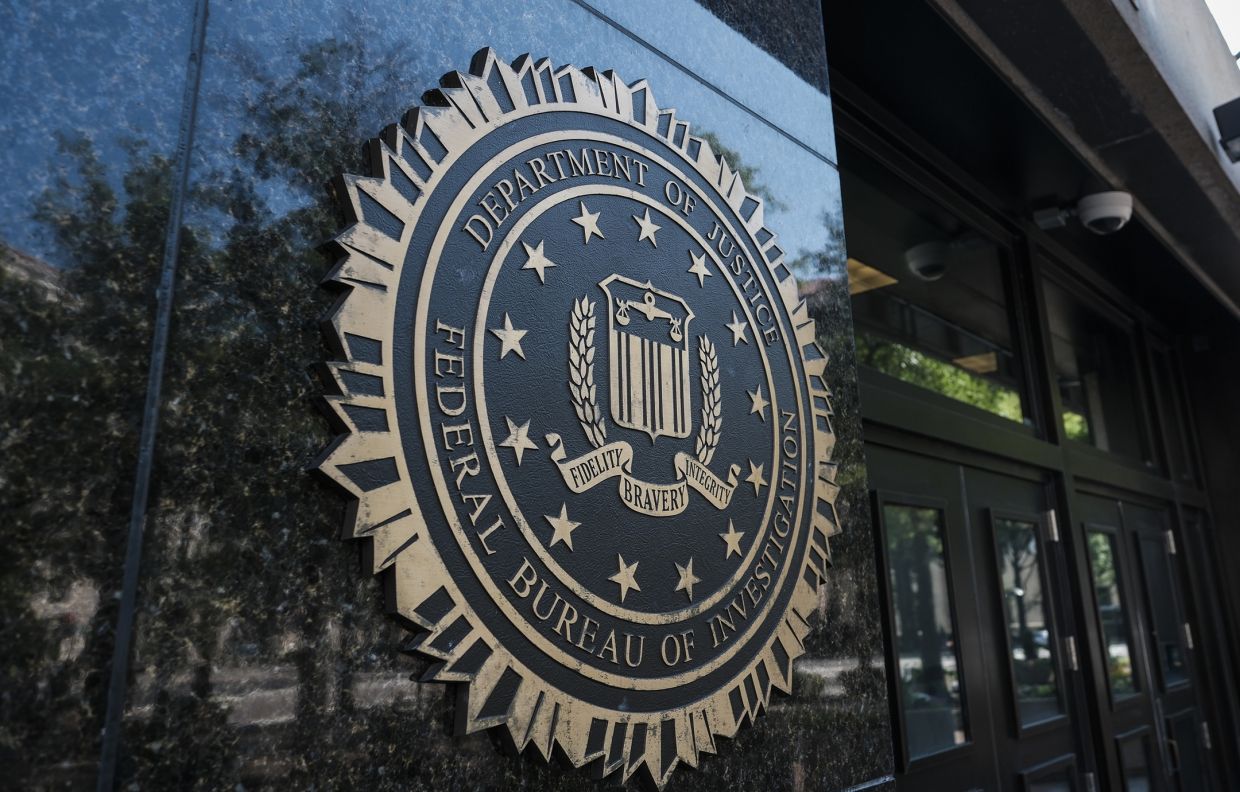
An FBI supervisory agent working in Washington has been arrested following his confession to stealing cryptocurrency that had been seized as evidence in a federal investigation. Patrick Yaroch's case illustrates a troubling breach of institutional trust within America's premier law enforcement agency, raising questions about oversight mechanisms and the vulnerabilities that emerge when agents gain access to digital assets of significant value.
According to court documents filed in the matter, Yaroch experienced what investigators describe as a genuine moral reckoning, prompting him to voluntarily disclose his actions. He confided in an unidentified Justice Department employee, explaining that the theft was "eating him up inside" and that he needed to "get it off his chest." This admission, rather than discovery through routine audits or forensic examination, marked the beginning of an accelerated investigation that culminated in his weekend arrest on charges of possession of stolen property.
The scope of the theft appears substantial, though Yaroch's own accounting proved imprecise. When questioned, the supervisory agent expressed uncertainty about the exact amount he had taken, attributing this vagueness to the fact that stolen funds had been commingled with his personal financial holdings. He initially suggested the sum fell below US$1 million, yet when investigators examined his cryptocurrency wallet—where he had deposited the proceeds—they discovered approximately one million dollars in digital assets. This discrepancy raises questions about whether Yaroch was being deliberately evasive or genuinely unable to track his illicit withdrawals.
The timing of Yaroch's theft spans a critical period in cryptocurrency volatility and regulatory evolution. He claims to have initiated the scheme in late 2024 or early 2025, executing between 10 and 12 separate withdrawals over this interval. Each transaction required access to a passphrase belonging to the original cryptocurrency account owner—credentials that Yaroch had lawfully obtained during his official investigation of the individual. This detail is particularly damaging, as it demonstrates that Yaroch exploited his legitimate access and investigative privileges to facilitate what amounts to a high-tech heist from within the government apparatus itself.
Yaroch's motivations, as reconstructed by federal authorities, reveal a complex psychological profile combining frustration with institutional constraints and personal ambition. In conversations with colleagues, he articulated his growing sense of being "spinning out of control" and expressed resentment that the FBI "could not or would not act against adversarial cryptocurrency accounts." These statements suggest that Yaroch may have rationalized his conduct as a form of vigilante justice or at minimum as a justified response to perceived institutional inadequacy in addressing cryptocurrency-related threats.
Digital evidence uncovered during the investigation provides additional insight into Yaroch's state of mind and financial aspirations. In May, he queried ChatGPT seeking investment recommendations for one million dollars, explicitly mentioning a retirement goal around age 40 and a detailed vision of lifestyle relocation. He expressed particular interest in properties in Cilento, Italy, and Portugal's Dao region—locations associated with wine production and rural tranquility. These searches paint a portrait of an individual contemplating significant life changes and possibly viewing the stolen cryptocurrency as a vehicle for achieving them.
The handling of Yaroch's case reveals notable procedural tensions within federal law enforcement. Despite his announced willingness to cooperate further with investigators and his stated intention to retain legal counsel by August 3, FBI officials opted to conduct a surprise search of his residence and execute his arrest over the intervening weekend. This aggressive timeline suggests that authorities feared either flight risk or the destruction of evidence, though Yaroch's voluntary disclosure might have indicated lower flight probability than typical criminal suspects.
Notably, Yaroch has not yet been formally charged with the core offense of stealing cryptocurrency, a gap that likely reflects the investigation's rapid pace rather than any evidentiary insufficiency. Instead, he faces charges of possession of stolen property—a charge that, while serious, carries different legal implications and sentencing parameters. Court records as of the latest filings do not identify any attorney representing Yaroch, suggesting either that he has not yet secured counsel or that such representation has not yet entered formal appearances in the case.
This case resonates particularly for Southeast Asian audiences given the region's emerging cryptocurrency markets and the increasing involvement of regional enforcement agencies in cross-border digital asset investigations. Malaysia, Singapore, and other nations have intensified efforts to regulate cryptocurrency trading and combat digital asset-related crime, making the integrity of investigators handling seized crypto essential to public confidence. When law enforcement officers themselves become perpetrators of theft, it undermines the credibility of entire investigative units and complicates international cooperation on cases involving digital currencies.
The structural vulnerability exposed by Yaroch's conduct—the ability of investigators to access and exploit passphrases obtained during legitimate probes—demands urgent policy review. Many jurisdictions, including those in Southeast Asia, are still establishing best practices for cryptocurrency evidence management, chain of custody protocols, and access controls. This incident demonstrates that American law enforcement, despite its resources and sophistication, has not yet achieved foolproof safeguards against internal theft of digital assets.
For Malaysian legal and regulatory frameworks, the Yaroch case offers cautionary lessons as domestic agencies expand their cryptocurrency investigation capabilities. It underscores the necessity of implementing multi-signature authority requirements, regular audit trails, and compartmentalized access to seized digital assets. The psychological dimension also merits attention—Yaroch's apparent frustration with institutional limitations suggests that law enforcement agencies must create legitimate channels for agents to voice concerns about resource allocation and investigative constraints, lest those frustrations metastasize into corrupt conduct.
The broader implications extend to questions about cryptocurrency's place within the financial system and its particular vulnerabilities to insider threats. Unlike traditional currency or securities held in segregated accounts with external custodians, cryptocurrency seized by law enforcement often remains under the direct control of investigating agents, creating opacity and opportunity. As Southeast Asian nations develop their own approaches to cryptocurrency regulation and law enforcement, decisions about custody arrangements and oversight mechanisms will significantly impact both public safety and institutional integrity.

