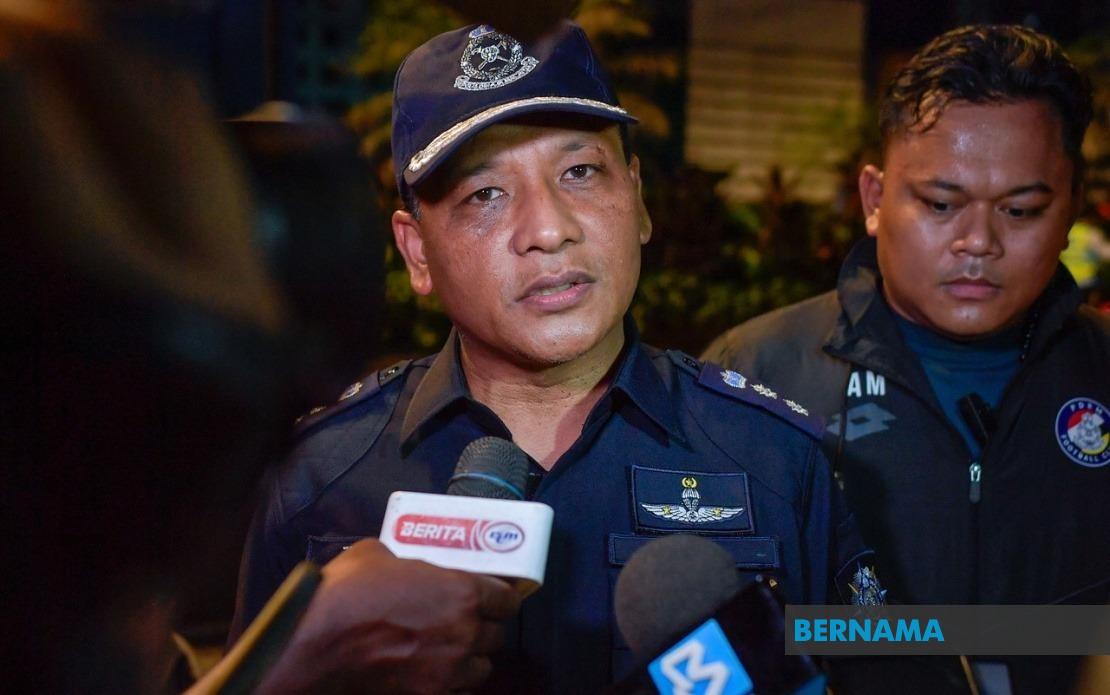
A fatal traffic collision in Kuala Lumpur early this morning has escalated to a critical juncture in the criminal justice process, with police announcing that their investigation file will be submitted to the Attorney General's Chambers tomorrow for assessment and potential prosecution. The deadly crash, involving a truck operated by the Kuala Lumpur Immigration Department, claimed three lives and left another family member in intensive care, prompting swift action from traffic authorities to bring the matter before legal counsel.
ACP Mohd Zamzuri Mohd Isa, who heads the Kuala Lumpur Traffic Investigation and Enforcement Department, disclosed that the investigation paper would be delivered to the Head of the General Crime and Public Order Division within the Attorney General's Chambers. He explained that the submission followed detailed consultations between his traffic division and the Kuala Lumpur Prosecution Director, ensuring all relevant considerations had been made before the case moved forward for legal review and potential charging decisions.
The circumstances surrounding the crash remain under scrutiny as investigators gathered evidence from the scene. Police detained both the driver of the Immigration Department truck and the driver of the Proton Saga that was struck in the collision, securing a one-day remand order for each suspect. The investigation itself proceeded under Section 41(1) of the Road Transport Act 1987, a provision typically applied in cases where vehicle operation results in death or serious injury.
The tragedy unfolded around 1 am when the Kuala Lumpur Immigration Department's "Black Maria" truck entered an intersection on Jalan Sultan Ismail while the traffic signal showed red. The official vehicle, equipped with its beacon and siren activated, was reportedly travelling empty toward Chow Kit to conduct an operation targeting undocumented immigrants. Despite these warning lights and sounds, the truck proceeded through the red signal and collided with a Proton Saga that was lawfully proceeding through the intersection under a green light.
The impact proved catastrophic. The truck lost control following the collision, veered sharply off the roadway, and struck multiple persons and vehicles in its path. Among those hit was an Inokom Matrix, along with pedestrians who had been in the vicinity. The collision scene involved at least three separate vehicles and multiple casualties, indicating the severity of the impact and the chaotic sequence of events that unfolded in mere seconds.
The victims of the fatal crash were identified as Shaik Mohd Firdaus Shaikh Yahya, aged 53, along with two of his daughters, Siti Nor Sazlin, 25, and Siti Darwisyah Auni, 12. His wife, Norhayati Razali, 55, sustained serious injuries and was admitted to the Intensive Care Unit at Kuala Lumpur Hospital, where she remained under medical supervision. The loss of three family members in a single incident has highlighted the devastating human cost of the collision and raised questions about the decision-making processes that led to the truck's movement through the intersection.
This incident adds to ongoing concerns about emergency vehicle operations and traffic law enforcement in Malaysia. While official vehicles equipped with sirens and beacons receive certain privileges under traffic regulations to respond to emergencies or conduct time-sensitive operations, the circumstances here suggest those privileges may have been exercised without adequate regard for other road users' safety. The fact that the truck was empty and travelling to a future location rather than responding to an immediate incident may become significant in determining culpability.
The referral to the Attorney General's Chambers represents a pivotal moment in the investigation. Legal counsel will review the entire investigation file to determine whether charges are warranted and, if so, what level of charges best reflects the circumstances. Potential charges could range from negligent driving causing death to more serious traffic offences, depending on how prosecutors assess the driver's conduct and decision-making at the moment of the collision.
For Malaysian road safety advocates, this case underscores persistent tensions between emergency response privileges and public safety. The use of sirens and beacons to proceed through red lights creates inherent risks when other road users may not have sufficient time to react or may be unaware of approaching vehicles. Questions will likely emerge about whether training, protocols, and accountability mechanisms for official vehicle operations are adequate to prevent similar tragedies.
The broader implications extend beyond this single incident. Malaysia's traffic enforcement agencies and government departments that operate vehicles must grapple with balancing operational efficiency against public safety responsibilities. The involvement of the Attorney General's office signals that authorities are taking the matter seriously, and the outcome may influence how such cases are handled going forward.
As the investigation proceeds through the legal system, the family affected by this tragedy will await answers about how three lives were lost and whether accountability mechanisms will deliver justice. The referral to the Attorney General's Chambers will determine whether the legal system itself holds the driver and possibly his employer to account for decisions that resulted in such devastating consequences on a Kuala Lumpur street in the early morning hours.

