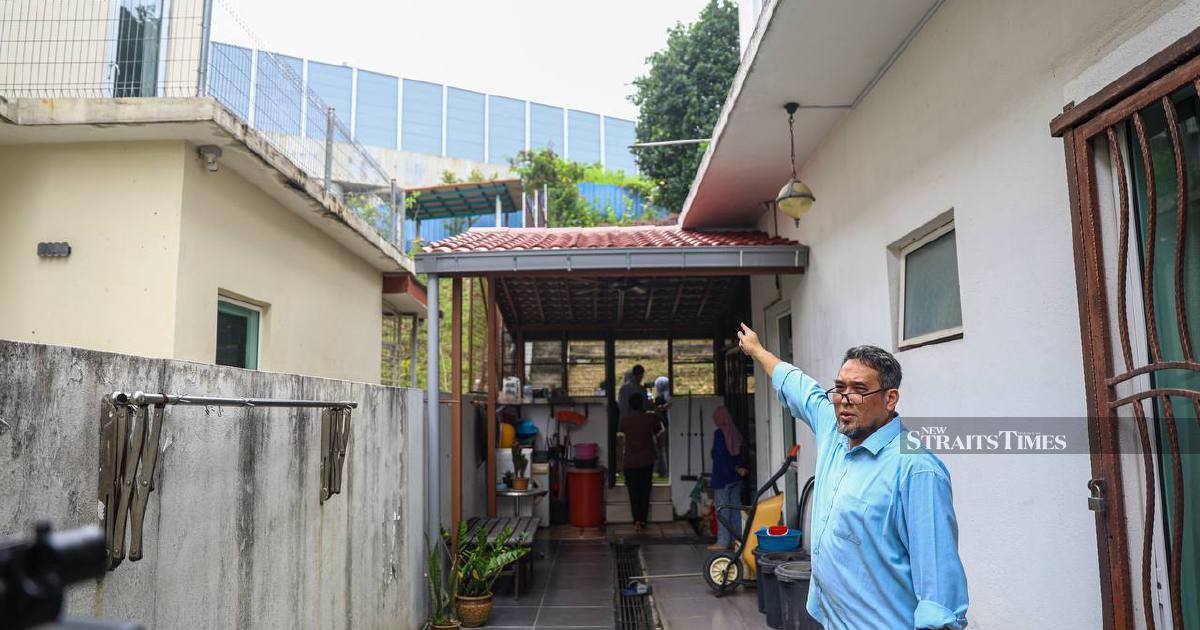
A family in Kuala Lumpur has initiated legal proceedings seeking RM1.33 million in damages against three parties connected to the East Coast Rail Link (ECRL) project, contending that construction operations have jeopardised the safety and architectural stability of their residence.
The lawsuit represents an emerging concern regarding the broader implications of large-scale infrastructure development in densely populated Malaysian regions. The ECRL project, one of Malaysia's most significant recent transport initiatives, has drawn scrutiny over its proximity to existing residential areas and the impact of construction activities on neighbouring properties. This case highlights the tension between advancing national infrastructure ambitions and protecting the interests of families whose homes lie in project corridors.
Residential properties situated along major construction zones frequently experience structural complications including cracks in foundations and walls, settlement issues, and foundational displacement caused by heavy machinery, excavation, and vibration from drilling and pile-driving operations. The family's allegations suggest that monitoring and mitigation measures employed during the ECRL's construction phase may have been inadequate to safeguard adjacent properties from construction-induced damage.
The involvement of multiple defendants—typical in construction-related disputes—indicates a complex chain of responsibility spanning project developers, contractors, and potentially supervisory authorities. Determining which parties bear liability requires establishing clear causation between specific construction activities and the documented structural deterioration. Such disputes often hinge on technical engineering assessments and expert testimony regarding damage mechanisms and timelines.
Malaysia's legal framework for construction damage claims has evolved through precedent, with courts recognising that developers and contractors bear responsibility for foreseeable harm to adjacent properties. However, claimants must demonstrate direct causation and quantifiable losses, a burden that frequently necessitates comprehensive structural surveys, engineering expert reports, and documentation of repair costs. The RM1.33 million claim suggests substantial damage requiring major remedial work or potential relocation expenses.
The ECRL project, running from Port Klang to Kota Bharu, traverses multiple established residential neighbourhoods and commercial zones. While environmental and social impact assessments precede such megaprojects, practical implementation often reveals unanticipated consequences. Vibration thresholds, dust control, noise mitigation, and temporary ground subsidence—all construction realities—can accumulate into significant property damage despite contractor compliance with formal guidelines.
This lawsuit carries implications beyond the individual family, as it may establish jurisprudential precedent for other affected residents. Infrastructure projects inherently disrupt surrounding communities, and families often lack adequate recourse when property damage occurs. Successful litigation could strengthen the bargaining position of affected homeowners in future disputes with developers and contractors, potentially compelling more rigorous pre-construction baseline surveys and enhanced protective measures.
The case also underscores tension between infrastructure accountability and project momentum. Developers and contractors facing extensive claims may experience delayed timelines and increased costs, factors that already strain infrastructure budgets in Malaysia. Conversely, inadequate compensation mechanisms leave residents bearing the financial burden of repairs and diminished property values, creating equity concerns that demand resolution.
Resolving such disputes typically involves technical assessment phases where independent engineers evaluate structural conditions and attribute damage causes. Engineering evidence frequently proves decisive, as precise identification of damage mechanisms—whether from construction vibration, groundwater changes, or pre-existing defects—determines liability apportionment. The defendants in this case will likely commission counter-investigations to challenge causation assertions.
Beyond the immediate legal contest, the matter highlights policy gaps in Malaysia's construction oversight. While authorities enforce safety standards for workers and public spaces, protection mechanisms for neighbouring residential properties remain relatively underdeveloped compared to jurisdictions with mature construction regulation frameworks. Establishing mandatory damage assessment protocols, comprehensive insurance requirements, and community liaison standards could prevent such disputes.
For Malaysian homeowners proximate to active construction zones, this case demonstrates the importance of documenting baseline property conditions through professional surveys and photographic evidence. Early notification of damage concerns and formal complaints to developers create contemporaneous records supporting future claims. Many residents remain unaware that construction damage recovery is legally actionable, leading to significant uncompensated losses.
The financial and emotional toll on affected families extends beyond litigation itself. Living in properties with structural concerns creates safety anxiety, complicates future property transactions, and generates ongoing repair expenses. Insurance policies rarely cover construction-adjacent damage, leaving families with limited recourse absent successful lawsuits. This family's decision to pursue formal legal action through the courts reflects the inadequacy of alternative dispute resolution mechanisms in addressing infrastructure-induced residential harm.
As Malaysia continues developing major transport and utility infrastructure, managing construction impacts on existing communities demands greater attention to preventive measures, transparent accountability mechanisms, and equitable compensation frameworks. This lawsuit serves as a reminder that development progress cannot be measured solely in completed projects but must account for the communities and properties that bear its operational costs.

