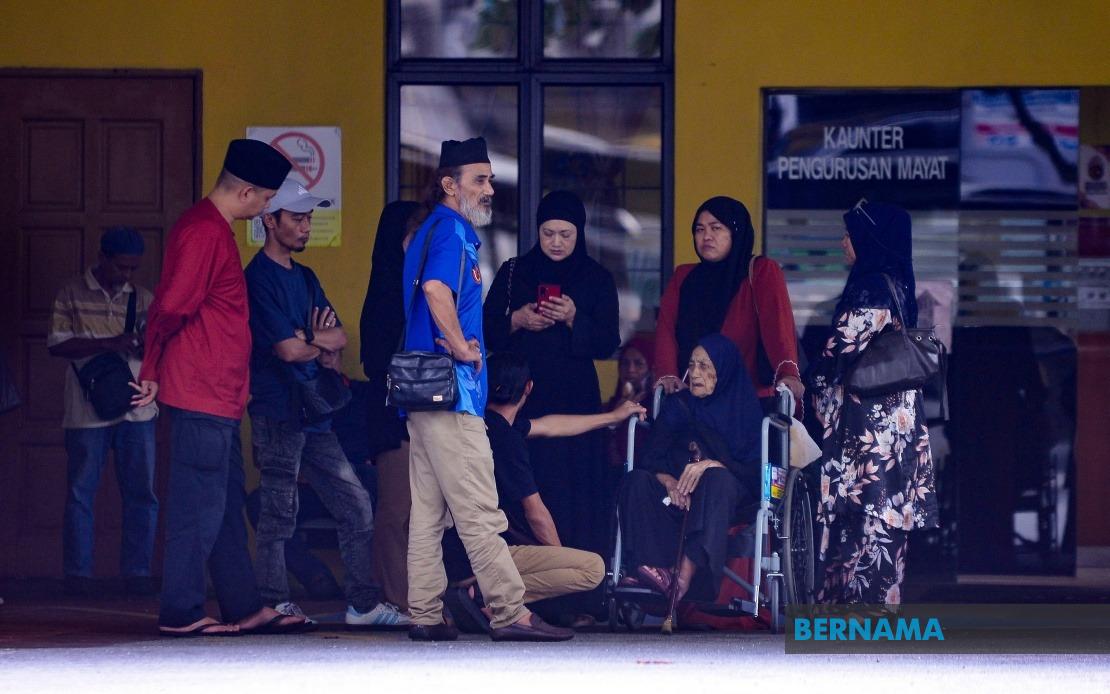
A Malaysian family bereaved by a catastrophic dawn traffic collision is pressing authorities for a thorough and transparent inquiry into the circumstances that claimed three lives at Maju Junction. Mohd Nadzri Razali, 69, has stepped forward from his home in Taman Aman Fasa 2, Mambang Di Awam near Kampar to voice the family's demands for accountability and justice following the tragedy that has left his household fractured and his younger sister fighting for survival in hospital.
The accident occurred shortly after 1 am when an empty Isuzu Black Maria lorry operated by the Immigration Department left the Kuala Lumpur Immigration Office en route to Chow Kit to conduct an enforcement operation targeting undocumented migrants. The circumstances surrounding the collision reveal a chain of events that has sparked significant concern about the vehicle's conduct at the intersection. According to accounts of the incident, the lorry entered the Maju Junction while its traffic signal displayed red, despite operating with its beacon lights and siren engaged. A Proton Saga travelling perpendicular to the lorry on a green light found itself unable to brake or maneuver sufficiently to avoid the oncoming vehicle, resulting in a violent collision that investigators are now examining under Section 41(1) of the Road Transport Act 1987.
The impact of the collision was devastating. The force propelled the lorry out of control, causing it to skid across the intersection where it struck four pedestrians who were members of the same family. Shaik Mohd Firdaus Shaikh Yahya, a 53-year-old man, and his two daughters—Siti Nor Sazlin, 25, and Siti Darwisyah Auni, just 12 years old—were pronounced dead at the scene. The family's mother, Norhayati Razali, 55, sustained severe injuries and remains hospitalized in the Intensive Care Unit of Kuala Lumpur Hospital. The collision also involved an Inokom Matrix multi-purpose vehicle, underscoring the extensive disruption caused by the incident.
Mohd Nadzri's determination to see a thorough investigation stems partly from preliminary reports he has received regarding the lorry's actions at the intersection. Speaking from his home, he disclosed that he had been informed the Immigration Department vehicle allegedly proceeded through a red traffic light—a claim that, if substantiated, would represent a critical breach of road safety protocols. He emphasized his hope for transparency throughout the investigative process, stating his firm belief that the family deserves clarity about what transpired and assurances that accountability mechanisms will function properly. The case now falls within the purview of road traffic safety authorities who must determine whether standard operating procedures were followed and whether any lapses contributed to the tragedy.
The family's immediate medical concerns centre on Norhayati Razali's recovery and care trajectory. While conscious and showing signs of improvement, her condition remains uncertain as to whether she can be discharged from Kuala Lumpur Hospital soon. The family has expressed a preference to transfer her to either Hospital Ipoh or Hospital Teluk Intan in Perak, where they maintain stronger community connections and family support networks. This desire to relocate her care reflects both the family's wish to maintain closer proximity to their bereaved relative during her recuperation and the practical challenges of managing recovery far from their home base in Perak.
The collective loss has inflicted extraordinary emotional damage on the extended family. Mohd Nadzri described the sudden death of three family members simultaneously as shocking and deeply heartbreaking, particularly given the family's recent history of loss. Just three months prior to this collision, in May, the family had mourned the passing of another member, meaning the household is now grappling with compounded grief and trauma. The timing compounds the tragedy, leaving survivors struggling to process multiple bereavement events within a relatively short period and raising difficult questions about the family's resilience and psychological wellbeing during the coming months.
Memories of ordinary family moments now carry poignant significance. Mohd Nadzri recounted that he had last encountered Shaik Mohd Firdaus Shaikh Yahya and his family approximately two weeks before the collision, when they had returned to their Kampar neighbourhood to visit and maintain family graves in Teluk Bakong, Ayer Tawar. These were routine expressions of filial piety and cultural observance that characterize Malaysian family life. That brief encounter now represents the final memory Mohd Nadzri will carry of his brother-in-law and his nieces—a sobering reminder of how instantaneously normal life can be disrupted by traffic accidents, particularly those involving large vehicles and intersections.
The burial arrangements reflect the family's determination to honour their deceased with dignity and togetherness in death. All three victims will be interred in a single grave at the Muslim Cemetery in Kampung Air Hitam Labu, Kampar, a decision that symbolizes the family's desire to keep the deceased together and maintain their physical proximity even in their final resting place. This arrangement, while emotionally significant, also carries logistical and spiritual importance within the Muslim funeral tradition observed by the family.
The investigation's focus on Section 41(1) of the Road Transport Act 1987 will be critical in determining liability and whether any criminal charges should be pursued against the vehicle's operator or the Immigration Department as an institution. The provision addresses dangerous or reckless driving causing death and injury, making it the appropriate legislative framework for examining whether the lorry's operation at the intersection constituted a breach of driving standards. The transparency and thoroughness with which authorities conduct this inquiry will significantly impact the family's perception of justice and may set important precedents for how similar incidents involving government vehicles are handled in the future. For Malaysian road safety advocates and traffic law experts, the collision raises broader questions about whether emergency vehicles operating with lights and sirens should have different rules for navigating intersections, and whether such privileges create dangerous situations when other road users are unable to anticipate their movements.

