The Federal Agricultural Marketing Authority (FAMA) has announced a significant commercial achievement through its Agro MADANI Sales (JAM) initiative, which generated RM46.72 million in turnover during the January to May period across 1,833 nationwide events. The milestone represents a meaningful contribution to Malaysia's efforts to modernise agricultural marketing infrastructure and create sustainable income pathways for rural producers in an increasingly competitive domestic food market.
The programme reflects FAMA's strategic pivot towards bridging the gap between farm and consumer, a challenge that has long characterised Malaysia's agri-food sector. By establishing direct sales channels, the initiative circumvents traditional middlemen networks that historically compressed farmer margins whilst raising consumer prices. This direct-to-consumer model addresses a systemic inefficiency in Malaysia's food supply chain, where transport costs, storage losses, and intermediary markups can inflate produce prices by 30 to 40 percent before reaching retail shelves. The sales figures suggest the approach resonates with both vendors seeking higher returns and buyers pursuing better value.
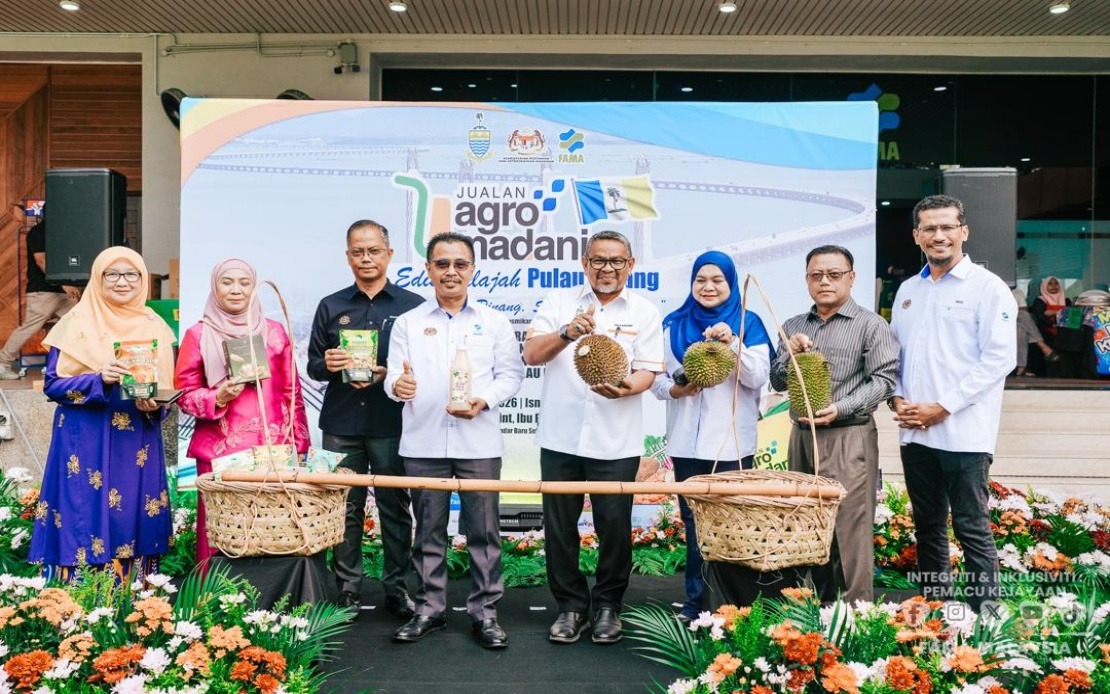
Penang's inclusion as the third major market in the JAM programme demonstrates FAMA's commitment to regional equity in agricultural commerce. The state, historically known for horticultural production rather than mass commodity farming, presents a distinct market opportunity. The Penang edition featured 45 individual sales lots operated by 30 entrepreneurs, targeting 2,000 visitors with a conservative RM100,000 sales projection. This structure indicates FAMA's focus on supporting small and medium-sized agricultural enterprises rather than consolidating sales through large agribusiness players, a distinction relevant to Malaysia's broader agenda of inclusive economic development.
The product portfolio showcased at the Penang edition reflects sophisticated consumer preferences emerging in Malaysian urban centres. Premium Balik Pulau durians, specialty varieties including Black Thorn and Red Prawn, and the increasingly sought-after Cempedak King demonstrate that Malaysian consumers have graduated from commodity purchasing towards premium, origin-specific agricultural goods. This segmentation allows smaller producers to compete on quality and reputation rather than pure price competition with industrial-scale operations. The integration of ready-to-eat food offerings—nasi kandar, Penang laksa, char kuey teow—further illustrates FAMA's recognition that modern food marketing extends beyond raw produce into value-added experiences and cultural narratives that enhance consumer engagement.
FAMA director-general Abdul Rashid Bahri's involvement signals institutional commitment at the highest operational level. His presence at the Penang launch, alongside Penang State Economic Planning Division secretary Kamarul Azlan Mustaffa, underscores the programme's importance as a state-level economic development instrument. This coordination between federal and state authorities indicates that agricultural marketing has transcended departmental silos to become an integrated policy priority, essential given Malaysia's federal structure where agricultural development responsibilities overlap between national and state governments.
The collaboration with the Penang Bumiputera Development Council introduces an equity dimension to the programme's scope. By positioning the JAM initiative as part of broader entrepreneurship development for Bumiputera participants, FAMA connects agricultural commerce to Malaysia's constitutional commitment to Bumiputera advancement. This framing proved politically significant as Penang Rural Development, Agrotechnology, Food Security and Cooperatives Committee Exco Datuk Rashidi Zinol publicly endorsed the programme, lending state-level legitimacy and integrating it into broader rural development strategies.
The scale of activity—1,833 programmes generating RM46.72 million across five months—yields an average per-event revenue of approximately RM25,500. While this suggests modest individual event turnover, the geographic distribution indicates FAMA's capacity to simultaneously operate multiple market activations, suggesting operational maturity and logistical capability. For context, sustaining this pace would project annualized sales exceeding RM112 million, a substantial achievement if maintained throughout 2024. However, the first-five-months timing warrants scrutiny, as agricultural sales in Malaysia typically spike during festive seasons and post-harvest periods; sustainability across lower-demand months remains to be demonstrated.
From a consumer perspective, the programme addresses persistent frustrations with fresh produce availability and pricing in Malaysian urban markets. Direct-from-producer transactions reduce quality degradation associated with extended supply chains, whilst transparent pricing mechanisms eliminate speculation and hoarding that periodically drives sharp price fluctuations in seasonal commodities. For price-conscious households, particularly in lower-income segments, these events offer predictable access to quality vegetables, fruits, and proteins at controlled costs.
The programme's emphasis on marketing chain strengthening and market network expansion positions FAMA as a facilitator of economic value addition rather than a traditional regulatory authority. This represents a significant institutional repositioning, aligning the agency with contemporary food security paradigms that emphasise not merely production capacity but functional, resilient distribution systems. Given Malaysia's heavy reliance on agricultural imports—the nation imports approximately 40 percent of its food requirements—strengthening domestic agri-food marketing networks contributes indirectly to food sovereignty and supply chain resilience.
The inclusion of agro-based product categories beyond fresh produce, encompassing processed foods and prepared items, suggests FAMA's recognition that agricultural commerce increasingly encompasses value chains rather than single commodities. This perspective enables farmers and small processors to capture higher margins through value addition, a crucial consideration given that global commodity price pressures constrain returns for primary producers. The Penang delicacies featured—traditional foods with cultural heritage—further indicate that FAMA understands agricultural marketing as cultural commerce, leveraging Malaysia's diverse culinary traditions as competitive advantages in both domestic and potentially export markets.
The programme's success must be evaluated not solely through sales figures but through systemic impacts on agricultural entrepreneurship participation rates, average farmer incomes, and consumer purchasing patterns. The stated commitment to expanding market opportunities for entrepreneurs whilst improving consumer access requires longitudinal tracking of these metrics beyond headline sales achievements. Questions regarding programme sustainability post-event, whether consumer relationships developed at JAM events translate into recurring direct purchases, and whether participating entrepreneurs achieve sufficient revenue stability to justify ongoing participation remain unanswered by current reporting.
Looking forward, the Agro MADANI Sales programme appears positioned to become a cornerstone of Malaysia's agricultural modernisation efforts, particularly as consumers increasingly demand transparency, origin-traceability, and direct producer relationships. The programme's expansion to Penang follows successful activations in Selangor, suggesting momentum towards national coverage. However, ensuring equitable access for entrepreneurs across all regions, particularly in less urbanised areas where agricultural production concentrates but consumer density remains lower, will determine whether the initiative meaningfully advances inclusive agricultural development or primarily benefits producers proximate to urban centres capable of sustaining 2,000-visitor events.

