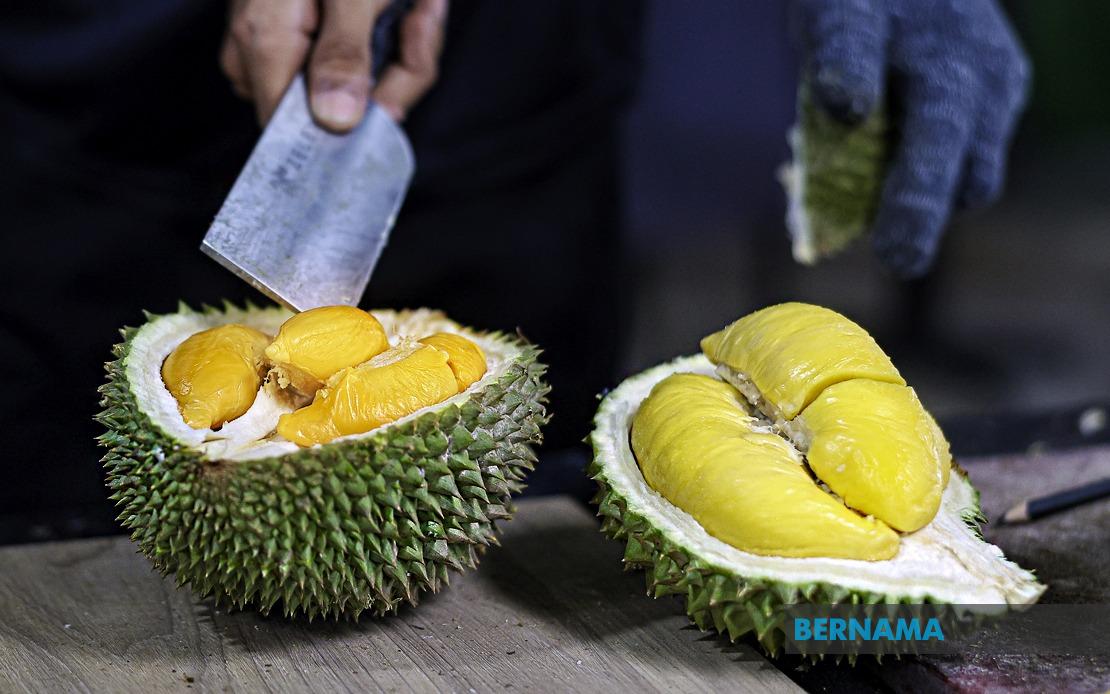
The Federal Agricultural Marketing Authority is accelerating its marketing drive for Penang's booming durian season, capitalising on this year's anticipated harvest of more than 18,000 metric tonnes as part of its 2026 Seasonal Fruits Marketing and Intervention Plan. Unveiled at the Penang Durian Festival and Road to MAHA 2026 launch event in Nibong Tebal by Chief Minister Chow Kon Yeow, the initiative aims to steer the state's premier fruit through the critical June to August selling window while managing the downstream effects of elevated production volumes across Malaysia's major growing regions.
The output projection represents a meaningful increase from approximately 17,000 metric tonnes recorded in the preceding year, signalling the maturation of Penang's durian sector as a significant contributor to national supply. However, according to Penang FAMA director Mohd Hafiz Nurulhuda, the state's position differs meaningfully from competitors enduring sharper oversupply pressures. He attributed this relative resilience to the composition of Penang's growing stock, with kampung or local durian varieties comprising roughly 30 percent of total production, thereby insulating the broader market from the worst disturbances seen in regions with heavier commodity durian concentration.
FAMA's intervention strategy relies on three complementary mechanisms designed to provide economic certainty to growers while maintaining competitive wholesale dynamics. The authority has committed to purchasing durians through forward agreements encompassing approximately 85 metric tonnes, effectively pledging to absorb production at predetermined rates. Most critically, FAMA established a floor price mechanism targeting kampung varieties at RM2.70 per kilogramme—a threshold below which the agency will step in as buyer of last resort. This safety net addresses the primary vulnerability facing small and medium-scale producers who lack direct market access or negotiating leverage with major retailers and exporters.
The premium segment, meanwhile, continues to demonstrate remarkable price stability. High-value varieties including Black Thorn and Musang King have maintained quotations in the RM30 to RM40 per kilogramme range, reflecting sustained regional and international demand for these reputation-intensive products. This bifurcation between commodity and premium markets underscores the importance of varietal diversification and quality positioning—lessons increasingly relevant for smallholder farmers across Southeast Asia seeking to escape commodity price volatility through differentiation and branding.
Physical infrastructure expansion underpins FAMA's logistical response to the seasonal surge. Two temporary collection centres established in Balik Pulau and Seberang Jaya have already processed approximately 50 metric tonnes of fruit, functioning as consolidation points that reduce transport friction and enable small producers to achieve market scale without individually navigating urban distribution networks. Additionally, FAMA has channelled 310 metric tonnes through its own marketing outlets whilst extending direct sales coverage into the Klang Valley—Malaysia's largest metropolitan consumption centre—thereby shortening supply chains and capturing value that would otherwise accrue to intermediaries.
Beyond immediate seasonal support, FAMA is executing longer-term positioning initiatives that align durian marketing with broader agricultural tourism and rural development objectives. The authority is developing agro-tourism projects and financing orchard facility upgrades, transforming Penang's durian belt into a destination sector that generates revenue through farm visits, harvest experiences, and producer-direct purchasing whilst simultaneously raising productivity standards and encouraging generational succession within farming communities. This approach mirrors successful models elsewhere in Southeast Asia, where agricultural tourism has become a stabilising income supplement for fruit producers facing structural market pressures.
The timing of these interventions reflects sophisticated recognition of cyclical challenges within tropical fruit marketing. Malaysia's durian industry has experienced periodic gluts when multiple states achieve simultaneous peak harvests, compressed by modern logistics into narrow sales windows that suppress prices despite stable or growing consumption. Thailand and Vietnam have encountered similar dynamics, prompting both countries to invest in cold chain infrastructure, processing facilities, and export diversification—strategies that FAMA appears to be adopting incrementally.
For Malaysian agriculture stakeholders, the Penang initiative signals FAMA's evolving operational posture toward proactive market management rather than reactive crisis response. By deploying purchasing commitments, price floors, and collection infrastructure before supply peaks, the agency demonstrates willingness to absorb short-term costs to prevent the catastrophic price collapses that periodically undermine farmer viability and discourage production investment. This approach stabilises both rural incomes and consumer prices—dual objectives that remain elusive in many commodity sectors.
The initiative also carries implications for Malaysia's fruit export positioning. Penang's reputation for premium durian quality provides leverage in Southeast Asian and Asian markets where price-sensitive competition from Thailand and Vietnam intensifies annually. By ensuring domestic supply stability and maintaining quality standards through organised marketing channels rather than dispersed informal sales, FAMA enhances the consistency and reliability that major export customers demand, potentially expanding opportunities for processed durian products and value-added exports.
Looking forward, the success of FAMA's 2026 interventions will likely establish templates for managing other seasonal crops across Malaysia's regions. Coconut, pineapple, and mangosteen sectors face analogous oversupply risks and smallholder challenges, suggesting that the authority's durian experience could catalyse broader agricultural marketing modernisation. The integration of price supports, collection infrastructure, and tourism development represents a holistic model increasingly necessary as climate variability and production consolidation create sharper supply fluctuations.

