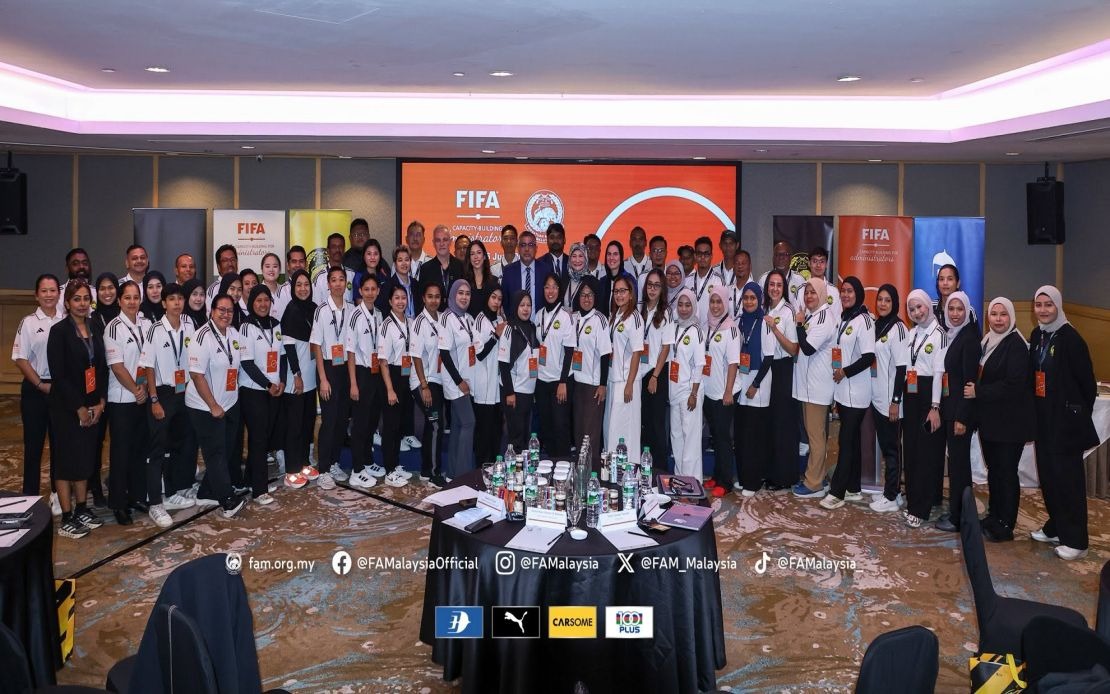
The Football Association of Malaysia (FAM) has initiated a significant capacity-building effort aimed at professionalising the administrative backbone of women's football in the country. Beginning in late June, the four-day FIFA Capacity-Building For Administrators 2026 programme represents a strategic pivot towards addressing gaps in management and institutional support that extend well beyond the tactical sphere of the sport. This marks an important recognition that for women's football to flourish in Malaysia, investment in human capital off the pitch is equally vital as on-field development.
The programme's design reflects contemporary understanding of sports ecosystem maturity. Rather than concentrating narrowly on coaching techniques and player development, FAM has partnered with FIFA to deliver comprehensive training modules that address the complex operational requirements of modern football administration. The curriculum encompasses Women's Leadership, Women's Competition frameworks, Club and Players' Rights, and Strategic Planning—a breadth that acknowledges the multifaceted challenges facing those tasked with managing women's football at institutional and grassroots levels. This holistic approach positions the initiative as a response to identified weaknesses in how Malaysian women's football clubs and national teams are currently structured and operated.
The delivery team itself underscores the international calibre of this intervention. FIFA Women's Football Development Experts Safia Abdeldayem and Pema Choden Tshering bring global experience in advancing women's football across diverse contexts. Their presence suggests that FAM is not merely replicating standard administrative training, but rather importing proven methodologies from markets where women's football has achieved greater commercial and competitive maturity. For Malaysian participants, exposure to internationally tested frameworks offers pathways to address longstanding organisational inefficiencies that may have constrained the growth of domestic women's competitions and club infrastructure.
The programme's focus on empowering female leadership within football administration carries particular significance for Malaysia's development agenda. By deliberately cultivating women leaders in management and administrative roles, FAM is constructing a pipeline of decision-makers whose presence at institutional levels can reshape how women's football is resourced, prioritised, and promoted. This gender-targeted approach acknowledges that structural barriers to women's participation in sports governance require deliberate, targeted interventions rather than passive hope that progress will emerge organically.
FAM's emphasis on sustainable ecosystem development distinguishes this initiative from isolated capacity-building exercises. The statement that development must extend beyond technical on-field aspects reflects maturity in strategic thinking. Malaysian women's football has often suffered from investment volatility and inconsistent institutional support, patterns that stronger administrative frameworks may help stabilise. Well-trained managers and administrators can implement more rigorous financial planning, player welfare protocols, and competition governance—elements essential for clubs to operate independently of sporadic sponsorship windfalls.
The involvement of FAM Secretary-General Datuk Noor Azman Rahman, along with representation from FIFA's Women's National Team Competitions Committee and the Asian Football Confederation's Women's Football Committee, signals institutional commitment at multiple governance levels. This layered engagement ensures that learning from the programme can be transmitted upward through regional and international networks, facilitating peer-to-peer knowledge exchange and benchmarking against standards elsewhere in Asia. Such vertical integration of training outcomes enhances the likelihood that recommendations will translate into actual policy and structural changes within FAM and affiliated clubs.
Malaysia's position within Asian football provides specific context for this initiative's importance. Several neighbouring nations have invested substantially in women's football infrastructure in recent years, creating competitive pressure and strategic opportunities. A programme designed to elevate Malaysian administrative capabilities responds to this regional dynamic, potentially accelerating the professionalisation timeline that would otherwise take years to achieve through incremental learning. Enhanced administration may yield immediate improvements in tournament organisation, player contract enforcement, and club financial management—areas where Malaysian women's football has sometimes lagged regional peers.
The reference to developing more skilled individuals in management and administration as crucial for growth reflects evidence-based sports development thinking. Research on women's sports globally consistently demonstrates that administrative bottlenecks—inadequate financial management, weak governance structures, poor player welfare systems—often constrain athlete development more severely than coaching limitations. By addressing the supply side of administrative talent, FAM is tackling a constraint that directly impacts how effectively technical investment translates into competitive performance and athlete retention.
FAM Women's Football Technical Director Soleen Al-Zoubi's presence among key stakeholders indicates coordination between technical and administrative streams within the association. This integration matters because sustainable programme growth requires alignment between coaches and administrators on matters ranging from facility allocation to competition scheduling. When technical and administrative leadership jointly engage with capacity-building content, the resulting shared understanding can reduce friction and create more coherent strategic direction for women's football development.
The initiative also positions Malaysia within FIFA's global women's football development architecture. By hosting this capacity-building programme, FAM gains visibility within international football governance networks and demonstrates commitment to FIFA's stated priorities. This alignment can yield secondary benefits, including potential technical assistance, funding opportunities, and inclusion in FIFA research initiatives focused on women's football innovation. For a confederation seeking to elevate its standing within continental and global structures, such programme participation serves strategic positioning beyond the immediate skills transfer.
Looking forward, the success of this initiative will likely be measured not merely by participant satisfaction but by whether changes in administrative practice materialize within participating clubs and FAM structures. If the programme catalyses adoption of improved financial management systems, enhanced safeguarding protocols, or more transparent club governance, the four-day investment will have yielded returns extending far beyond the training room. Conversely, if administrative recommendations encounter resistance from established power structures or resource constraints, the initiative's impact will be limited to knowledge transfer without institutional transformation.
For Malaysian women's football stakeholders observing from outside formal structures—sponsors, media, fans—this programme signal that organisational development is now a priority alongside athlete and coaching advancement. Stronger administration typically correlates with improved transparency, better athlete treatment, and more compelling competition structures. If successful, this initiative could catalyse a shift in how women's football is perceived and resourced domestically, moving beyond marginal status toward recognition as requiring serious institutional investment and professional management.