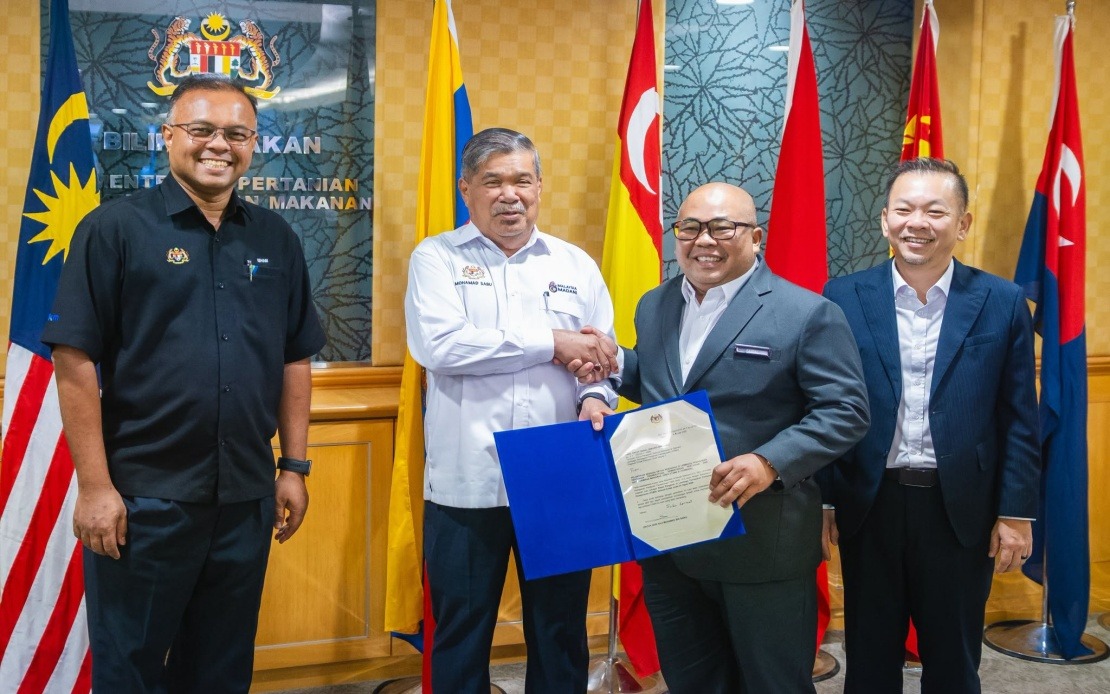
Faisal Iswardi Ismail has been named the new director-general of the Federal Agricultural Marketing Authority (FAMA), marking a significant leadership transition within one of Malaysia's key agricultural institutions. The appointment took effect from August 1, with Agriculture and Food Security Minister Datuk Seri Mohamad Sabu formally presenting the appointment letter during a post-Cabinet meeting in Kuala Lumpur on August 5.
The promotion of Faisal Iswardi from his previous role as deputy director-general overseeing Food Security and Operations represents a continuity of institutional knowledge at FAMA. His background in the operations and food security divisions suggests the authority is prioritising stability and operational competence as it navigates current challenges in the domestic agricultural sector. This internal elevation, rather than external recruitment, signals confidence in existing management capacity and the candidate's understanding of FAMA's strategic direction.
FAMA's mandate extends across critical areas of Malaysia's agricultural economy. The authority serves as the primary vehicle for marketing locally-produced agricultural commodities, a responsibility that has grown increasingly complex given regional competition and evolving consumer preferences. Under Faisal Iswardi's leadership, the organisation will need to strengthen its approach to supply chain management, particularly as domestic production faces pressures from import competition and changing climatic conditions affecting yield patterns.
Minister Mohamad Sabu emphasised the importance of the appointment in his public statement, highlighting FAMA's elevated strategic role within the broader food security landscape. His characterisation of the trust placed on the new director-general as "not small" underscores recognition that the authority faces mounting expectations to deliver measurable outcomes. These extend beyond traditional marketing functions to encompass food sovereignty concerns, farmer income stabilisation, and the economic viability of agri-food entrepreneurs throughout the country.
The timing of this leadership change occurs within a context of growing focus on agricultural resilience across Southeast Asia. Malaysia's agricultural sector has faced persistent challenges including labour shortages, rising input costs, and the need for modernisation to improve productivity. FAMA's role in bridging the gap between producers and markets becomes increasingly critical as the country seeks to reduce agricultural imports and strengthen its domestic production base. The new director-general will inherit an organisation tasked with delivering tangible improvements in farmer profitability and market access.
FAIMA's supply chain responsibilities are multifaceted, encompassing distribution, storage, and market intelligence for a diverse range of agricultural products from rice and palm oil to fresh produce and processed foods. Faisal Iswardi's previous operational oversight experience positions him to address inefficiencies that have historically plagued Malaysia's agricultural marketing infrastructure. Enhancing these systems directly impacts farmer returns and consumer food security, making the quality of FAMA's operations a matter of national economic concern.
The appointment also reflects broader institutional trends within Malaysian government agencies, where technical competence and operational experience are increasingly prioritised in senior leadership selection. This approach contrasts with earlier practices that sometimes emphasised political considerations or seniority over demonstrable capability. The choice to promote from within suggests the Ministry of Agriculture and Food Security is confident that Faisal Iswardi's operational background provides the necessary foundation for strategic leadership at the national level.
For agri-food entrepreneurs, this transition may signal both continuity and the potential for new initiatives. The incoming director-general's familiarity with operational challenges means he enters the role without a steep learning curve regarding FAMA's internal dynamics. However, entrepreneurs and farmer associations will be watching closely to assess whether his tenure brings tangible improvements in market access, pricing mechanisms, and the authority's responsiveness to sector needs. Competition from imported agricultural products remains intense, and FAMA's effectiveness directly influences the competitiveness of Malaysian producers.
Looking ahead, Faisal Iswardi will need to balance multiple pressures: supporting smallholder farmers whose livelihoods depend on stable markets, facilitating the export competitiveness of larger agri-businesses, and contributing to national food security objectives. His operational background suggests capacity to manage these competing demands, though success will ultimately depend on whether FAMA receives adequate resources and policy support. Regional developments also matter, as the authority operates within the context of ASEAN agricultural trade flows and shifting patterns of regional food production.
The minister's well-wishes in his public statement, delivered through a Facebook post, reflect the political visibility FAMA has acquired as concerns about food security have elevated agricultural policy's prominence in government discourse. This heightened attention presents both opportunity and scrutiny for the new leader. Faisal Iswardi's performance will be measured not only by FAMA's traditional operational metrics but increasingly by broader indicators of food security resilience and farmer welfare. The appointment therefore carries implications extending well beyond institutional management to questions about whether Malaysia can strengthen its agricultural competitiveness and self-sufficiency in coming years.

