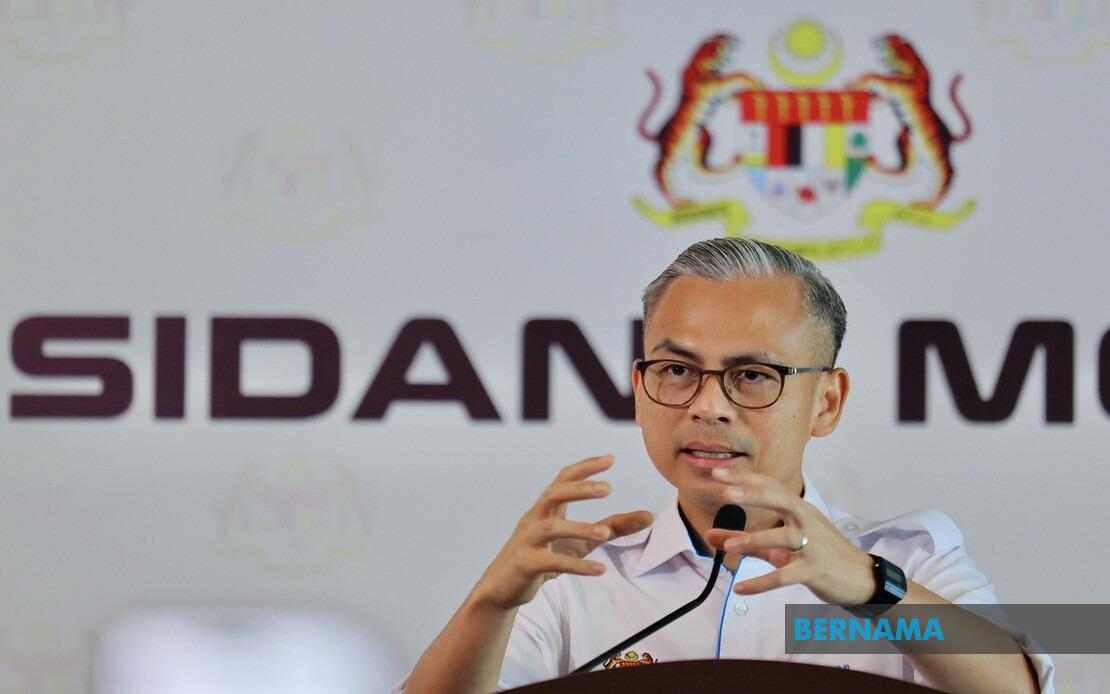
Communications Minister Datuk Seri Fahmi Fadzil has appealed to Malaysians to reaffirm their commitment to national unity and patriotism as the country prepares to mark both National Day and Malaysia Day in 2026. In a message released through Berita RTM, Fahmi underscored that Malaysia's hard-won independence represents the accumulated sacrifices and struggles of generations who came before, a legacy that demands active stewardship and respect from contemporary Malaysians.
Fahmi's statement arrives at a critical juncture when Malaysia, like many nations in Southeast Asia, faces complex challenges spanning economic pressures, social cohesion, and geopolitical uncertainties. The minister's emphasis on inter-communal harmony and transcending divisive identities reflects the government's continuing focus on maintaining the delicate social compact that has anchored Malaysia's stability since 1957. His message explicitly rejects narrow interpretations of patriotism that exclude segments of the population based on ethnicity, faith, or cultural background.
The communications minister stressed that strengthening national bonds requires more than symbolic gestures during festive periods. He outlined a framework centred on mutual respect, collective responsibility, and a shared vision for progress that encompasses all Malaysians regardless of their demographic background. This formulation addresses persistent concerns about social fragmentation and the need to build consensus around national priorities that transcend communal interests.
Central to Fahmi's message is the 2026 celebrations' theme, "Malaysia MADANI: Kesejahteraan Dinikmati", which translates to a vision of shared prosperity accessible to all segments of society. The theme carries significant policy implications, signalling the government's commitment to inclusive development models where economic gains are distributed equitably across regions and communities. This framing moves beyond rhetoric to suggest that patriotism in the Malaysian context inherently involves ensuring that prosperity remains a collective achievement rather than benefiting narrow constituencies.
The minister articulated that Malaysia's progress and prosperity must be understood as a collective responsibility rather than the exclusive domain of political elites or specific economic actors. This democratised conception of national development reflects growing recognition that social stability depends on broad-based economic participation and visible improvements in living standards across different segments of the population. Such messaging gains particular resonance in Malaysia, where persistent wealth disparities and perceptions of unequal opportunity have occasionally strained communal relations.
Fahmi's invocation of "a spirit of togetherness and shared responsibility" acknowledges the multi-ethnic and multi-religious character of Malaysian society whilst framing diversity as a source of collective strength rather than potential conflict. This represents a deliberate rhetorical strategy to counter polarising narratives that have gained traction in some quarters, emphasising instead that Malaysia's competitive advantage in the region derives from its ability to maintain harmonious plurality across ethnic and religious lines.
The minister's call for Malaysians to "ignite the spirit of patriotism" carries particular weight given contemporary debates about the nature of national identity and belonging in Malaysia. Rather than promoting a monolithic or exclusionary form of patriotism, Fahmi's formulation suggests a conception rooted in shared commitment to constitutional values, mutual respect for diversity, and collective efforts to build a Malaysia that functions equitably for all communities. This inclusive patriotism stands in contrast to narrower identity-based political narratives that have periodically emerged in Malaysian discourse.
Expressed hope that Malaysia would continue its trajectory as a united nation commanding respect internationally signals the government's aspiration for external standing correlated with internal cohesion. Regional and global observers frequently note that Malaysia's diplomatic influence and economic attractiveness are partly contingent on perceptions of domestic stability and the successful management of plurality. Maintaining inter-communal harmony thus becomes not merely a domestic imperative but also integral to Malaysia's positioning within Southeast Asia and broader international relations.
The timing of Fahmi's message, coinciding with preparations for dual celebrations honouring Malaysia's federation (1963) and independence (1957), provides occasion for reflection on trajectories since these founding moments. Both dates carry symbolic weight for different communities within Malaysia, making simultaneous commemoration a subtle affirmation that various historical narratives can coexist within a unified national framework. This calendrical approach to national identity acknowledges that patriotism in pluralistic societies requires space for multiple commemorative traditions and historical perspectives.
The minister's emphasis on fostering "a more inclusive, prosperous, peaceful and harmonious Malaysia" articulates an aspirational vision that extends beyond immediate festival celebrations. The sequential listing—inclusivity preceding prosperity and peace—suggests a causal relationship where genuine inclusivity creates conditions for sustainable prosperity and durable peace. This ordering reflects sophisticated understanding that top-down imposition of harmony proves insufficient; authentic national unity emerges when citizens perceive material benefits and feel genuinely included in national projects.
Fahmi's statement ultimately represents an attempt to mobilise patriotic sentiment around constructive visions of shared progress rather than defensive narratives or adversarial identity politics. In a regional context where several Southeast Asian nations grapple with similar questions about national identity, communal relations, and inclusive development, Malaysia's approach to celebrating its independence offers both instructive example and cautionary tale about the ongoing work required to sustain multi-ethnic democracies.

