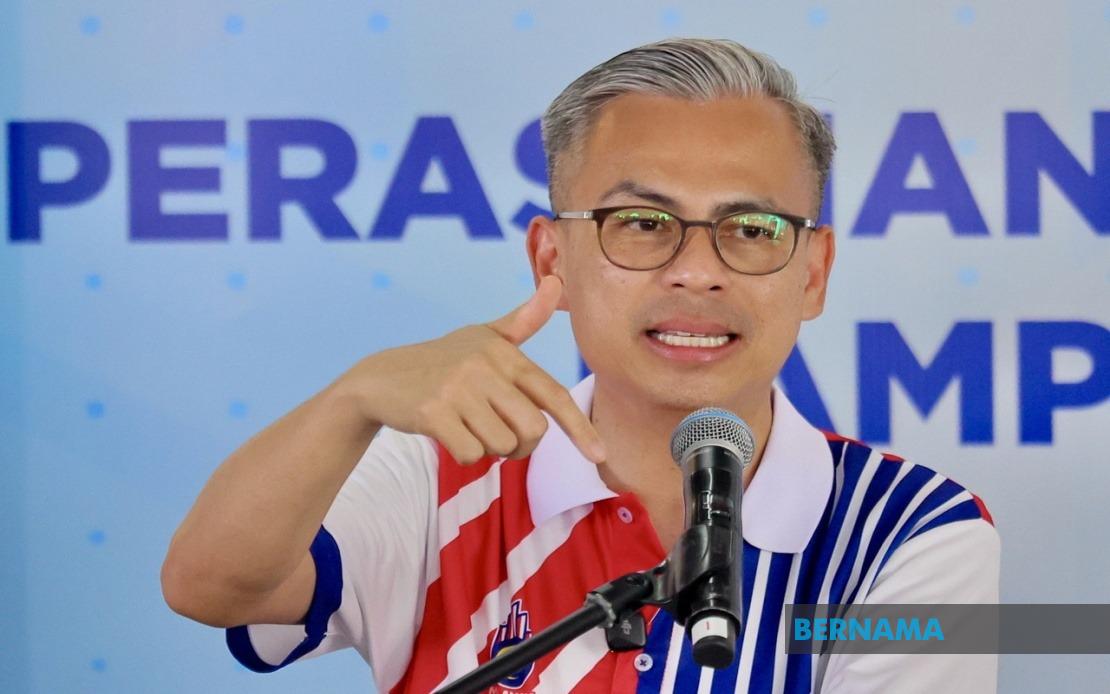
Communications Minister Datuk Fahmi Fadzil has denounced those orchestrating a fraudulent WhatsApp account that claims to represent Pakatan Harapan's candidate for the Endau state seat, Saiful Nizam Samat, characterising the deception as a reckless manoeuvre in the lead-up to the Johor state election. Fahmi's rebuke, delivered through comments on Saiful Nizam's official Facebook page, suggests that perpetrators of such schemes are prepared to resort to unethical means to secure electoral victory. The incident underscores growing concerns about the weaponisation of digital communication platforms during regional political contests in Malaysia, where voters increasingly rely on social media for candidate information and campaign messaging.
Saiful Nizam swiftly disassociated himself from the fraudulent account, issuing a public statement clarifying that the WhatsApp profile in question was not his and bore no relation to his campaign operations or Team SS, his official campaign machinery. The fake account was using Saiful Nizam's photograph and disseminating messages claiming "I am Saiful Samad, the future Endau assemblyman"—a variation of his actual name that nonetheless carries sufficient similarity to deceive casual observers unfamiliar with his proper identification. By publishing screenshots of the impersonating account's communications, Saiful Nizam aimed to demonstrate the extent of the deception and prevent further confusion among voters and campaign supporters.
The appearance of such fraudulent accounts reflects a broader challenge facing electoral integrity across Southeast Asia, where the sophistication of digital manipulation continues to evolve faster than regulatory and institutional safeguards can adequately address. In Malaysia's context, where WhatsApp remains ubiquitous as a communication tool amongst all demographic groups, the misuse of the platform for electoral purposes presents particular vulnerabilities. Impersonation campaigns can manipulate voter sentiment, harvest personal information, or spread misleading claims about a candidate's positions or whereabouts, thereby distorting the information environment upon which voters depend to make informed choices.
Saiful Nizam took the additional step of advising the public to exercise heightened caution when engaging with accounts claiming to represent him or his team. He explicitly cautioned against sharing sensitive personal data through unverified channels and recommended that anyone encountering suspicious messages should verify communications directly through Team SS's officially recognised contact methods. This guidance becomes increasingly critical in an electoral landscape where digital literacy varies considerably across the population, and where elderly voters or those less experienced with social media may struggle to distinguish between authentic and counterfeit accounts.
The Endau constituency contest has emerged as a complex, multi-party affair involving representatives from Barisan Nasional, Pakatan Harapan, Perikatan Nasional, and Parti Orang Asli Malaysia. Such four-cornered contests intensify the pressure on campaigns to deploy every available channel and tactic to gain competitive advantage, and the stakes are sufficiently high that some operatives may be tempted to cross ethical boundaries. The involvement of multiple parties vying for the same seat amplifies the risk that unscrupulous actors might attempt to exploit digital platforms to damage rivals' credibility or siphon away supporters through misinformation.
Fahmi's intervention as Communications Minister carries particular significance, as his portfolio encompasses responsibility for overseeing media standards and, increasingly, digital communication integrity. His public condemnation sends a signal to the broader political community that such tactics will face scrutiny and reputational consequences. However, his statement also highlights the persistent challenge of identifying and holding accountable those who orchestrate such schemes, as social media accounts can be created anonymously, operated remotely, and abandoned rapidly once detected, making attribution and prosecution extraordinarily difficult.
The incident arrives amidst broader Malaysian political discourse surrounding election conduct and the balance between competitive politics and democratic fairness. While negative campaigning and criticism of opponents form legitimate aspects of electoral competition, impersonation crosses a distinct threshold into fraudulent activity that undermines voters' ability to verify information sources and evaluate candidates on genuine credentials and policy positions. The fact that such a scheme was attempted and publicly exposed suggests that vigilance mechanisms—whether through candidate awareness, voter reporting, or platform monitoring—are functioning to some degree, though perhaps inadequately to prevent such attempts in the first place.
For Malaysian voters navigating the Johor state election, the incident serves as a practical reminder that digital verification of candidate communications represents a necessary precaution. In an era where misinformation can circulate at unprecedented speed and scale, personal verification through official campaign channels before sharing or acting on information has become an essential democratic responsibility. Political parties themselves bear responsibility for educating supporters about secure communication practices and for maintaining transparent, easily verifiable official contact information.
The episode also underscores the need for platform governance improvements. WhatsApp, despite its popularity and encryption features, lacks robust mechanisms for verifying the authenticity of user profiles claiming to represent public figures or organisations. While the responsibility for detecting and reporting fraudulent accounts ultimately rests with both users and platforms, the political establishment has legitimate interest in advocating for stronger identity verification standards during electoral periods. Regional governments including Malaysia have begun exploring legislative frameworks to address digital election interference, though balancing such measures with privacy protections and freedom of expression remains contentious.
As the Johor state election continues, campaigns across all competing parties would be well-advised to intensify their own digital security protocols and to communicate clearly with supporters about how to verify campaign messaging. The emergence of counterfeit accounts suggests that the electoral battleground increasingly extends into digital territory where traditional monitoring and regulatory frameworks struggle to maintain pace. Voters, for their part, should remain sceptical of campaign communications received through personal messaging applications and prioritise official channels for campaign information and candidate engagement, thereby protecting themselves from potential manipulation while simultaneously upholding their own role in maintaining electoral integrity.

