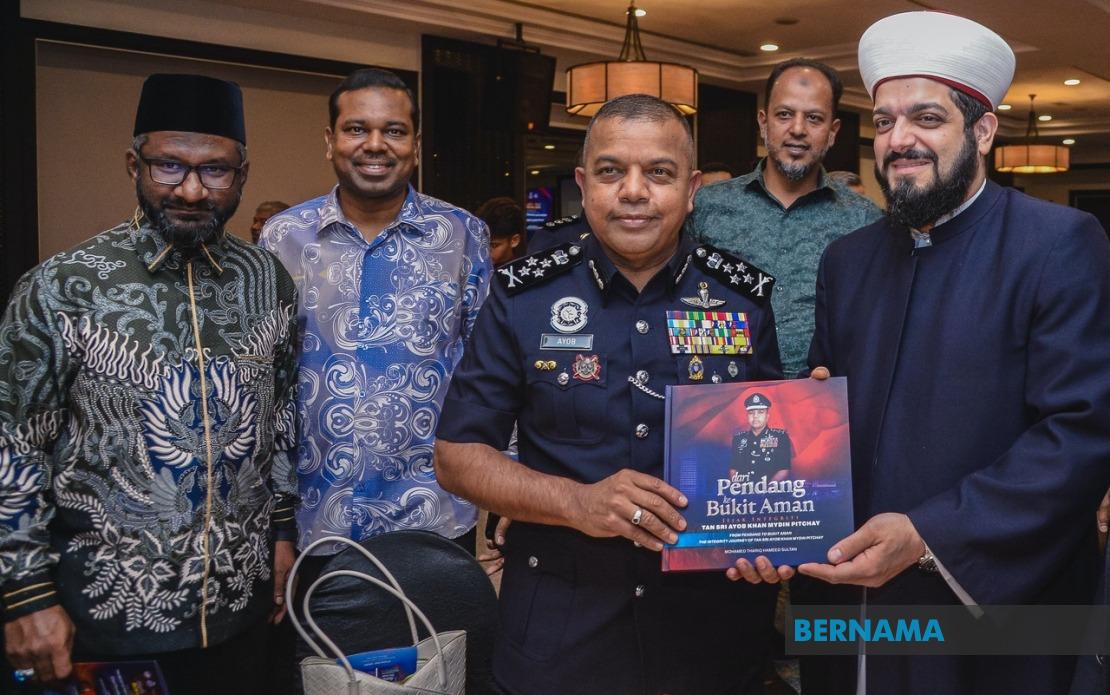
The threat landscape from militant and extremist organizations in Malaysia is undergoing rapid transformation, with recruitment strategies becoming increasingly sophisticated and digitally focused, according to Tan Sri Ayob Khan Mydin Pitchay, the country's Deputy Inspector-General of Police. Speaking at an event in Kuala Lumpur on July 23, Ayob Khan emphasized that the danger from such groups shows no signs of diminishing and will continue to adapt through emerging technologies and novel online channels that security forces must learn to counter more effectively.
The most striking development in this evolving threat picture is the migration of recruitment activities from traditional in-person settings to digital environments. Where extremist organizations once relied primarily on organizing physical usrah, or religious study circles, to identify and indoctrinate potential recruits, they have now pivoted almost entirely toward online engagement strategies. This shift represents a fundamental change in how these groups operate, making detection and prevention significantly more challenging for law enforcement agencies tasked with disrupting their activities before radicalization occurs.
Among the platforms now being weaponized by recruiters are mainstream video games that attract millions of global users, particularly younger demographics. Roblox, a widely popular online gaming platform where players create and explore user-generated worlds, has become a venue for extremists to identify vulnerable individuals and cultivate relationships that can lead to radicalization. The use of entertainment platforms as recruitment channels is particularly concerning because it blurs the lines between legitimate social spaces and radicalization pipelines, allowing bad actors to operate within environments where parental and institutional oversight is typically limited.
Ayob Khan further highlighted that the motivational drivers behind extremist activity have become more diverse and psychologically complex than traditional narratives about religious motivation alone might suggest. Contemporary radicalization increasingly stems from emotional triggers, accumulated grievances, and profound personal hatred that push individuals—particularly young people—toward violent action. The deputy police chief pointed to recent arrest cases involving teenagers as evidence that emotional factors now play a central role in recruitment and radicalization processes, suggesting that many individuals drawn into extremist circles are responding to personal anger and resentment rather than abstract ideological convictions.
This psychological dimension carries particular significance for Southeast Asian security agencies. The region's youth population is increasingly connected to global digital networks while navigating rapid social change, economic uncertainty, and identity questions. These conditions can create vulnerability to narratives that offer simple explanations for complex problems and promise belonging within communities of like-minded individuals. When extremist recruiters can reach such vulnerable individuals through the gaming platforms and social media channels they already use daily, the traditional barriers to radicalization—distance, social networks, institutional oversight—effectively dissolve.
The implications for Malaysian security strategy are substantial. Ayob Khan emphasized that law enforcement agencies cannot afford to remain reactive, waiting for threats to materialize into actual attacks. Instead, he stressed the critical importance of intelligence-led, proactive operations that detect and neutralize potential dangers before they reach the stage of violent action. He warned explicitly that failure to maintain vigilance and operational superiority against these threats could result in attacks occurring within Malaysia, a development he characterized as constituting a significant intelligence failure on the part of security forces.
Specific responsibility for addressing these emerging threats falls upon specialized units within the police force, particularly the Special Branch's Counter-Terrorism Division, known internally as E8. Ayob Khan called upon this division and other relevant security units to intensify their surveillance and monitoring efforts, ensuring they remain constantly ahead of extremist organizations in identifying new recruitment methods, platform usage patterns, and radicalization techniques. This requirement demands sustained investment in training, technological capabilities, and intelligence-gathering resources devoted to understanding how online environments function as radicalization spaces.
The challenge extends beyond police action alone. Gaming platforms themselves present a policy dilemma. Roblox and similar services host millions of legitimate users and serve genuine entertainment purposes, yet their open architectures and user-generated content make them vulnerable to exploitation by bad actors. Neither complete platform restrictions nor laissez-faire approaches are likely to prove effective. Instead, coordinated efforts involving platform operators, government agencies, civil society organizations, and community groups will likely be necessary to create safer online environments while preserving legitimate user freedoms.
For Malaysian citizens and parents particularly, Ayob Khan's warnings underscore the importance of understanding how their children and younger family members engage with online spaces. The normalization of gaming and social media use can obscure the reality that these platforms have become genuine security concerns. Greater awareness of how extremist recruitment operates—the gradual building of trust, the normalization of extreme content, the isolation of individuals from counter-narratives—represents an essential component of societal resilience against radicalization.
The regional dimension should not be overlooked either. Malaysia's security challenges around extremism do not exist in isolation but reflect patterns evident throughout Southeast Asia, where militant organizations, transnational extremist networks, and homegrown radicalization movements all compete for recruits. The tactical innovations described by Ayob Khan—particularly the exploitation of gaming platforms—are likely to be adopted and adapted across the region if not actively countered. Effective response therefore requires not only strong domestic security capabilities but also enhanced regional intelligence sharing and coordination among Southeast Asian law enforcement agencies.
Moving forward, the tension between maintaining open digital societies and securing them against radicalization threats will likely define security policy debates across Malaysia and the broader region. Ayob Khan's statements suggest that Malaysian authorities recognize both the scope of this challenge and the necessity of evolving their operational approaches in response. Whether security forces, technology platforms, civil society, and communities can develop sufficiently sophisticated and coordinated responses remains an open question with profound implications for regional stability.

