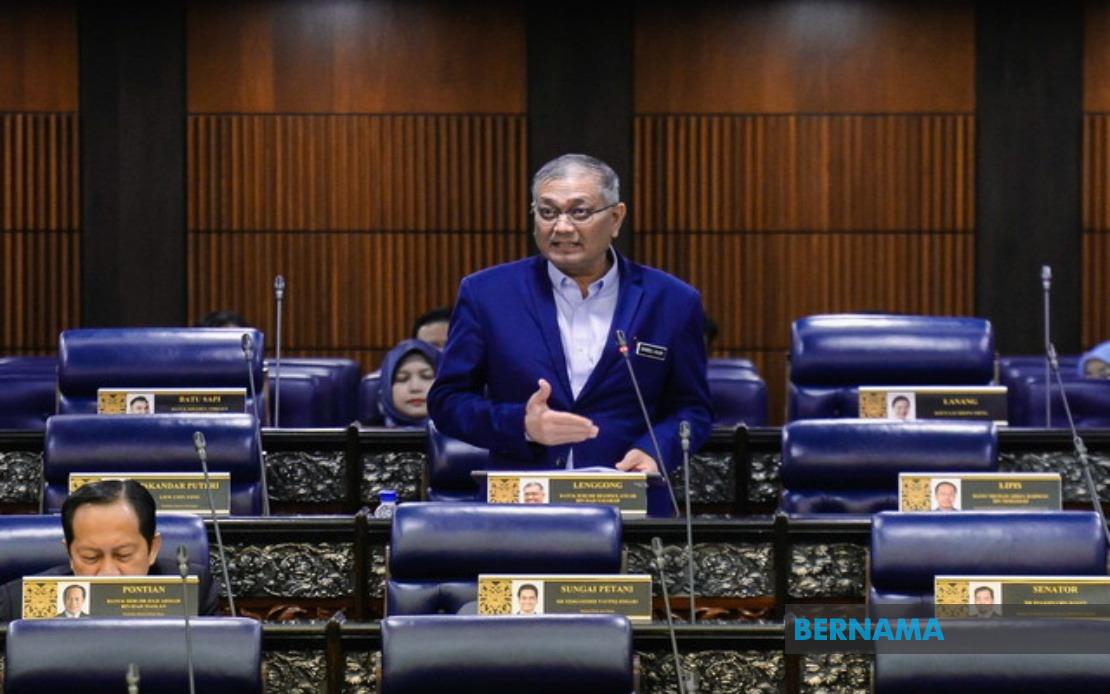
The Home Ministry has moved to clarify the nature of extra drills and field duties administered within the Royal Malaysia Police, distinguishing such measures from physical punishment in the wake of public scrutiny following a fatality earlier this year. Deputy Minister Datuk Seri Dr Shamsul Anuar Nasarah made the clarification during parliamentary proceedings on July 14, emphasising that these duties function as a structured disciplinary tool designed to develop professional standards among officers rather than inflict harm.
The distinction carries significance for how Malaysia's largest paramilitary force manages internal discipline across its workforce. According to the Deputy Minister, field duties operate under Paragraph 32 of the Inspector-General of Police's Standing Orders (PT KPN) A110 on Discipline, specifically targeting minor offences where formal disciplinary procedures might prove disproportionate. This regulatory framework creates a middle ground between ignoring misconduct and pursuing formal charges that could derail an officer's career trajectory.
The clarification became necessary following the death of a policeman in Sepang in May, which prompted questions about whether disciplinary procedures place undue physical strain on personnel. The incident raised concerns about whether existing safeguards adequately protect officer wellbeing during field duties, a matter that resonates particularly in a force numbering over 250,000 members across diverse geographical and climatic conditions throughout Malaysia and Federal Territories.
In response to the incident, the PDRM Integrity and Standards Compliance Department has strengthened procedural oversight by introducing a new administrative directive dated June 29. This directive mandates the use of health assessment forms as part of the disciplinary process, creating an additional checkpoint to evaluate whether personnel possess the physical capacity to undertake assigned duties. The measure reflects an acknowledgement that health screening represents a critical safeguard when imposing field duties on officers.
Existing regulations governing field duties establish clear boundaries intended to prevent excessive imposition. The rules specify that such duties cannot extend beyond four hours daily and cannot be sustained for more than five consecutive days, effectively capping the intensity and duration of this form of discipline. These temporal restrictions aim to ensure that disciplinary measures remain proportionate to the offences committed while limiting cumulative physical stress on officers.
Responibility for prudent implementation falls squarely on supervising officers, who bear accountability for ensuring that field duties proceed in a controlled manner sensitive to individual circumstances. According to the Deputy Minister, supervisors must consider each officer's existing physical condition, overall health status, environmental factors such as weather and terrain, and any other variables that could compromise safety. This requirement establishes a duty of care that extends supervision beyond mere task assignment to active monitoring throughout the disciplinary process.
Questions about equitable application of discipline across police ranks prompted clarification regarding the scope of Paragraph 32. The Deputy Minister explained that this particular provision targets junior police officers specifically, offering them an alternative pathway for addressing minor misconduct that avoids formal disciplinary machinery. This targeted approach reflects recognition that junior ranks often lack representation and appeal mechanisms available to senior personnel, necessitating administrative tools that preserve professional standards while protecting career prospects.
Concerns about rank-based favouritism in disciplinary treatment received direct attention during the parliamentary exchange. The Deputy Minister rejected suggestions that extra drills apply exclusively to lower-ranking officers, instead explaining that senior officers fall under different disciplinary frameworks governed by separate legal provisions aligned with their service category. This distinction acknowledges that officer grades function under distinct contractual and professional arrangements, requiring correspondingly differentiated disciplinary mechanisms.
Allegations of bullying or ragging during field duties prompted further reassurance about procedural safeguards. The Deputy Minister emphasised that every disciplinary measure operates through rigorous processes that prevent arbitrary imposition by individual superior officers. This procedural requirement establishes checks against personal vendetta or abuse of authority, ensuring that field duties result from legitimate disciplinary decisions rather than personality conflicts or institutional bullying.
The emphasis on procedure reflects broader concerns about workplace conduct within uniformed services. In the Southeast Asian context, where police forces increasingly face scrutiny regarding internal governance and officer welfare, Malaysia's attempt to formalise and moderate disciplinary approaches carries significance beyond the immediate police institution. The case demonstrates how high-profile incidents can catalyse institutional responses that enhance transparency and safety standards across large public organisations.
For Malaysian officers and the broader public, these clarifications establish that discipline within the police service operates through defined channels with protective mechanisms. The health assessment requirement and temporal limitations represent tangible safeguards, while the procedural emphasis combats potential abuse. However, ongoing monitoring of implementation remains necessary to ensure that formal rules translate into consistent practice across the geographically dispersed force.
The parliamentary discussion also illuminates how contemporary police management navigates competing pressures. Maintaining discipline and professional standards requires mechanisms capable of addressing minor misconduct promptly, yet such mechanisms must operate within frameworks that protect officer wellbeing and prevent exploitation. The Home Ministry's response suggests an attempt to satisfy both imperatives through procedure-bound discipline that remains expeditious while incorporating health and safety considerations.

