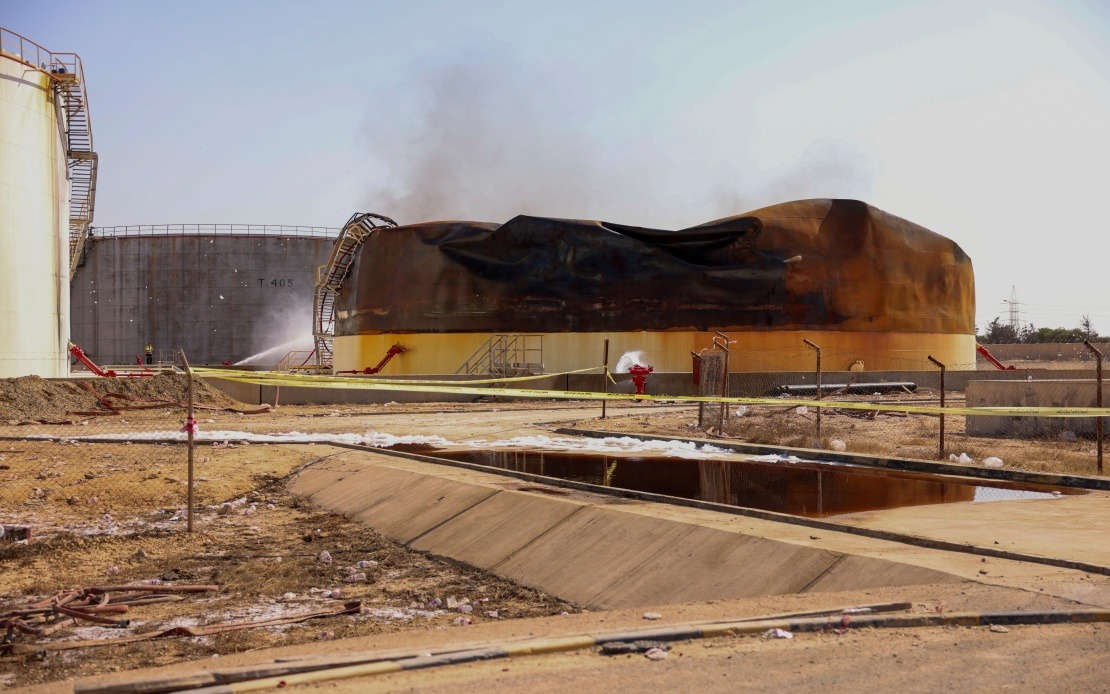
Western Libya's electricity grid faces renewed strain following a significant explosion that struck the Zawiya power plant on Saturday, forcing the shutdown of multiple generation units and adding to the country's escalating infrastructure crisis. The General Electricity Company of Libya (GECOL) confirmed the incident, which occurred near the facility and immediately hampered the nation's already fragile power supply to a critical western region.
The state utility has mobilised technical teams to investigate the circumstances of the blast and determine its precise cause. Engineers are working to assess damage across the affected generation units while management attempts to understand how the explosion originated and whether it resulted from equipment failure, maintenance issues, or external causes. The investigation reflects GECOL's urgent need to restore full operational capacity and prevent further deterioration of power infrastructure that continues to struggle with maintenance backlogs and limited investment.
Restoration efforts are proceeding incrementally as authorities coordinate repair and stabilisation work across the damaged systems. GECOL has indicated that electricity service should normalise progressively as teams complete their assessment and bring units back into operation. The utility issued an apology to residents facing blackouts and reduced supply, acknowledging the disruption to households and businesses dependent on reliable power for essential services, water pumping, healthcare facilities, and commercial operations.
This incident arrives at a particularly precarious moment for Libya's energy infrastructure. Just one week prior, the Zawiya region experienced coordinated drone strikes targeting multiple critical installations, including petroleum storage facilities, desalination plants that serve coastal communities, and electrical infrastructure. Those attacks, which remain unclaimed and unexplained, sent alarm through Libya's government and raised serious questions about vulnerabilities in protecting essential services that sustain the nation's economy and population.
The pattern of attacks on Zawiya infrastructure reflects deeper regional instability in western Libya, where rival political factions, armed groups, and external actors maintain competing interests. Authorities have launched investigations into the drone operations but have yet to identify the responsible parties or the source of the unmanned systems, complicating efforts to prevent future incidents. The succession of strikes suggests either deliberate targeting of Libya's energy sector or broader instability that extends beyond singular actors.
For Malaysia and the broader Southeast Asian region, Libya's electricity crisis illustrates the vulnerability of Middle Eastern and North African energy systems to disruption, with potential ramifications for global energy markets and regional stability. As a maritime trading nation dependent on energy imports and transiting through sensitive waterways, Malaysia faces indirect exposure to Libyan instability and the precedent it sets for critical infrastructure vulnerability across developing economies.
The Zawiya power plant serves western Libya's population and industrial base, making its operational status crucial for regional development and quality of life. Extended outages create cascading problems beyond simple darkness, affecting water treatment, medical facilities, telecommunications, fuel distribution, and economic productivity. Communities reliant on desalinated water face particular vulnerability when power supplies collapse, as the region depends heavily on energy-intensive desalination to supplement scarce freshwater resources.
Libya's electricity sector reflects broader governance challenges in a nation recovering from civil conflict and institutional fragmentation. GECOL operates within a fractured political environment where competing authorities claim jurisdiction over different territories, complicating maintenance scheduling, spare parts procurement, and coordinated investment in grid modernisation. The combination of technical deterioration and security threats creates a compound crisis that single technological solutions cannot address.
The repeated targeting of infrastructure suggests that some actors view Libya's energy systems as strategic leverage points within ongoing power struggles. Whether attacks aim to destabilise particular regions, pressure specific political factions, or simply demonstrate capability, they have succeeded in degrading essential services and creating humanitarian consequences for ordinary Libyans. The absence of claimed responsibility obscures motivations but does not diminish the impact on daily life across western Libya.
Regional implications extend beyond Libya itself. The instability demonstrates how ungoverned or contested territories can become launch points for attacks on critical infrastructure, potentially affecting broader Mediterranean security and energy flows. The unclaimed drone strikes raise concerns about proliferation of unmanned systems and degradation of the security perimeter around essential facilities that previous generations assumed were defensible.
Libyan authorities face mounting pressure to restore both immediate electricity service and longer-term infrastructure resilience. Effective responses require not only technical repair but also security measures to prevent future attacks, political settlement to stabilise governance, and sustained investment to modernise aging generation and distribution systems. Without addressing underlying instability, individual repair efforts will provide only temporary relief before the next incident occurs.
The international community, including regional powers and external partners, has watched Libya's electricity sector deteriorate without substantial coordinated intervention to rebuild resilience. Investment, technical assistance, and security cooperation could improve outcomes, but Libya's fractured politics and limited government capacity to absorb external support constrain effectiveness of aid programmes. The explosion at Zawiya represents not an isolated technical failure but a symptom of deeper structural vulnerabilities that will continue disrupting essential services until comprehensive political and institutional reform occurs.

