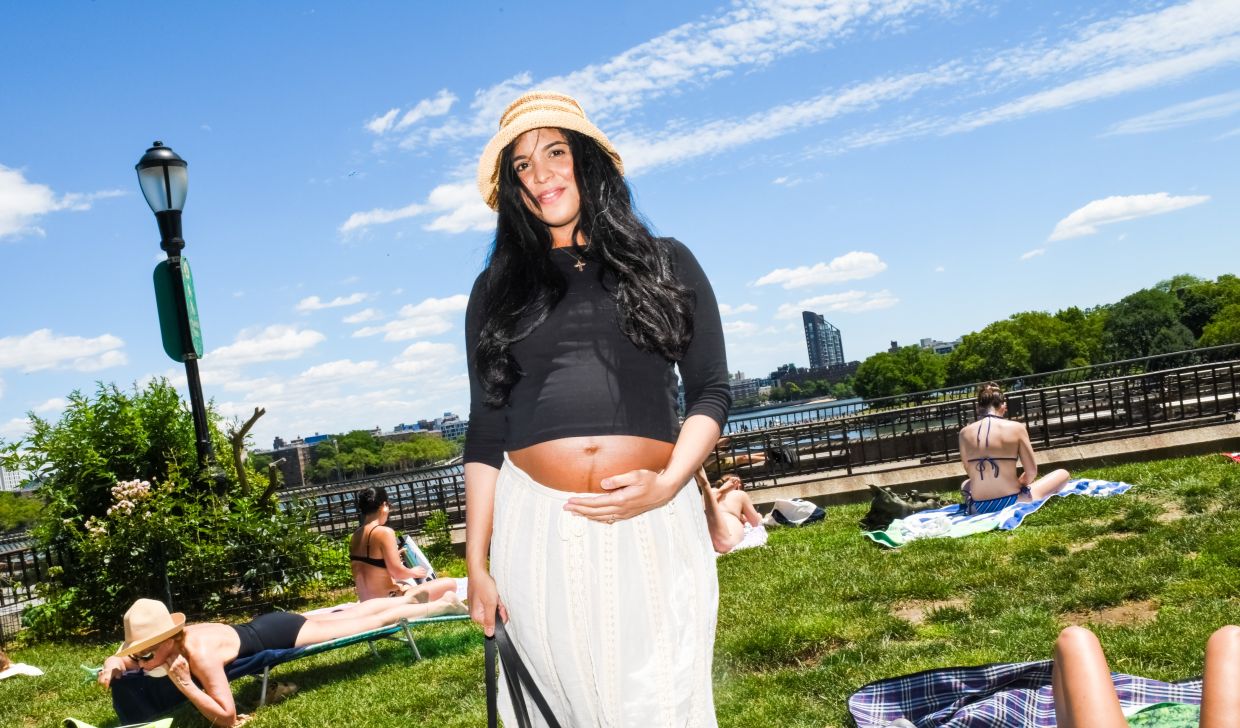
Sarah Brown was halfway through her pregnancy when she began sharing photographs of her exposed belly on social media—a simple grey T-shirt lifted to reveal her rounded midriff, paired with a beige blazer and low-slung jeans. The handbag designer and stylist felt confident in her choices, deliberately styling to highlight rather than hide her transformation. Her mother's well-intentioned suggestion that she purchase a maternity jumpsuit revealed a generational divide in how women approach pregnancy fashion. Brown, now 36, recognised her mother meant no criticism, but the offer underscored an older assumption that pregnancy should be camouflaged rather than celebrated.
What Brown's experience reflects is part of a broader cultural realignment reshaping maternity wear. In recent years, pregnant bellies have increasingly appeared beneath crop tops, peeked through intentional cutouts, and emerged from bikinis at music festivals, beaches, and public spaces. This visible, unapologetic approach to pregnancy marks a dramatic departure from decades of concealment. The baggy silhouettes and tent-like garments that once dominated maternity departments have largely given way to styling that, in the words of celebrities and fashion-conscious mothers, follows the Rihanna playbook: reveal, style, and celebrate the temporary contours of expectancy.
Laura McAndrews, an associate professor at Kent State University's fashion school who studies generational attitudes toward maternity wear, attributes much of this shift to the body positivity messaging that saturated the cultural landscape during Gen Z's formative years. "Because they've been messaged all this body positivity they're embracing all stages of their body, especially women," McAndrews observed, drawing a sharp contrast with earlier eras. "We're not like back in the 1990s, and even earlier, where women just completely covered their bodies with these big tents." The distinction matters: where previous generations laboured under social pressure to render pregnancy invisible, today's younger women inherit a framework that encourages acceptance of bodily change across all life stages.
The celebrity influence on this transformation cannot be overstated. Millennials and members of Gen Z have grown up consuming images that normalised and glamourised visible pregnancy. Demi Moore's iconic 1991 Vanity Fair cover set a precedent, but it was Beyoncé's 2017 baby shower photographs—featuring her seven months pregnant and unclothed—that captured the internet's imagination. Rihanna's 2022 pregnancy announcement in a half-buttoned Chanel puffer jacket, her bare bump centre stage, crystallised a new aesthetic that blended high fashion with intimate bodily display. These images, circulated endlessly through social media, have become touchstones for younger women navigating their own pregnancies. Anne Hathaway's June announcement in a white crop top and skirt followed the pattern, suggesting that celebrity-led normalisation has created a permission structure for expectant mothers to dress in ways their own mothers might have deemed inappropriate.
Michelle Zauner, a singer and author who performed at the Governors Ball music festival in New York while visibly pregnant, embodied this evolution. She took the stage in an unbuttoned cardigan, deliberately exposing a lacy black bra and her bare pregnant belly—a choice she directly credited to Rihanna's influence. Zauner articulated a perspective held by many contemporary mothers: she had long felt apprehensive about pregnancy's physical demands, yet discovered genuine pride in her body's capabilities and appearance. Her aversion to traditional maternity wear stemmed from practical frustration: the shapeless muumuus and oversized garments marketed to pregnant women felt antithetical to how she wished to present herself. For Zauner and countless others, the solution was not specialised maternity clothing but rather strategic styling of everyday garments that aligned with their personal aesthetic and values.
Historically, the concealment of pregnancy served deeper cultural functions. Isabel Davis, an author examining fashion history, notes that pregnancy was long considered intrinsically scandalous—evidence of sexual activity and therefore unsuitable for public observation. This social prohibition shaped the entire architecture of maternity wear for decades. Ariane Goldman, chief creative officer of Hatch, a maternity clothing company she founded in 2011, recalls launching her business during an era when pregnancy itself remained somewhat taboo. "I started this company when it was taboo to talk about pregnancy, and women were hiding it from their bosses because they didn't want to get fired," Goldman explained. Over the preceding decade, however, a seismic cultural shift had occurred. "Over the last decade, there's been this incredible shift to the celebration and the power of carrying a child and owning it." This transformation from shame to celebration fundamentally altered expectations around how pregnant bodies should be dressed and displayed.
The commercial implications of this shift remain uncertain and contested within the maternity fashion industry. If expectant mothers increasingly bypass specialised maternity wear in favour of oversized pieces from partners' wardrobes, strategic tailoring of their existing clothes, or simple styling choices that embrace their changing silhouettes, the traditional maternity market faces existential questions. Goldman notes that her team regularly discusses this paradox: women empowered enough to refuse conventional maternity wear still eventually require functional clothing designed for their temporary physiology. The solution, she suggests, lies not in elaborate concealment but in intelligent engineering. Pieces must serve practical purposes—accommodating shifting proportions, facilitating nursing, managing the physical discomfort of advanced pregnancy—while respecting women's desire to look fashionable and intentional rather than resigned to shapelessness.
Sarah Brown's own experience illuminates how contemporary mothers navigate this landscape pragmatically. Throughout her pregnancy, she relied on just a few key pieces: several pairs of Los Angeles Apparel elastic waist trousers and two Paloma Wool tops that unbuttoned at the sides. This stripped-down wardrobe allowed her to layer, adjust, and adapt while maintaining control over her visual presentation. She avoided the maternity sections of retailers entirely, instead mining regular inventory for pieces that could accommodate her changing body. Her approach reflects a broader strategy among fashion-conscious expectant mothers: working with what already exists in the closet, supplementing minimally with pieces offering flexibility, and trusting personal styling intuition rather than deferring to designated pregnancy fashion categories.
The implications of this cultural realignment extend beyond fashion into broader questions about women's agency, bodily autonomy, and social attitudes toward reproduction. By refusing to disappear into concealing garments, by instead styling and displaying their pregnant bodies, contemporary women assert ownership over their physical transformation. This represents more than aesthetic preference; it reflects philosophical disagreement with the notion that pregnancy should render women less visible or less fashionable. The younger generations' insistence on dressing in ways that feel authentic—whether that means crop tops, cutouts, or borrowed boyfriend jeans—signals confidence that their changing bodies warrant celebration rather than camouflage. As this generational attitude solidifies, the maternity fashion industry must fundamentally reconsider its purpose: not to hide pregnancy, but to honour it while providing the practical support expectant bodies require.

