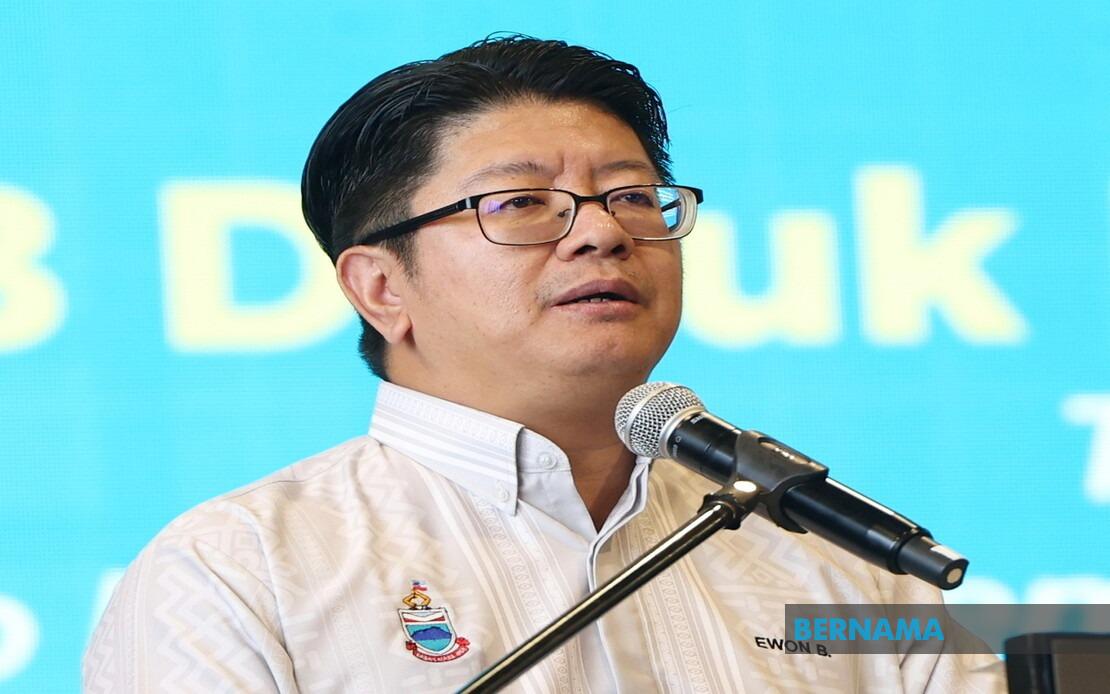
The United Progressive Kinabalu Organisation has consolidated its leadership structure by returning Datuk Ewon Benedick to the presidency and retaining Datuk Donald Peter Mojuntin as deputy president for the 2026-2029 term. The election, held during the party's 17th triennial delegates conference in Penampang, proceeded without contest for these top two positions, indicating broad internal consensus among UPKO's membership about the direction of the regional party.
Beyond the president and deputy president, five vice-presidential roles remained uncontested, with Jairaiaz Joseph, Datuk Wong Thien Fook, Datuk Pangiran Lalung, Datuk Basari Sarikun, and Datuk Dr Laurentius Nayan Ambu maintaining their positions. This absence of competition across the highest echelons of party leadership reflects either strong satisfaction with current stewardship or a mature political culture within UPKO that prioritises stability over factional contests. For a component party within the Gabungan Rakyat Sabah coalition governing Sabah, such organisational harmony carries practical significance in maintaining political cohesion.
In his closing remarks at the conference, Ewon underscored his commitment to democratic principles and party unity, framing the election results as a mandate to strengthen rather than fracture the organisation. His emphasis on respecting delegate decisions whilst avoiding triumphalism suggests an awareness that uncontested elections, though efficient, require careful messaging to avoid appearing predetermined or exclusionary. He positioned the newly elected leadership as custodians of party unity, explicitly describing UPKO members as a single family despite their diverse backgrounds and geographic constituencies across Sabah.
The newly elected president outlined a clear pathway for translating party resolutions into government action, identifying Sabah Chief Minister Datuk Seri Hajiji Noor in his dual capacity as GRS chairman as a key interlocutor. This strategic focus highlights UPKO's operational mode as a coalition partner rather than independent political force. By channelling party positions through both executive and legislative forums—Parliament and the Sabah state assembly—Ewon articulated a dual-track approach to political influence that maximises visibility while maintaining coalition discipline.
Significant changes emerged in several party wings, with youth and women's organisations undergoing leadership transitions. Carlye Lajimin assumed the role of UPKO Youth chief alongside deputy Newbaxter Tibin, bringing new personnel to an organisation tasked with recruiting and mobilising younger supporters. Meanwhile, the women's wing retained Mohina Sidom as chief whilst elevating Lomiti Jahan to the deputy position, suggesting both continuity and gradual renewal in women's representation. These shifts in subordinate structures may indicate generational considerations within UPKO's broader succession planning.
The Young Generation division also witnessed leadership changes with Emmanuel Atin's election as chief and Alison Chan as deputy chief. This proliferation of youth-oriented wings—Youth, Young Generation, and implicitly others—reveals UPKO's strategic prioritisation of younger demographics, likely reflecting both demographic realities and competitive pressures from other Sabah-based parties. The naming distinctions between Youth and Young Generation suggest targeted outreach to different age cohorts or functional purposes within the party apparatus.
UPKO's position within Sabah's political ecosystem remains distinctive as a primarily indigenous Kadazandusun-based party that has evolved into a coalition player. The Gabungan Rakyat Sabah framework encompasses multiple parties including Warisan and the Malaysian Chinese Association, creating a multi-ethnic governing coalition. UPKO's internal stability thus carries implications beyond its immediate membership, affecting the durability of the state coalition and indirectly the political balance in federal parliament, where GRS components contribute to Malaysia's broader political calculations.
For Malaysian readers observing regional politics, UPKO's smooth leadership transition illustrates the mechanics of coalition governance in Sabah. Unlike more contentious party elections in Peninsular Malaysia or within larger federal parties, UPKO's unopposed result reflects either strategic discipline or limited internal competition for positions. Whether this represents healthy consensus or suppressed ambition remains an interpretive question, though the emphasis on unity suggests party leaders view consensus as preferable to public factional contests.
The conference outcomes also demonstrate how component parties within coalitions manage their internal affairs whilst serving broader coalition interests. Ewon's framing of leadership obligations to present resolutions to the CM as GRS chairman indicates subordination of party autonomy to coalition coordination. This dynamic shapes how UPKO can advocate for Kadazandusun interests whilst maintaining the broader GRS partnership essential for retaining state power. The party's inability or disinclination to operate independently reflects both its size and the structural realities of Sabah's multiparty coalition politics.

