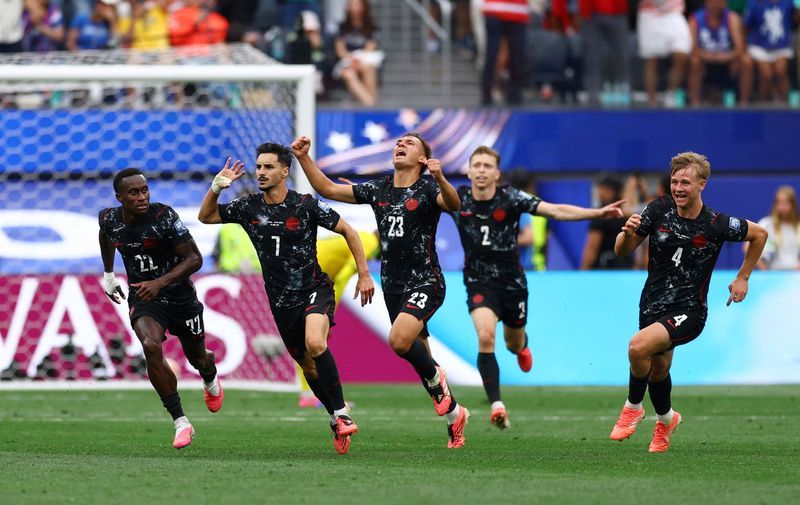
Stephen Eustaquio's thunderous strike in the 92nd minute delivered Canada a momentous 1-0 victory over South Africa at Los Angeles Stadium on Sunday, marking a watershed moment in the co-host nation's World Cup history. The midfielder received possession at the edge of the penalty box and unleashed a powerful shot that evaded the grasp of diving goalkeeper Ronwen Williams, sending Canadian supporters into jubilation as the match reached its dramatic conclusion. This triumph propels Canada into the knockout rounds for only the second time ever, and represents the team's first-ever appearance in the World Cup's final 16.
The match itself embodied the tension characteristic of do-or-die football, with South Africa adopting a cautious approach throughout that reflected their comfort in edging towards extra time and a potential penalty shootout. The South Africans mounted several desperate attacking moves in the final moments before Eustaquio's match-winning intervention, but their efforts proved insufficient against a Canadian side that refused to surrender despite mounting frustration. The sun breaking through overcast skies at the venue seemed to symbolize Canada's brightening fortunes as the whistle sounded.
Canada's pathway to this historic moment has been unconventional. As joint hosts of this World Cup alongside Mexico and the United States, the Canadians were expected to benefit from home advantage in multiple matches. Yet the tournament's format dictated they travel south to Los Angeles for their opening knockout fixture, arriving with just three days' recovery following a disappointing 2-1 group-stage defeat to Switzerland on Wednesday. That loss had left serious questions about whether the co-hosts possessed the resilience to progress further, making Eustaquio's late heroics all the more significant.
In the immediate aftermath of his crucial goal, Eustaquio captured the emotional significance of the moment with reflective honesty. He described the sensation of striking the ball and feeling as though his teammates were channeling their collective determination through his shot, emphasizing the unity that propelled the effort goalward. His evident joy transcended the individual achievement, representing instead a shared accomplishment for the entire squad that had battled against considerable odds and external pressures throughout the tournament.
Canada's head coach Jesse Marsch provided tactical insight into the team's performance, acknowledging that his players had created sufficient opportunities throughout the ninety minutes but had proven insufficiently clinical in their finishing. He praised the team's character and perseverance, suggesting that the squad had transcended the realm of professional athletics to embody something deeper within Canadian sporting culture. His assertion that the players had become "Canadian heroes" reflected the extraordinary nature of their achievement for a nation that had never previously progressed this far in World Cup competition.
The first half unfolded as a cautious affair with both teams feeling their way into the match, neither willing to commit excessively to attacking ventures. Canada's clearest opportunity before the interval emerged from a set-piece situation when Moise Bombito directed a header towards goal only for Aubrey Modiba to clear the danger from the goal line. Tajon Buchanan's subsequent close-range effort lacked sufficient precision, striking Williams directly. More controversially, Richie Laryea's tumble in the penalty area sparked vehement Canadian protests for a penalty that video assistant referee technology ultimately deemed insufficient grounds for an award, generating substantial crowd disapproval from the Canadian supporters who dominated the stadium's attendance.
Canada's frustration intensified throughout the second half as South Africa demonstrated their apparent satisfaction with a stalemate, seemingly content to allow the match to progress towards extra time and beyond. The contrast in tactical approach became increasingly apparent as the Canadians pressed forward seeking a breakthrough whilst their opponents defended with discipline and limited ambition. A particularly promising Canadian opportunity materialized when Jonathan David failed to convert a loose ball after Tani Oluwaseyi's attempt had deflected off the keeper, with Mbekezeli Mbokazi's resolute defending thwarting the follow-up.
South Africa's campaign, whilst ending in defeat, nonetheless represented genuine progress for the African nation's football program. Their advancement to the knockout stages represented only the second occasion in four World Cup appearances where they had progressed beyond the group phase, suggesting genuine improvement in their competitive standing. However, the manner of their exit—characterized by a passive approach that invited Canadian pressure—will likely provoke considerable debate regarding their tactical choices during the decisive final stages.
Looking ahead, Canada will confront either the Netherlands or Morocco on July 4 in Houston, with a quarter-final berth at stake. The achievement of reaching this juncture represents validation of their World Cup participation as hosts and suggests their football program possesses genuine potential for continued development. Meanwhile, South African coach Hugo Broos confirmed this tournament represents his final World Cup involvement, leaving open the question of successor and the direction the national team will pursue under fresh leadership.
For Malaysian and Southeast Asian football observers, Canada's breakthrough carries broader significance. The co-hosts' progress demonstrates that nations outside traditional football powerhouses can compete and succeed at the highest level when institutional support and player development align effectively. As Southeast Asia pursues its own World Cup aspirations, Canada's example provides both inspiration and a template for the long-term investment required to transform continental football fortunes.

