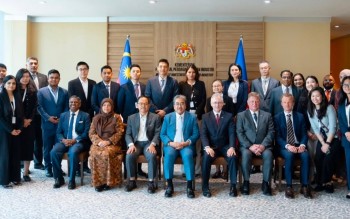
A major European business delegation has wrapped up a three-day engagement with Malaysia's government apparatus, signalling strengthened interest from the continent's companies in deepening their footprint in Southeast Asia's largest economy. The visit, spanning August 4-6, brought together more than 25 European enterprises represented by over 70 delegates who conducted intensive discussions with senior Malaysian officials and agency heads across economic, environmental and regulatory portfolios. The deliberate focus on multiple government touchpoints reflects a strategic approach by European investors to understand Malaysia's policy trajectory and regulatory environment while demonstrating confidence in the nation's reform programme.
Chris Humphrey, executive director of the EU-ASEAN Business Council, characterised the engagement as exceptionally constructive, noting that the three-day itinerary provided European business leaders with direct access to policymakers shaping Malaysia's economic direction. During their meetings at the Economy Ministry, the delegation received detailed briefings on ongoing reform packages whilst signalling support for Malaysia's environmental commitments. The dialogue extended to tangible policy areas including sustainable development frameworks, circular economy initiatives and the accelerating digitalisation agenda that increasingly defines competitiveness in Southeast Asian markets.
The financial and investment climate emerged as a central preoccupation during discussions at the Finance Ministry, where delegates explored critical infrastructure for European investment including taxation structures, government procurement protocols and overall investment conditions. The persistently positive tenor of these exchanges underscores European confidence in Malaysia's macroeconomic management and regulatory stability. Such sentiment holds particular weight given the competitive landscape for foreign direct investment across the region, where Singapore, Indonesia and Vietnam vie aggressively for capital flows from developed economies.
Malaysia's strategic positioning as a gateway to Southeast Asia features prominently in the delegation's calculus. The nation's geographic location, modern infrastructure networks, sophisticated connectivity systems, educated labour force, abundant natural resources and available land collectively render it an appealing destination for European capital seeking regional expansion. These structural advantages have attracted cumulative European investment stock exceeding €33.1 billion as of 2024, cementing Malaysia's status as a leading destination for Old World capital on the continent. The substantial volume of existing European investment suggests confidence in Malaysia's trajectory, though the visit indicates European businesses are actively evaluating fresh opportunities and policy clarity before committing additional capital.
Trade data underscores the depth of existing economic ties. In 2025, bilateral commerce between Malaysia and the European Union reached €48.9 billion, with Malaysian exporters supplying €30.3 billion whilst European firms shipped €18.6 billion in goods to Malaysian shores. This positioning of the European Union amongst Malaysia's five largest trading partners reflects decades of commercial integration spanning manufacturing, commodities, agricultural products and specialised services. The figures demonstrate mutual economic interdependence, establishing a foundation upon which ambitious new agreements can be negotiated.
The delegation's schedule encompassed meetings with Bank Negara Malaysia's Governor Datuk Seri Abdul Rasheed Ghaffour alongside Investment, Trade and Industry Minister Datuk Seri Johari Abdul Ghani and Economy Minister Akmal Nasrullah Mohd Nasir. Subsequently, discussions unfolded with Natural Resources and Environmental Sustainability Minister Datuk Arthur Joseph Kurup, Deputy Finance Minister Liew Chin Tong and Energy Transition and Water Transformation Secretary-General Datuk Seri Mad Zaidi Mohd Karli. This multi-ministerial engagement pattern emphasises Malaysia's whole-of-government approach to attracting and facilitating European investment.
Upcoming engagements scheduled for August 7 signal continued momentum, with the delegation set to meet representatives from the Malaysian Investment Development Authority and the Royal Malaysian Customs Department alongside officials from agriculture, transport, digital transformation, healthcare and tourism portfolios. These meetings will address practical operational concerns that European investors encounter, particularly surrounding customs procedures, clearance expediting and digital trade infrastructure. The customs focus carries particular significance given Malaysia's struggles with illicit tobacco trafficking, an area where European expertise and private sector resources may contribute meaningfully to enforcement effectiveness.
Healthcare collaboration emerged as another priority area, with European businesses indicating willingness to support Malaysia's evolving healthcare needs through innovative financing mechanisms, pharmaceutical supply discussions and self-care promotion strategies. This sector-specific engagement reflects broader European capabilities in pharmaceuticals, medical devices and health services where developed market companies maintain technological and operational advantages. For Malaysia, such partnerships could enhance healthcare delivery whilst generating investment and employment within the health technology ecosystem.
The free trade agreement between Malaysia and the European Union represents perhaps the most significant long-term outcome from this engagement cycle. Both parties have targeted 2027 as the completion date for the pact, with negotiators already advancing through the fourth round of discussions. The fifth negotiation round is scheduled for September 21-25 in Brussels, Belgium, with a sixth round anticipated before year's end. Humphrey expressed confidence that sufficient momentum exists to conclude the agreement by 2027, allowing both economies to formalise and deepen their commercial relationship through tariff elimination and regulatory harmonisation.
The FTA negotiations carry outsized importance for Malaysia's economic positioning. A comprehensive agreement with the European Union would enhance Malaysian competitiveness relative to other Southeast Asian nations whilst improving market access for Malaysian exporters across a 450-million-strong consumer base. Conversely, European enterprises gain clarity on long-term tariff and regulatory frameworks, reducing investment uncertainty. The accelerated timeline reflects mutual interest in completing the arrangement before potential shifts in European political direction or international trading conditions alter negotiating positions.
Beyond formal trade mechanics, the delegation visit signals qualitative shifts in European business perceptions of Malaysia. The substantial commitment of executive-level resources and the breadth of sectoral engagement indicate recognition that Malaysia represents something beyond a mere manufacturing location. Rather, European companies increasingly view Malaysia as an integrated regional hub offering stability, regulatory competence and investment protection alongside competitive labour costs and manufacturing capabilities. This perception elevation matters considerably for attracting higher-value activities including regional headquarters functions, research and development operations and sophisticated manufacturing processes.
For Malaysia, the visit validates the government's multi-year reform agenda whilst creating operational pressure to deliver on reform commitments and regulatory improvements. The positive reception signals that reform messaging is reaching target audiences effectively, though executives will scrutinise implementation pace and consistency in subsequent months. The engagement also highlights Malaysia's role within ASEAN as a preferred interlocutor for developed economy partnerships, offering diplomatic and commercial benefits extending beyond direct investment flows.
As Malaysian policymakers navigate competing demands from American, Chinese and regional investors, the European engagement represents a calculated effort to maintain diversified capital inflows and prevent over-reliance on any single geographic source. The FTA negotiations and the sustained focus from major European corporations reinforce Malaysia's position as a destination of genuine strategic importance rather than a residual choice for cautious foreign investors.

