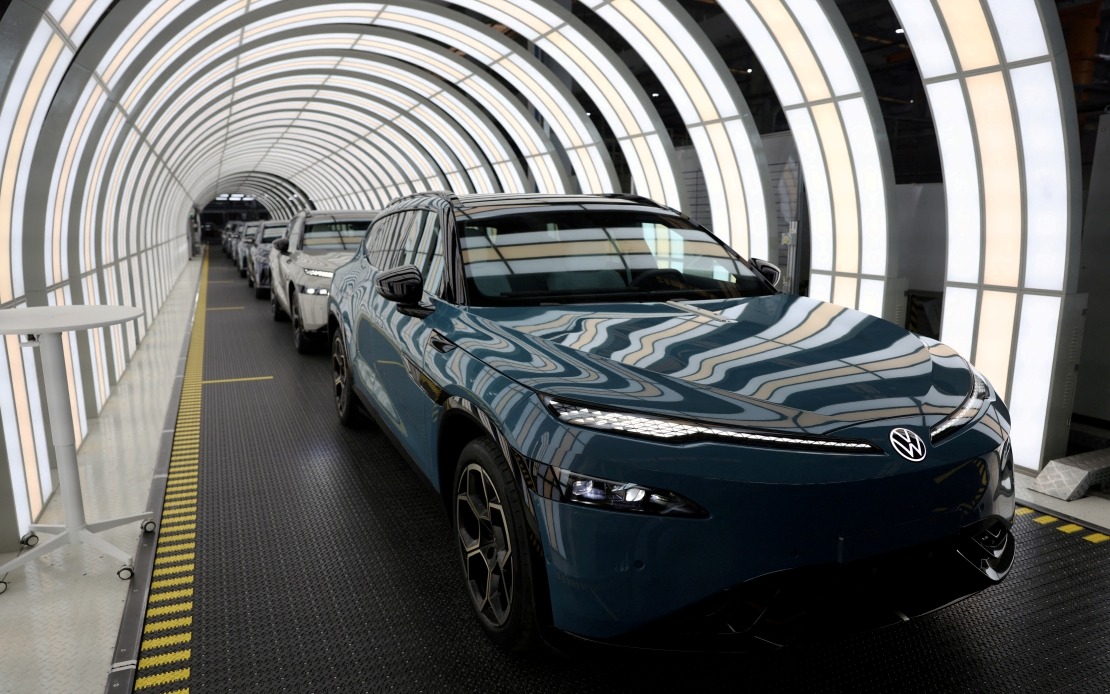
The introduction of European Union tariffs on Chinese-manufactured electric vehicles has triggered a significant realignment in global automotive supply chains, with Western carmakers retreating from reliance on Chinese production and redirecting output back to European facilities. Research conducted by the European transport advocacy group T&E reveals this reorientation through detailed production and sales data, signalling a structural shift in how multinational automotive firms are managing their EV operations across continents.
The statistical evidence is striking. In the first quarter of 2025, Western automotive brands sold electric vehicles sourced from China representing just 23 per cent of their total EV sales across Europe, a dramatic decline from the 38 per cent dependency recorded during 2024. This data, compiled from manufacturing and distribution figures supplied by market analysis firm GlobalData, examined production patterns among major established manufacturers including BMW, Dacia, Volvo, Smart and Tesla. The magnitude of this shift underscores how quickly tariff policy can reshape industrial strategy among multinational corporations operating across multiple jurisdictions.
Tesla's experience exemplifies this broader trend. The electric vehicle manufacturer reduced its reliance on Chinese-built vehicles destined for European markets from 23 per cent of its regional sales in 2024 down to 19 per cent by the first quarter of this year. Though the decline appears modest in percentage terms, it reflects the company's deliberate repositioning away from its Shanghai manufacturing hub as a primary supplier to the European market, suggesting a recalculation of tariff exposure and supply chain resilience following the EU's trade actions.
However, the tariff regime has produced uneven consequences across different Chinese suppliers. While Western brands have demonstrably reduced their dependence on Chinese manufacturing, Chinese automakers themselves—particularly BYD and Geely—have continued expanding vehicle exports to Europe despite the punitive duties. The primary driver of this counterintuitive pattern rests on excess manufacturing capacity throughout China's automotive sector. These Chinese firms possess production facilities operating below full utilisation, creating economic incentive to maintain export momentum even when absorbing tariff costs, effectively using European markets as an outlet for surplus output.
The exception proves instructive. SAIC, another major Chinese automaker, has experienced declining European sales since 2024 when the EU imposed tariffs nearly double those applied to BYD and Geely. This differentiation reflected Brussels' determination that SAIC benefited disproportionately from state subsidies embedded throughout its supply chain, from raw materials through component manufacturing to final assembly. The steeper tariff burden on SAIC demonstrates how trade authorities are using granular investigations into subsidy flows to calibrate duties, creating divergent competitive pressures among different Chinese manufacturers.
Simultaneously, Chinese automakers have substantially accelerated their strategy to establish manufacturing footprints within Europe itself, circumventing tariffs through local production. Since the EU initiated its subsidy investigation in 2023, Chinese companies have announced plans to construct ten new production facilities across the continent. This shift represents a structural response to trade protectionism—rather than accepting higher tariff costs, these manufacturers are investing capital in European factories to service the market from within protected borders. Such investments carry long-term implications for European employment and industrial capacity, even as they reflect the success of EU tariff policy in redirecting investment patterns.
A particularly noteworthy development involves Chinese manufacturers' aggressive pivot toward plug-in hybrid vehicles for European export. Their penetration of the EU plug-in hybrid market surged from a mere 3 per cent share in 2024 to 13 per cent by early 2025. This tactical repositioning allows Chinese firms to circumvent some tariff restrictions by producing vehicles that combine internal combustion engines with battery-electric components. The regulatory landscape surrounding plug-in hybrids differs from pure electric vehicles, creating arbitrage opportunities that Chinese manufacturers are exploiting with considerable speed and coordination.
For Malaysian and Southeast Asian observers, these developments carry substantial implications. The EU tariff regime is establishing a template for how wealthy trading blocs will respond to competitive challenges from Chinese manufacturers. If similar tariff structures emerge in other markets—whether ASEAN, India, or elsewhere—the dynamics observed in Europe will replicate across different regions. Additionally, the acceleration of Chinese manufacturing investment in Europe signals that leading Chinese automakers are transitioning from export-dependent strategies toward direct investment models, potentially affecting the competitive positioning of local manufacturers throughout Southeast Asia.
The automotive industry's response illuminates broader patterns in trade policy effectiveness. The EU tariffs achieved their primary objective of incentivising Western multinational firms to reconcentrate production within Europe, reducing supply chain exposure to China. Simultaneously, the policies failed to substantially reduce Chinese export volumes, as domestic Chinese manufacturers responded by absorbing costs and exploiting alternative product categories. This mixed outcome suggests that tariff policy alone, without complementary measures addressing capacity utilisation and subsidy structures, produces only partial realignment of global supply chains.
Looking forward, the trajectory of these supply chain adjustments remains uncertain. Western automotive firms must balance immediate tariff avoidance through European production with the long-term economics of manufacturing locations, labour costs, and technological innovation ecosystems. Chinese manufacturers simultaneously navigate between direct investment in Europe and continued exports from established Chinese facilities. The resolution of these competing pressures will shape not only European industrial capacity but also influence the broader competitive landscape affecting automotive manufacturing throughout Asia and beyond.

