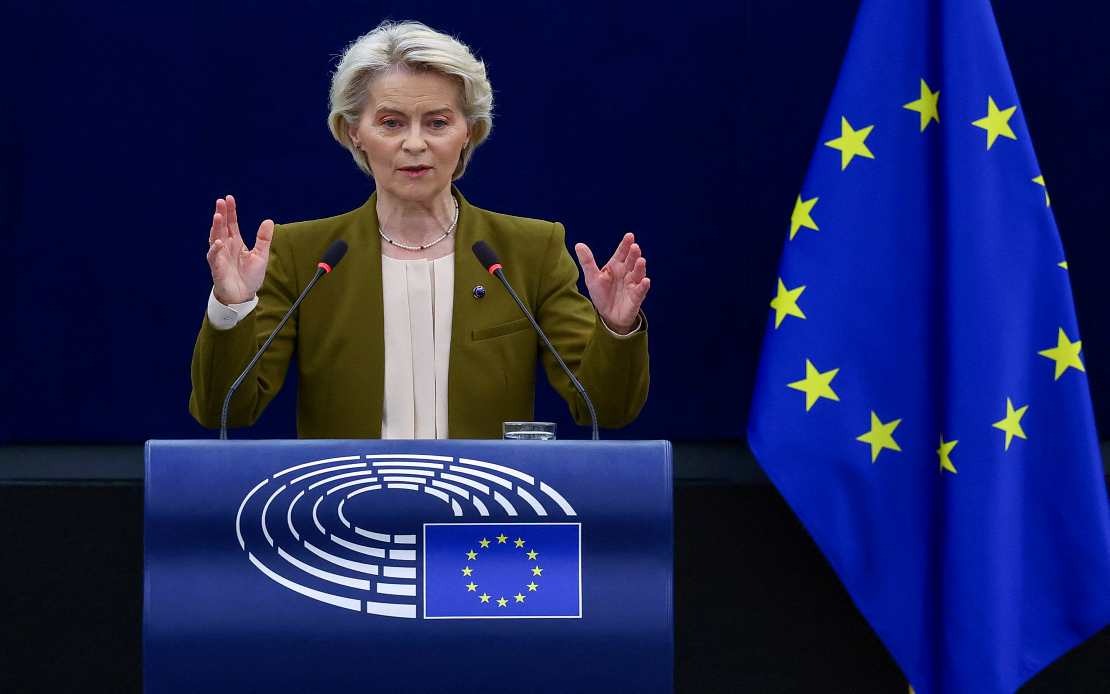
The European Union has activated its humanitarian response mechanism, committing €2.1 million (approximately US$2.4 million) in emergency aid to assist Colombia in the aftermath of a catastrophic earthquake that struck the South American nation earlier this week. The tremor, which registered 7.4 on the magnitude scale, has resulted in at least 181 confirmed deaths and widespread displacement across affected regions. European Commission President Ursula von der Leyen announced the assistance on Wednesday, emphasising the bloc's solidarity with Colombia as rescue operations continue across the devastated areas.
The timing of this intervention reflects the EU's established protocols for rapid disaster response in partner nations. As search and rescue teams work around the clock to locate survivors trapped under collapsed structures, the European Commission has swiftly mobilised resources to address the most urgent humanitarian needs. Von der Leyen's statement underscores the EU's commitment to supporting Colombia "wherever possible" during this critical period, signalling that further assistance may be deployed should the situation deteriorate or recovery needs expand.
The €2.1 million package targets multiple dimensions of post-disaster relief. The funding framework encompasses essential health services, clean water provision, sanitation infrastructure, and hygiene materials—critical interventions in earthquake scenarios where disease outbreaks pose secondary threats to survivors. Beyond immediate medical and sanitation needs, the aid also covers shelter provision, food distribution, protection services for vulnerable populations including children and women, and direct cash assistance to affected families. This multi-sector approach reflects contemporary humanitarian best practices that recognise earthquake survivors face cascading challenges beyond initial physical injury.
The European Commission had already demonstrated its responsiveness by allocating €100,000 to the German Red Cross on Tuesday, the day following the earthquake. This earlier tranche specifically targets the most severely impacted departments of Chocó and Valle del Cauca, where infrastructure damage appears most extensive. The German Red Cross, with established operational capacity in these regions, was positioned to immediately assist approximately 2,500 families with emergency supplies and support. This staged funding approach—initial rapid deployment followed by larger coordinated assistance—enables aid organisations to address acute needs while EU headquarters mobilises the broader response apparatus.
Technological resources represent a critical but often underappreciated dimension of international disaster response. The European Commission has made its advanced satellite mapping services available to Colombian authorities and emergency responders, providing real-time geospatial intelligence essential for coordinating search operations, assessing damage patterns, and identifying priority zones for relief deployment. Satellite imagery helps rescue teams locate collapsed buildings, identify accessible routes through damaged infrastructure, and monitor changing ground conditions that may pose hazards to emergency personnel. For a country grappling with simultaneous disasters across multiple departments, such technological support accelerates decision-making and resource allocation.
Colombia's earthquake represents a significant test of international solidarity mechanisms at a moment when competing global crises strain humanitarian resources. The EU's response demonstrates how established partnerships between developed and developing nations facilitate rapid assistance during catastrophes. For Southeast Asian readers, this case study offers relevant lessons regarding disaster preparedness and international cooperation, particularly given the region's exposure to multiple natural hazards including earthquakes, tsunamis, and typhoons. The EU model of coordinated assistance involving governmental bodies, international organisations, and humanitarian NGOs provides a template applicable to ASEAN contexts.
The European Commission has maintained active coordination channels with Colombian authorities to ensure aid delivery aligns with ground realities and evolving needs. This ongoing dialogue proves essential because earthquake impacts are rarely static—initial damage assessments frequently underestimate humanitarian consequences as structural collapses occur days after the initial tremor, as displaced populations face secondary displacement, and as supply chain disruptions intensify scarcity. By sustaining communication with Colombian government counterparts, the EU positions itself to adjust assistance packages responsively rather than adhering to predetermined allocations that may prove inadequate or misaligned with actual requirements.
The magnitude and human cost of this earthquake places it among Colombia's most devastating seismic events in recent decades. The concentration of casualties and damage in Chocó and Valle del Cauca—regions already characterised by significant socioeconomic vulnerability—suggests that recovery will extend far beyond immediate rescue operations. Rebuilding infrastructure, restoring livelihoods, and addressing psychological trauma typically span years rather than weeks. The EU's commitment of €2.1 million must be contextualised as initial assistance rather than comprehensive recovery support, with subsequent phases likely requiring substantially larger investments from Colombia's government, international financial institutions, and the broader donor community.
From a geopolitical perspective, the EU's visible humanitarian response reinforces its positioning as a global actor invested in developing-world welfare beyond its immediate sphere of influence. Such assistance cultivates diplomatic goodwill and demonstrates European commitment to international solidarity principles enshrined in the United Nations Charter. For Colombia specifically, the aid signals that despite global attention fragmentation, major institutional actors remain engaged with Latin American crises. This may carry implications for Colombia's engagement with multilateral institutions and its alignment with international initiatives addressing climate resilience and disaster risk reduction—domains where EU expertise and resources hold considerable value.

