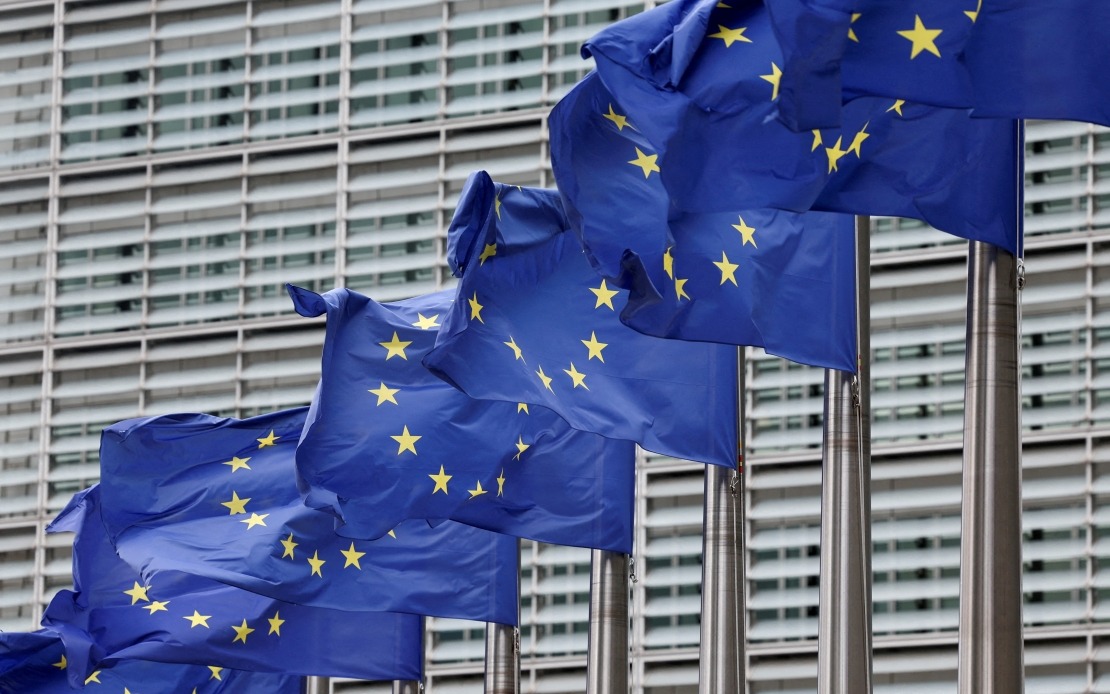
European Union foreign ministers gathered in Brussels on Monday to deliberate on the intensifying situation across West Asia, with Israeli settlement expansion in the occupied West Bank emerging as a particularly fraught agenda item that exposed fundamental fault lines within the 27-member bloc. The European Commission has positioned itself as a facilitator by preparing multiple policy options for the ministers' consideration, ranging from selective restrictions to comprehensive bans on importing products sourced from Israeli settlements—measures that could significantly reshape trade relationships in the region if implemented.
The settlement question has become a decisive test of EU cohesion precisely because member states hold irreconcilable positions on whether economic pressure represents an appropriate diplomatic tool. Spain, Ireland, and Belgium have emerged as the most vocal advocates for imposing stringent sanctions targeting Israel's settlement policies, reflecting their assessment that current international mechanisms have failed to constrain expansion in occupied Palestinian territories. Their position reflects broader European public sentiment in these nations, where support for Palestinian rights remains politically salient, though their capacity to force a consensus remains limited.
Germany's opposition to additional sanctions reveals the internal complexity within even progressive European capitals. Berlin's reluctance stems from multiple considerations: historical sensitivities around German-Israeli relations, concerns about unintended economic consequences for European businesses, and doubts about whether trade restrictions would meaningfully alter Israeli policy trajectory. This German posture carries outsized weight given Berlin's influence within EU institutional structures and its status as Europe's largest economy, effectively constraining the bloc's negotiating space.
The procedural architecture governing EU decision-making has profound implications for whether sanctions can proceed. Should these trade restrictions be formally classified as foreign policy sanctions—the stricter categorisation—they would require unanimous approval across all 27 member states, effectively granting any single nation veto power. This consensus requirement has historically prevented EU action on contested Middle Eastern questions, allowing individual governments to block initiatives that lack universal support. Such unanimity demands have repeatedly frustrated capitals seeking swift, coordinated responses to geopolitical crises.
Alternatively, if the sanctions are structured as trade measures rather than foreign policy instruments, the threshold for adoption becomes significantly less demanding. Under qualified majority voting rules, the EU would need only 15 of 27 member states representing at least 65 percent of the bloc's aggregate population to endorse trade restrictions. This pathway would allow the EU to proceed without German or other holdout nations, though it risks deepening divisions and creating an incoherent European response that could undermine the bloc's credibility as a unified international actor.
For Malaysian observers and Southeast Asian policymakers, this European predicament illuminates broader challenges confronting multilateral organisations when member states possess divergent strategic interests and historical relationships with contested regions. The ASEAN principle of consensus decision-making, while emphasising harmony, similarly permits individual nations to obstruct collective action—a structural constraint that has historically paralysed ASEAN responses to numerous regional security and human rights questions. The EU's current struggle thus offers instructive parallels for understanding how regional organisations navigate disputes where economic, security, and normative interests collide.
Beyond the settlement question, EU ministers engaged with the deepening regional instability surrounding Iran, where escalating tensions threatened to consume diplomatic bandwidth. The agenda equally demanded attention to the Russian invasion of Ukraine, where ministers anticipated reaching consensus on imposing additional sanctions targeting Russian individuals, corporate entities, and state organisations. These measures reflected EU determination to maintain pressure on Moscow despite economic costs and war fatigue among some member states.
The proposed Russian sanctions package represented one area where EU unity appeared more robust than on Middle Eastern matters, though uncertainty lingered about whether comprehensive trade restrictions could attain sufficient political support for implementation. Ukrainian Foreign Minister Andrii Sybiha's attendance at the informal consultations underscored Kyiv's continued integration within European security deliberations and reflected EU commitment to sustaining backing for Ukraine's resistance despite protracted conflict dynamics.
The broader context reveals how the EU's decision-making machinery increasingly struggles when confronting multiple simultaneous geopolitical crises requiring coordinated responses. The need to navigate Israeli-Palestinian disputes, Iranian regional ambitions, and Russian aggression simultaneously taxes consensus-based institutions. For Malaysian policymakers monitoring these developments, the EU's challenges exemplify why middle powers have invested in maintaining equitable, rule-based international frameworks—structures that prevent hegemonic powers from unilaterally reshaping regional orders while also permitting smaller nations meaningful voice in collective decisions.
Moving forward, the EU's ultimate choice on Israeli settlement sanctions will signal either its capacity to overcome internal disagreements through compromise positions or its continued paralysis when confronting contested geopolitical questions. Regardless of the immediate outcome, the episode demonstrates that even wealthy, institutionally developed regional organisations struggle with genuine consensus on matters where fundamental interests and values diverge among constituent members, a reality that Southeast Asian nations must understand when evaluating their own multilateral commitments.

