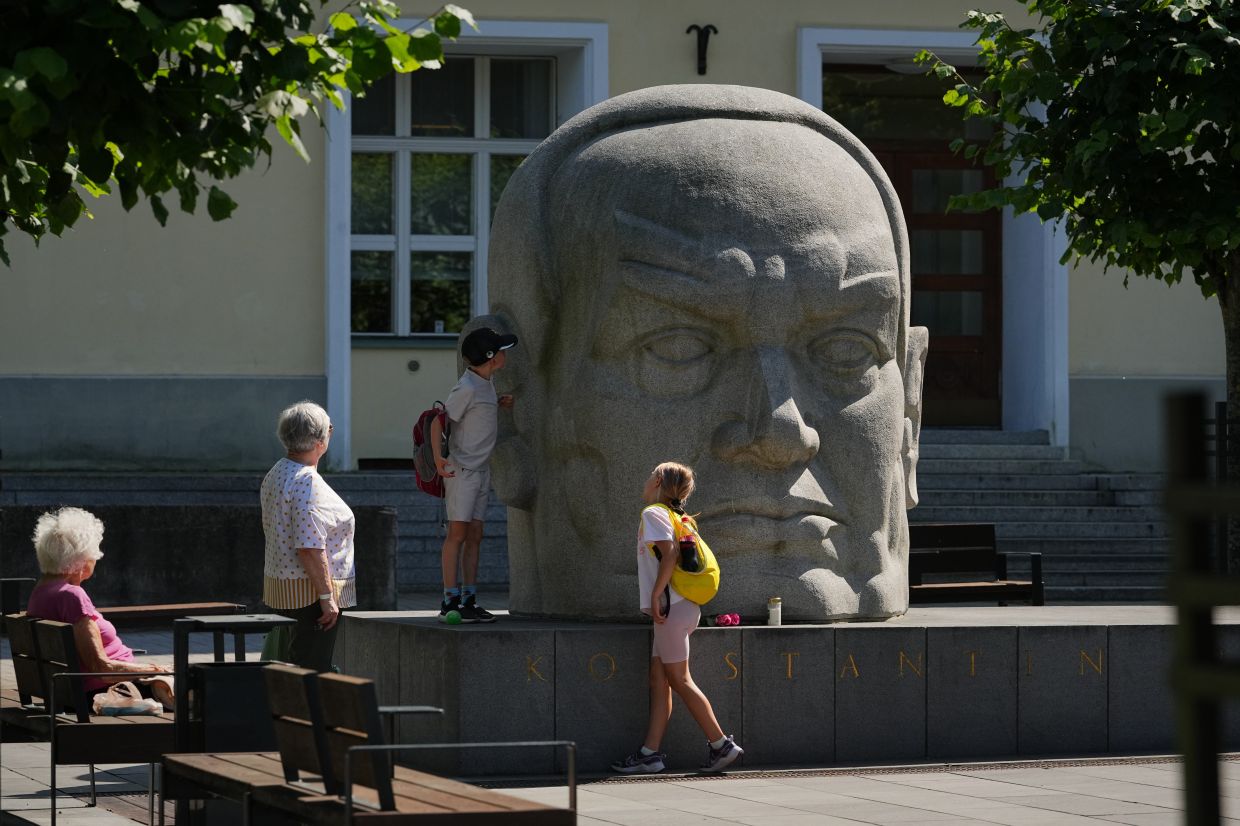
Estonia has launched an ambitious effort to catalogue and preserve Soviet-era artworks scattered across the nation, reflecting a fundamental shift in how the Baltic state approaches its fraught relationship with decades of Russian occupation. The initiative, coordinated by Estonia's Board of Heritage in partnership with the Estonian Academy of Arts and Tallinn University, represents a marked departure from the country's earlier strategy of simply erasing symbols of Soviet domination from the landscape. Instead of wholesale removal, authorities now recognise that many communist-era pieces carry genuine artistic and historical value, particularly given that they were created by ethnic Estonian artists who had no choice but to work within the constraints of the occupying regime.
The project emerged from a pragmatic realisation that blanket condemnation of all Soviet-period cultural production misses important nuances in Estonia's complicated past. For five decades following the Soviet annexation, everyday life continued despite the occupation. Artists worked, studied, and created within systems they did not choose. Rather than dismissing their output as merely propaganda, the current generation of heritage specialists and younger Estonians see merit in understanding what these creators accomplished under difficult circumstances. A 1963 etching by graphic artist Olev Soans—depicting a glassblower and now displayed in a rural bar—exemplifies the kind of understated, technically accomplished work that deserves preservation and scholarly attention rather than destruction.
The catalogue effort involves students fanning out across Estonia to document hundreds of surviving artworks, including murals, mosaics, frescoes, stained glass installations, and relief sculptures adorning schools, former factories, abandoned collective farms, and historic townhouses. This fieldwork is painstaking and often frustrating, as many buildings have been demolished since the Soviet era, requiring researchers to reconstruct the historical record through archival searches, newspaper reviews, and interviews with local residents who remember the works. The physical disappearance of buildings means that comprehensive documentation of what remains has become an urgent task, as further loss is inevitable without intervention.
Estonia's approach reflects a maturation in how post-Soviet nations engage with their communist heritage. Rather than the blanket iconoclasm that characterised the immediate post-independence period following 1991, Tallinn has begun distinguishing between artwork that genuinely glorifies the Soviet system and pieces that simply reflect the artistic concerns of the time. This distinction carries profound implications for how younger Estonians, born after the USSR's collapse, understand their national identity. For this generation, Soviet-era art represents not enemy propaganda but rather evidence of how Estonian culture persisted and even flourished amid occupation, with artists leaving subtle markers of identity and resistance that escaped the censors.
The government's role in this process remains contentious, however. A working group has identified approximately 240 monuments deemed "ideologically charged" that require removal or modification to ensure they no longer glorify the occupying regime in public spaces. The ministry's Cultural Heritage adviser, Reesi Sild, emphasises that such decisions aim to prevent glorification of occupation rather than erasure of history. Yet determining what qualifies as ideologically problematic versus what represents legitimate artistic expression proves genuinely difficult. Socialist realism's emphasis on industrial labour and collective productivity reflects ideological commitments, yet the style itself became a medium through which Estonian artists could pursue their craft and occasionally embed subtle references to local traditions and identities.
This nuanced approach gains added urgency given Estonia's contemporary security environment. Since Russia's 2022 invasion of Ukraine, Tallinn has become a vocal ally of Kyiv, and the country remains acutely conscious of Russian military pressure along its 294-kilometre border. Frequent drone incursions and fighter jet probes have repeatedly prompted NATO intervention. Against this backdrop, the decision to preserve rather than demolish Soviet-era cultural artifacts might seem counterintuitive. Yet Estonian officials argue that documenting and contextualising this art represents a more sophisticated form of sovereignty than simple removal. It demonstrates capacity to confront history directly, to acknowledge what happened without remaining trapped by it, and to distinguish between the regime that occupied the nation and the people who lived and created within it.
Coordinator Siiri-Liis Huttunen articulates this perspective clearly: the Soviet occupation is undeniably part of Estonian history, and life did not pause during those 51 years. The artists who worked then were not responsible for the geopolitical circumstances of their birth. By cataloguing their contributions, Estonia claims ownership of its entire cultural heritage rather than allowing Moscow to monopolise the narrative of the Soviet period. This represents a confidence-building exercise, suggesting that a nation secure in its independence can afford to preserve evidence of occupation without that evidence threatening contemporary identity.
The work undertaken by students like Martin Danilas involves interpretive challenges that extend beyond simple documentation. Looking at Soans' glassblower, Danilas notes that certain details—the style of the hat, for instance—appear to reference traditional Estonian folk costume, suggesting the artist embedded cultural markers within ostensibly generic socialist realist imagery. This detective work reveals how creative individuals navigated censorship and maintained cultural continuity even under occupation. Similar patterns likely appear throughout the corpus of works being catalogued, with careful analysis potentially revealing layers of meaning invisible to casual observation.
The project's scope extends to determining preservation priorities once the full inventory is complete. Rector Hilkka Hiiop of the Academy of Arts explains that once researchers understand which artworks remain and their condition, the Board of Heritage can make informed decisions about which pieces merit urgent conservation intervention and which can be monitored for gradual deterioration. This triage process acknowledges that unlimited resources do not exist, and priorities must be established. The very act of creating a comprehensive inventory shifts Estonia's relationship with Soviet-era art from reactive removal to strategic preservation.
Estonia's approach offers lessons for other post-Soviet and post-colonial societies grappling with inherited cultural landscapes that carry contested meanings. The initiative demonstrates that historical reckoning need not mean cultural erasure, and that acknowledging occupation does not require destroying all evidence of the period. Instead, careful documentation, contextualisation, and selective preservation can serve national interests while respecting the creative achievements of previous generations. For Malaysia and other Southeast Asian nations with complex multilayered histories, Estonia's model suggests that strategic engagement with inherited cultural artifacts—rather than wholesale rejection or uncritical preservation—may offer a path toward mature historical consciousness.
The catalogue project ultimately reflects Estonia's confidence in its renewed independence and NATO membership. The nation no longer feels compelled to erase all traces of Soviet presence; instead, it can afford to study, preserve, and reinterpret those traces through a distinctly Estonian lens. This approach transforms Soviet-era art from threatening reminders of occupation into historical documents and artistic achievements worthy of serious scholarly and public attention, contributing to a more complete and honest national narrative.

