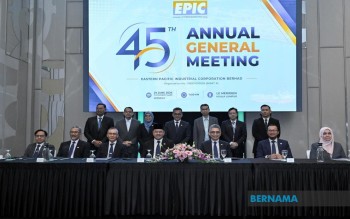
Eastern Pacific Industrial Corp Bhd (EPIC) has set its sights on significant expansion, unveiling a strategic roadmap that aims to nearly double revenue to RM700 million and grow its net asset value to RM1 billion by 2030. The integrated oil and gas solutions provider outlined these targets under its newly launched EPIC Strategic Business Plan 2025-2030 (EPIC BEST 2530), signalling management's confidence in sustained growth across multiple business verticals that have traditionally anchored Malaysia's industrial economy.
Group chief executive officer Dr Ts Muhtar Suhaili framed the ambitious targets as achievable given the company's recent momentum. EPIC currently generates around RM411.9 million in annual revenue and holds approximately RM700 million in net asset value. The planned trajectory represents a 70 percent increase in revenue within the five-year planning horizon, alongside a 43 percent uplift in shareholder value. This growth agenda reflects management's belief that Malaysia's energy and industrial sectors remain viable platforms for expansion despite global energy transition pressures.
The company's confidence stems from robust recent financial performance that has extended a winning streak since 2022. For the financial year ending December 2025, EPIC reported net profit of RM20.6 million, up 24 percent from RM16.6 million the previous year. Revenue growth similarly outpaced expectations, rising to RM411.9 million from RM403.8 million, demonstrating operational momentum across the group's portfolio. These results validate management's strategic positioning ahead of the five-year projection period.
Several operational factors powered this growth. The acquisition of Rahar Niaga Sdn Bhd expanded EPIC's service capabilities, while newly secured Pan Malaysia Maintenance, Commissioning and Modification and Hook-Up and Commissioning contracts from Petronas provided substantial revenue foundations. Additionally, rising offshore rig arrivals and increased cargo volumes through EPIC's port facilities contributed meaningfully to top-line expansion. This diversification across O&G services and maritime logistics reveals a management strategy intent on reducing dependence on any single revenue stream.
Looking ahead to 2026, Dr Muhtar projected another record-breaking year, signalling that momentum is likely to persist. The company's current contract pipeline underpins this outlook. EPIC's approved contract value for oil and gas operations ranges between RM1.3 billion and RM1.5 billion, providing substantial visibility into near-term revenue generation. While actual earnings depend on work orders and purchase orders flowing from these contracts, the size of the pipeline demonstrates confidence among major clients, particularly Petronas, in EPIC's capabilities and reliability.
Geographically, EPIC has broadened its footprint across Malaysia's energy heartland. Beyond its traditional base in Terengganu, the company has secured Petronas contracts in the southern Peninsular Malaysia region, including Pengerang and Melaka. Most significantly, management recently achieved market penetration into Sabah, a frontier for growth given the state's substantial hydrocarbon reserves and industrial development potential. This geographic diversification reduces regional concentration risk and positions EPIC to benefit from energy infrastructure development across Malaysia.
The renewable energy sector represents a critical pillar of EPIC's 2030 strategy, reflecting broader industry trends toward energy diversification and decarbonisation. EPIC is actively bidding for a hybrid hydro-solar project at Kenyir in partnership with its parent company, Terengganu Inc. Should the company succeed in securing this tender, it would mark a significant milestone in EPIC's transition toward cleaner energy solutions, complementing its traditional O&G expertise. This dual positioning—maintaining core competence in established energy sectors while building renewable energy capacity—reflects pragmatic risk management for a Malaysian industrial corporation navigating the global energy transition.
Internationalisation constitutes another strategic vector outlined in management's 2030 plan. The board has directed management to pursue expansion opportunities across neighbouring Asian markets, capitalising on EPIC's technical expertise and track record in the Malaysian market. While geopolitical uncertainties in West Asia remain a consideration, the company is nonetheless assessing opportunities in that region. This outward-looking orientation acknowledges that sustainable growth increasingly requires companies to access markets beyond their home base, a lesson underscored by many successful Malaysian industrial enterprises that have expanded regionally.
Recent operational moves underscore management's seriousness in executing this expansion agenda. In February this year, EPIC's subsidiary EPIC OG Sdn Bhd formalised a collaboration agreement with Begas Energy Sdn Bhd to provide project management services for the Terminal Turnaround, Maintenance and Modification contract in Sabah. This partnership mechanism strengthens EPIC's presence in Sabah and Sarawak, Malaysia's major energy-producing states, while distributing execution risk through collaborative arrangements with local partners who possess region-specific expertise and relationships.
For Malaysian investors and policymakers, EPIC's growth trajectory carries broader implications. The company represents a successful homegrown industrial enterprise that has built competitive advantage in capital-intensive sectors traditionally dominated by multinational players. Its expansion ambitions suggest confidence in Malaysia's continued relevance as an energy hub and industrial services destination. Furthermore, EPIC's diversification into renewables and its willingness to pursue regional expansion demonstrate adaptive management capable of navigating structural economic change. As Malaysia seeks to position itself within Southeast Asia's industrial hierarchy, EPIC's performance and strategic direction provide a useful case study in how domestic companies can achieve scale and sophistication.

