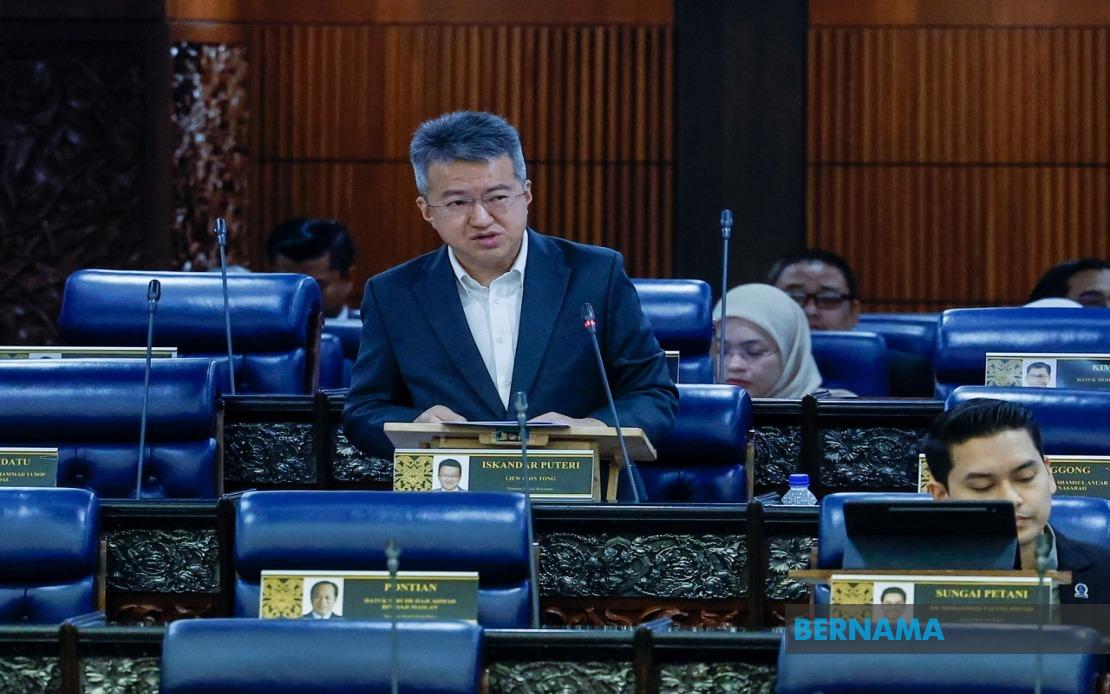
The Employees Provident Fund's wealth-transfer initiative has begun delivering tangible results, with Deputy Finance Minister Liew Chin Tong announcing that 63 applications under the i-Legasi programme have secured approval. Through these successful applications, a combined RM46.3 million in accumulated retirement savings has been redistributed among 86 eligible family members, providing a practical mechanism for members to support their dependents during the transition into retirement.
Introduced on February 1 this year, i-Legasi represents a significant policy shift in how Malaysia's largest provident fund manages intergenerational wealth preservation. The scheme permits EPF members who have reached the age of 55 and whose retirement savings exceed the Adequate Savings benchmark of RM650,000 to voluntarily channel surplus funds into the EPF accounts of their immediate family members. This threshold-based approach ensures that the initiative targets those whose retirement security is sufficiently established, preventing any depletion of personal retirement adequacy whilst enabling meaningful family support.
Liew disclosed the figures during parliamentary proceedings when responding to questions about government strategies for ensuring adequate retirement income among Malaysians, a concern raised by Datuk Seri Aminuddin Harun of Port Dickson. The deputy minister framed i-Legasi within the broader context of Malaysia's demographic transition, acknowledging that the nation faces mounting pressure as its population ages towards 2030. By facilitating direct transfers between family members, the government hopes to distribute retirement responsibilities more equitably across households rather than concentrating financial strain on individual retirees or overwhelming public assistance systems.
The broader retirement savings picture presents both encouraging momentum and persistent challenges. As of May 31 this year, Liew revealed that 3.04 million active EPF members aged between 18 and 60 have achieved the Basic Savings target established for their respective age groups, equivalent to RM390,000 by age 60. This cohort represents 38.3 per cent of the total 7.94 million members within that age bracket, marking measurable progress in the national effort to secure adequate retirement provisions. The improvement reflects upward movement in member contributions and growing awareness of long-term financial planning requirements.
The statistics demonstrate meaningful progress compared to the previous year's performance. May 31, 2025 saw only 35 per cent of eligible members, or approximately 2.71 million individuals, meeting their age-adjusted Basic Savings targets. The increase to 38.3 per cent represents a shift of 330,000 additional members achieving adequacy within a twelve-month window, suggesting that enhanced contribution incentives and public education campaigns are gaining traction among working-age Malaysians. However, the reality remains sobering: nearly two-thirds of the working population aged 18 to 60 have not yet accumulated sufficient retirement resources according to the EPF's own benchmarks.
For Malaysian workers and their families, these figures carry profound implications. The EPF's Basic Savings target of RM390,000 by retirement age translates to an average monthly income of roughly RM2,000 in today's currency value, a level that analysts consider barely adequate in a nation experiencing persistent inflation in housing, healthcare, and living costs. The focus on adequacy rather than sufficiency reveals the EPF's pragmatic acknowledgment that many members will rely on combinations of personal savings, family support, and government assistance schemes during their later years. This reality underscores why initiatives like i-Legasi matter—they create official pathways for families to pool resources and manage retirement security collectively rather than individually.
The government's commitment to strengthening retirement adequacy extends beyond i-Legasi alone. Liew confirmed that the administration and the EPF intend to deepen their collaborative approach through comprehensive policy development and enhanced financial mechanisms. This includes reviewing contribution incentive structures to encourage higher savings rates among younger workers and strengthening social protection systems that safeguard vulnerable retirees. The emphasis on holistic collaboration signals recognition that no single initiative—whether legislative, administrative, or market-based—can independently solve Malaysia's retirement security challenge, particularly given widening income inequality and the erosion of traditional extended family support systems in urban areas.
The i-Legasi scheme also addresses a distinctly Malaysian context that differs from Western retirement models. In Malaysia, family obligations remain culturally central to retirement planning, with adult children traditionally expected to contribute to parents' welfare. By formalising and incentivising these transfers through EPF mechanisms, policymakers validate traditional values whilst modernising their implementation. The scheme removes bureaucratic friction from family wealth transfer and ensures that such movements remain tax-efficient and properly documented, aligning personal financial planning with national retirement security objectives.
For Southeast Asian context, Malaysia's experience offers instructive lessons about retirement adequacy challenges facing the region's rapidly ageing societies. Thailand, Vietnam, and Indonesia face similar demographic pressures with underfunded pension systems and large informal-sector workforces outside traditional social insurance coverage. Malaysia's measured approach—combining individual savings mandates with flexible transfer mechanisms and incremental policy enhancement—demonstrates a pragmatic middle path between rigid pension systems and purely market-driven retirement models. The modest but measurable uptake of i-Legasi suggests that Malaysians respond positively to mechanisms that respect family autonomy whilst aligning with government retirement security objectives.
The trajectory of these figures warrants continued monitoring as Malaysia approaches 2030. If the current rate of improvement in Basic Savings achievement continues, the nation could potentially approach 45-50 per cent adequacy among the working-age population within five years. However, demographic realities complicate this projection: workers currently aged 55 and above represent the most vulnerable cohort, having accumulated less in defined-contribution accounts than younger cohorts beginning their careers today. The EPF must simultaneously address both the immediate retirement adequacy crisis among older members and establish sustainable savings patterns for the generation now entering the workforce, a dual challenge requiring sustained policy attention and adequate resourcing across multiple fronts.

