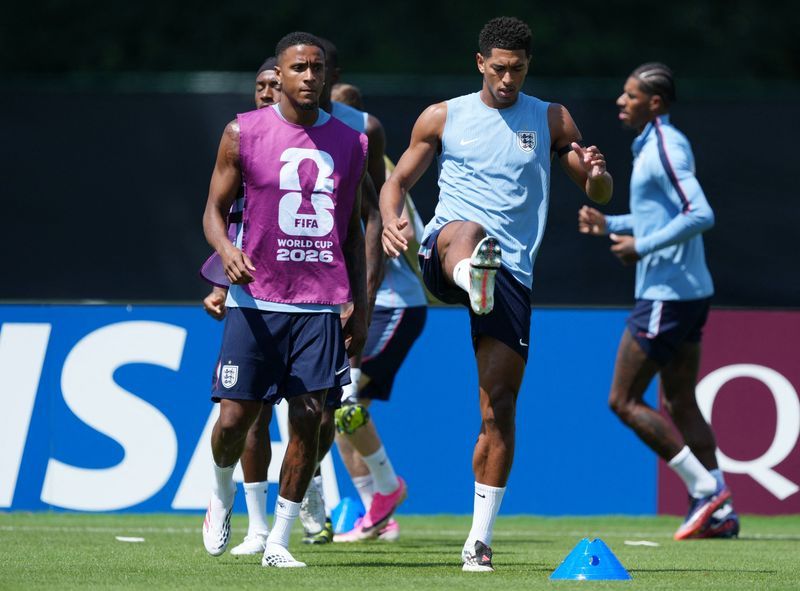
England's preparation for their World Cup semi-final against Argentina on Wednesday centres on an unwavering sense of collective purpose, with key players projecting an image of squad harmony and determination despite external scrutiny. Defender Ezri Konsa articulated the team's approach to managing the inevitable media attention that surrounds international football, suggesting that England's experience at the highest level has equipped them to compartmentalize distractions and focus on the tactical and mental demands ahead. The atmosphere within the squad appears markedly different from the tension that briefly surfaced following their quarter-final victory over Norway, when manager Thomas Tuchel and midfielder Jude Bellingham voiced differing assessments of the team's performance in their 2-1 extra-time win.
That match saw Bellingham score both England goals but also prompted public disagreement between player and coach about the quality of execution and the conditions faced during the encounter. Rather than allowing such friction to fester, the episode appears to have galvanized the squad into a demonstration of underlying solidarity. Konsa's remarks to journalists reflect a maturity about professional football's ecosystem, where competing narratives and scrutiny represent routine challenges rather than crises. He emphasized that the squad's internal relationships remain intact and that the group possesses the collective experience to distinguish between noise generated for consumption and the genuine work required to progress in tournament football.
Marc Guehi, another defensive cornerstone of England's campaign, expanded on this theme with unqualified praise for Tuchel's leadership. The German manager has apparently succeeded in establishing what Guehi described as unprecedented levels of cohesion within the squad, creating an environment where players feel secure in their roles and confident in the team's direction. Guehi's testimony suggests that Tuchel's appointment and tactical influence have fundamentally altered the psychological climate around the national team, moving beyond the mere accumulation of talented individuals toward a genuinely unified entity with shared objectives and mutual support.
Tuchel himself, addressing journalists in a separate press briefing at Atlanta Stadium, articulated a philosophy that transcends the immediate contest against Argentina. His remarks reflected a broader conviction that modern international football, despite the prominence of individual superstars, ultimately resolves itself through collective commitment and teamwork. The manager noted that the entire World Cup tournament has demonstrated this principle, with star players consistently subordinating personal ambitions to national team requirements. This observation carries particular weight given the calibre of talent on display throughout the competition and suggests that Tuchel views England's potential advantage not primarily in individual brilliance but in the discipline and sacrifice demanded of each player.
The manager emphasized the crucial attribute of resilience, describing a team that refuses to capitulate under pressure and maintains focus even when circumstances appear difficult. Such mental fortitude represents a significant asset in knockout football, where matches often hinge on moments of individual error or collective vulnerability. Tuchel's confidence appears grounded not in overconfidence but in repeated demonstrations of character from his squad, both in preparation and during competitive matches.
England's path forward includes a potential final against Spain, should they overcome Argentina on Wednesday. Spain defeated France 2-0 in their semi-final on Tuesday, setting up a possible rematch of this year's Euro 2024 final, which the Spanish won. The Spanish victory represents a significant benchmark, demonstrating that the European champions remain a formidable obstacle. For England, the immediate focus remains the Argentine challenge, a contest that will test both the tactical adjustments Tuchel has implemented and the squad unity that players continue to emphasize.
The travel logistics of international tournaments add another layer to team cohesion, yet Guehi's casual observation about sleeping through Spain's semi-final suggests an admirable compartmentalization within the squad. Rather than anxiously monitoring potential opponents or second-guessing preparation, players appear confident enough to rest during transit, indicating a psychological readiness and absence of the paralysing anxiety that sometimes grips teams in knockout stages. This detail, while seemingly minor, reflects the security and trust that pervades the current England setup.
Argentina presents a formidable opponent steeped in World Cup tradition and led by experienced players accustomed to high-pressure environments. The South Americans will test England's defensive organization, midfield control, and finishing efficiency. The extent to which Tuchel's emphasis on collective mentality translates into concrete performance will determine whether England advances to face Spain or returns home with tournament disappointment.
The narrative emerging from England's camp emphasizes that football remains fundamentally a team sport despite the modern obsession with individual talent. Tuchel's consistent messaging about unity, backed by player endorsements from multiple members of the squad, suggests a manager who has successfully aligned individual ambitions with collective goals. Whether such harmony extends into decisive moments against Argentina will ultimately determine England's World Cup trajectory and validate the emphasis players place on squad togetherness.

