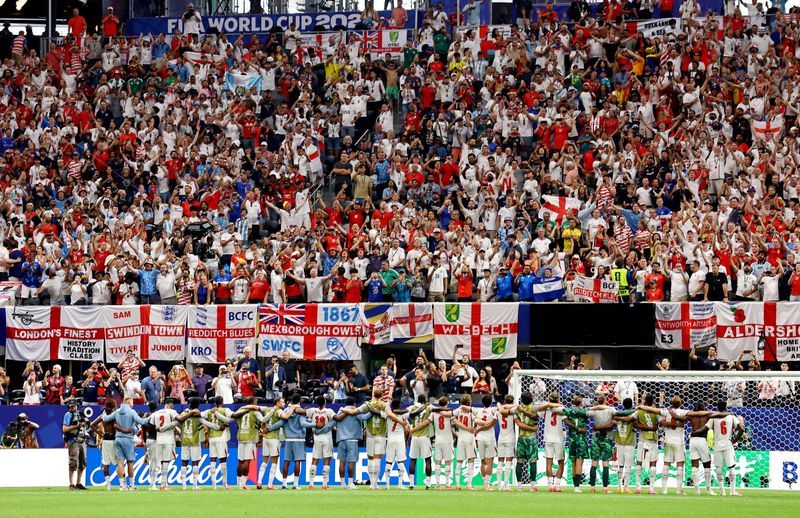
England's World Cup campaign has been a study in contrasts. After opening with a convincing 4-2 victory over Croatia, Thomas Tuchel's side struggled through matches against Ghana and Panama, raising concerns about the team's defensive solidity. Yet nothing quite prepared the Three Lions faithful for the ordeal that unfolded at Atlanta Stadium on Wednesday evening against the Democratic Republic of Congo, a moment that would test both their nerve and their ability to respond when trailing.
When Brian Cipenga's early strike gave DR Congo the lead within ten minutes, it shattered the psychological dominance England had maintained throughout the group phase. This was uncharted territory for Tuchel's outfit in this tournament—their first time behind on the scoreboard. The weight of that statistic hung heavy in the humid Georgia air, compounded by a troubling historical fact: England had never previously recovered from a halftime deficit to win a World Cup knockout tie.
The Congolese underdogs, playing with the desperation of a team with nothing to lose, set about their task with impressive discipline and organisation. Their goalkeeper Lionel Mpasi proved immense, requiring just a single shot on target to justify his side's tactical approach whilst England laboured to find a way through what seemed an impenetrable defensive barricade. Every Congolese attack carried palpable menace, particularly during a period when Yoane Wissa's attempt struck the post before the interval and when Harry Kane's penalty appeals were waved away by the referee.
The psychological impact rippled through the England support. Television cameras captured the nervous energy—supporters unable to settle, clutching their drinks as if the beverage might steady their fraying nerves. The stadium itself seemed to hold its breath, each England chance met with hope, each failed effort with mounting dread. Tuchel prowled his technical area in visible agitation, at one point audibly berating defender Djed Spence after a misplaced throw-in, searching desperately for tactical adjustments that might unlock the Congolese resistance.
The turning point arrived only after the interval restart, when England finally began to assert control. Jude Bellingham's powerful header forced another outstanding save from Mpasi, whilst Declan Rice delivered dangerous crosses into the penalty area. Marcus Rashford's effort was blocked on the goal line through sheer desperation, and Bellingham struck the post in stoppage time as frustration mounted. Tuchel's tactical recalibration—shifting Rice to right-back and introducing midfielder Eberechi Eze—signalled a commitment to break the deadlock regardless of tactical risk.
When Kane's glancing header finally breached Mpasi's defences in the 75th minute, the release of tension seemed almost audible across the stadium. His 83rd international goal provided England their path through, with Kane adding a second six minutes later to secure a 2-1 scoreline that would have seemed improbable during those agonising first-half minutes. The victory carried historical resonance—England's first World Cup comeback from a losing position since defeating Cameroon in the quarter-finals precisely 36 years earlier to the day.
Post-match, Tuchel emphasised the psychological resilience required. "We kept believing," he reflected, underscoring that maintaining composure when circumstances turn adversarial represents a fundamental tournament skill. The German manager acknowledged the team's battle-tested commitment in knockout football, where margins narrow and execution becomes paramount. Kane similarly noted the distinction between the challenges posed by different opponents: DR Congo required England to unlock a defensive fortress, but Mexico would present an entirely different examination—one focused on defensive solidity against dynamic attacking play.
Yet England faces a fresh complication beyond tactical considerations. Mexico City's Azteca Stadium sits at an elevation exceeding 2,200 metres above sea level, a geographical factor that has historically tested football teams unaccustomed to oxygen-depleted conditions. The ball travels with greater velocity at altitude, requiring adjustment to players' spatial awareness and passing accuracy. After the suffocating tension of Atlanta's humidity and pressure, England must now acclimate to Mexico's rarefied atmosphere.
The trajectory facing England represents the reality of knockout football: each successive tie introduces novel challenges demanding fresh tactical responses and mental resilience. Against DR Congo, the examination focused on breaking down resolute defending and recovering from adversity. Against Mexico, England must demonstrate they can simultaneously attack with purpose whilst maintaining the defensive discipline that remains their tournament's soft underbelly. The altitude adds a physiological dimension few teams relish. In this unpredictable World Cup format, England has demonstrated the capacity to grind through adversity—the question now becomes whether that resilience can sustain them through the compounding challenges that await.

