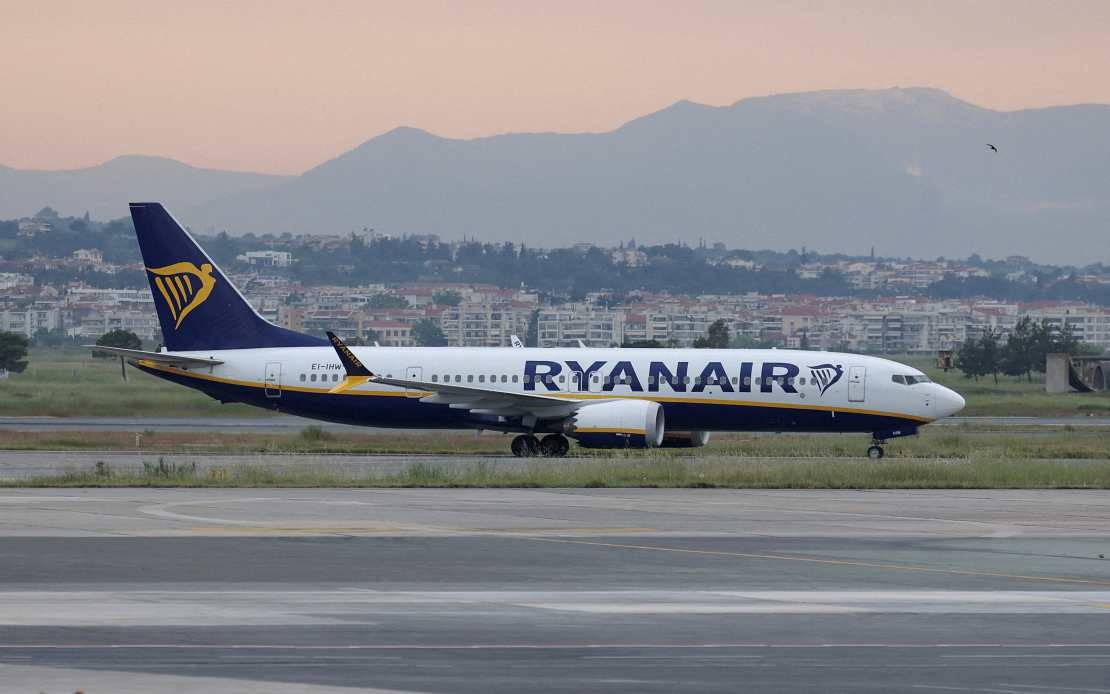
A routine flight from Greece to Germany turned into a life-threatening emergency when an engine malfunction breached the pressurised cabin of a Ryanair aircraft, nearly pulling a passenger into the thin air above the Mediterranean. The US National Transportation Safety Board (NTSB) has now detailed the harrowing incident, revealing that fan blade failure in the right engine of the Malta Air flight, operating as Ryanair, sent metal fragments tearing through the aircraft's fuselage during climb-out from Thessaloniki International Airport in Greece last month.
The investigation demonstrates the violence of high-altitude engine catastrophes and the fragility of the barriers protecting airline passengers. When the right engine's fan blade separated, the resulting debris became a projectile that penetrated multiple sections of the aircraft simultaneously. The initial breach occurred through a cabin window at row 11, shattering the fortified pane that normally withstands enormous pressure differentials at cruising altitude. A second breach opened in the lower fuselage skin behind the right wing-to-body fairing, evidence of the sweeping destructive path the fragments carved through the aircraft structure.
The passenger seated at window 11F experienced the full force of the decompression event. As pressure equalised explosively between the cabin and the atmosphere outside, the passenger was partially extracted from their seat and forced partially through the broken window frame. This represents one of aviation's most terrifying scenarios—the sudden, violent depressurisation that can pull objects and people toward the opening. In this case, the passenger's position at the window meant they bore the direct impact of this phenomenon.
What prevented a tragedy was the quick thinking and brave intervention of surrounding passengers. Fellow travellers managed to grab hold of the partially ejected passenger and physically pull them back into the cabin, likely preventing their complete exit into the atmosphere. The rescue operation highlights the human factor in aviation safety—the role of alertness and courage among passengers themselves. This act of collective passenger intervention almost certainly saved the individual's life, as the pilot would have had no time to maintain cabin pressure or alter the aircraft's flight path to assist.
The NTSB's investigation uncovered an unexpected factor contributing to the engine failure: bird strike. Investigators discovered bird remains, including feathers, embedded in multiple sections of the engine. This suggests the initial damage that eventually cascaded into complete fan blade failure may have originated from a collision with wildlife during the initial climb phase. Bird strikes remain one of aviation's persistent hazards, with thousands occurring annually worldwide, though catastrophic failures remain rare thanks to engine design standards.
Malta Air operates numerous aircraft on behalf of Ryanair across European routes, and this incident raises questions about maintenance protocols and inspection procedures for engines subjected to bird strikes. Even incidents that appear minor at the moment of impact can initiate fatigue cracks or structural damage that weakens components over time. The separation of a fan blade represents the failure of multiple safety systems and factors working in concert—an unusual but not unprecedented occurrence in modern aviation.
The aircraft managed to return to Thessaloniki for an emergency landing, a feat that underscores modern aircraft's ability to continue operating even with catastrophic damage. The pilot's response and the aircraft's structural integrity allowed everyone aboard to reach the ground safely despite the missing window and breached fuselage. Engineers design commercial aircraft with redundancy and failsafes specifically to handle scenarios where individual systems fail, and in this case, those systems performed as intended.
For Southeast Asian aviation operators, this incident carries relevance beyond European airspace. Tropical and subtropical climates across Malaysia, Indonesia, Thailand, and the Philippines have high concentrations of large bird species, with some routes experiencing more frequent bird strike incidents than their temperate counterparts. The proximity of airports to wetlands and forest areas in the region, combined with year-round bird migration patterns, means that airlines operating in Southeast Asia face particular exposure to this hazard.
The regulatory implications extend to how airlines handle bird strike incidents and the documentation required for post-incident inspections. Even when aircraft appear to land safely after wildlife collisions, detailed engine inspections and potentially replacement of affected components become mandatory. The financial and operational costs of such incidents drive home why prevention—through wildlife management at airports and flight path adjustments—remains critical for regional carriers managing tight operational budgets.
For passengers considering aviation safety in the aftermath of such incidents, the Ryanair event illustrates that modern aircraft design incorporates multiple layers of protection. The cabin window, while it failed, was designed specifically to provide initial resistance to pressurisation effects. The fuselage structure contained the breach rather than allowing catastrophic structural failure. And crucially, the aircraft's design meant the loss of one engine did not compromise the ability to maintain flight and return safely to an airport.
The passenger injured in the incident received medical attention following the emergency landing, with reports indicating injuries consistent with the decompression trauma experienced. Such incidents leave lasting physical and psychological effects on those directly affected, even when survival outcomes prove successful. Airline compensation frameworks and victim support protocols have evolved over decades of aviation safety learning, though the human cost of such harrowing experiences cannot be fully quantified.
Ryanair, Europe's largest budget carrier by passenger volume, operates thousands of flights daily across the continent. With such operational scale come both economic pressures and heightened safety responsibilities. The NTSB investigation and its public findings contribute to the global knowledge base that helps all airlines improve their maintenance and emergency response protocols. Safety improvements often emerge from detailed analysis of incidents that fortunately did not result in total loss of the aircraft or loss of life.

